

Why do you hate God? - Joey Ferrell
Some years ago, a brother in Christ was riding in the car with me and a few other preachers returning from dinner to a conference. A conversation came up regarding a certain questionable action that some were in disagreement of whether it was a serious issue or not. This particular question was about a strong suggestion regarding people swimming at the public venue (hotel/conference center) where we were at. All of a sudden, this brother said “why do you hate swimming?”
Some years ago, a brother in Christ was riding in the car with me and a few other preachers returning from dinner to a conference. A conversation came up regarding a certain questionable action that some were in disagreement of whether it was a serious issue or not. This particular question was about a strong suggestion regarding people swimming at the public venue (hotel/conference center) where we were at. All of a sudden, this brother said “why do you hate swimming?”
Well, we all laughed at the question because it really came out of nowhere. It was a funny thought. If someone disagreed with one or the other, then the implication was that they hated that question/subject/action. Maybe you had to be there, but it was quite amusing. And then, it became a normal question, that some of us that were in that vehicle still use today.
A plethora of questions arose. “Why do you hate drinking?” “Why do you hate cussing?” “Why do you hate lying?” and then the ultimate one… “Why do you hate sin?” Well...that one had a pretty universal answer. We should hate sin because God hates sin and my Lord had to die because of sin!
But…here is the question of consideration.
“Why do you hate god?”
Most likely, if you have read this far you may be making a face, or thinking “who is this guy and who does he think he is asking such a question.” Well, I am the guy asking the question…because, the reality is that I have had to ask myself this question time and time again.
Why?
John 3:20 is the overpowering verse, stated by Jesus, that answers this question:
For everyone who does evil hates the Light, and does not come to the Light for fear that his deeds will be exposed.
Did you see that? EVERYONE who does evil….well, sin is evil, and sometimes I sin, as does everyone else that is human. Some are evident sins, others are secret sins. Some seem more serious than others, but sin is sin and sin is sin, and if I continue in sin and continue committing sin, then I am guilty of the evil that hates the Light, thus I could be one who asks the question of myself - why do you hate God?
This question is a serious one because it certainly has serious ramifications. The writer of Proverbs pens these words of God:
“But he who sins against me injures himself;
All those who hate me love death.”
Proverbs 8:36
Personally, I hate death, and I want to do better in my life each day. But, that requires admitting to myself and God that I have sinned against Him, as well as sometimes doing the same with others if my sin is against them. I cannot live day by day continuing in the sin that causes such a separation between me and God.
There is hope! There is forgiveness! There is unity with God!
Paul wrote to the young evangelist Titus and gave us that hope….but it is a hope in obedience, a hope that only can be found in the love of God and His mercy that puts those sins in the past where He will remember them no more against us! God provides that way for us, and we should desire that mercy and healing of our iniquities and no longer “hate God!”
For we ourselves were once foolish, disobedient, led astray, slaves to various passions and pleasures, passing our days in malice and envy, hated by others and hating one another. But when the goodness and loving kindness of God our Savior appeared, he saved us, not because of works done by us in righteousness, but according to his own mercy, by the washing of regeneration and renewal of the Holy Spirit, whom he poured out on us richly through Jesus Christ our Savior, so that being justified by his grace we might become heirs according to the hope of eternal life.
Titus 3:3-7
I hope you find these verses an encouraging motivation for a brighter tomorrow. One thing is for sure, out of all of the questions posed above, or that you may think of, we can all answer the question of “why do you hate sin” with the answer of because I love God!
God loves you and so do I. May God bless.

Are You Influential? - Ben Bailey
An old Korean Proverb illustrates the power of one’s influence when it says, “Power lasts ten years, influence not more than a hundred.” Sometimes we may think, “Am I influencing anyone? The question asked is really a faulty one. It’s not IF we are influencing anyone, but HOW are we influencing them. All of us are an influence on others either for good, bad, or indifference. What type of influence should a Christian possess? Let’s notice what God says.
An old Korean Proverb illustrates the power of one’s influence when it says, “Power lasts ten years, influence not more than a hundred.” Sometimes we may think, “Am I influencing anyone?” The question asked is really a faulty one. It’s not IF we are influencing anyone, but HOW are we influencing them. All of us are an influence on others either for good, bad, or indifference. What type of influence should a Christian possess? Let’s notice what God says.
Concerning our influence Jesus said, "You are the salt of the earth; but if the salt loses its flavor, how shall it be seasoned? It is then good for nothing but to be thrown out and trampled underfoot by men. You are the light of the world. A city that is set on a hill cannot be hidden. Nor do they light a lamp and put it under a basket, but on a lampstand, and it gives light to all who are in the house. Let your light so shine before men, that they may see your good works and glorify your Father in heaven” (Mt. 5:13-16). Jesus likened our influence to two powerful examples in this text: salt & light. All of us can see the value and effect of these in our everyday life. For example, think back to the most bland and boring meal that you have eaten. Don’t you remember thinking to yourself, “This needs some spice?”. Our influence is that “spice” that adds flavor to life. Oh how we need to add good “spice” to this life. Then, think about the effects of light. When you walk into a room at night the very first thing you do is…turn on the light. Why? Light helps us to see and adds beauty, vividness and life to all it touches. The same is true of our example. Our “light” must shine in such a vivid and beautiful way that others can see it and glorify our God!
Parents especially have an influence on their children. Henry Ward Beecher so eloquently said, “What a mother sings to the cradle goes all the way down to the coffin.” How parents need to be that good example to set a principle for their children’s lives. Of the lasting effect of parents upon children the Holy Spirit said, “…bring them up in the nurture and admonition of the Lord” (Eph. 6:4). As the old hymn says, “God give us Christian homes” and especially Christian influence in the home!
As we think about influence may our question not be, “Am I influencing anyone?” But rather, “How am I influencing everyone I come in contact with?” May God help us to be influential for Him!

Does it really matter how we worship? - Joey Ferrell
We all should want to worship God. There are enough verses in the Bible to signify the importance, command, inference, and desires of God Himself for us to see that He indeed wants us to worship Him and Him alone!
This week, Kristie and I are at a lectureship in Branson, MO. On the way here from our home, I had several hours to think about an article. At first, as we passed through rural Tennessee and Missouri, some of the “brands” of church buildings caught my eyes and thoughts. I have heard of many of the ones that were seen, but there were some new ones I had not…and I thought that would be an interesting exploration for an article. However, after hearing a very educational lesson during the lectures by Dave Miller, this topic seems much more pressing at this time.
We all should want to worship God. There are enough verses in the Bible to signify the importance, command, inference, and desires of God Himself for us to see that He indeed wants us to worship Him and Him alone! Even in the early days of man, God desired sacrifice - a part of worship. In the days of Noah, Moses, Elijah and the prophets, He described and desired worship. He expected His children to worship Him in the form, fashion, and example as is described throughout.
Think about the tabernacle. The intricacy of design for this particular time in history in which God was to be worshiped. Their were clear instructions from God regarding how and what to use to build it. Then you move to the temple. There were certain items that had to be used in the worship in the temple. While we do not have those types of definitive ideas about our “buildings” and places of worship today, we still have to understand that there is an element that God still designs worship in His own way!
Think about the story in John 4. Jesus meets the woman at the well. They have a discussion. She states that they worshiped in the traditions of their forefathers, but what does Jesus say? Take a look:
“The woman said to Him, “Sir, I perceive that You are a prophet. Our fathers worshiped on this mountain, and you Jews say that in Jerusalem is the place where one ought to worship.” Jesus said to her, “Woman, believe Me, the hour is coming when you will neither on this mountain, nor in Jerusalem, worship the Father. You worship what you do not know; we know what we worship, for salvation is of the Jews. But the hour is coming, and now is, when the true worshipers will worship the Father in spirit and truth; for the Father is seeking such to worship Him. God is Spirit, and those who worship Him must worship in spirit and truth.””
(John 4:19–24)
Jesus said that “all” would worship the way of the Father and not the ways of tradition. It isn’t about the place, or even the various items that we may add through tradition (that are not opposed to the commands of God), but it would be the way God wanted worship that would be accepted!
Fast forward a few decades and guess what happens…we start to see things stray from what God’s design and desire are. Look at what Paul addresses in the letter to the church at Colossi regarding some of the “self-willed” worship that was happening:
“These things indeed have an appearance of wisdom in self-imposed religion, false humility, and neglect of the body, but are of no value against the indulgence of the flesh.”
(Colossians 2:23)
Did you see that? The phrase “self-imposed religion” comes up. Who imposed? SELF. Not God, not Jesus, not even the Apostles in the “Apostles’ Doctrine” as is stated as viable in the book of Acts. Self…men and women deciding what is best for them…emotions…feel-good…lifting-up…praises of men. What a shame!
And, here we are, some almost 2,000 years later and what a mess we might see today. Think of the self-imposed items of the day:
hand-clapping
waving of arms
praise teams
instrumental music
unauthorized leadership roles (women, non-Christians)
statues or other idol types of devices taking “center-stage”
This list could go on and on with the variants of what man has decided that he knows better what God wants than what God knows it would seem. Why? Because it makes them feel good. It helps draw a crowd. It doesn’t offend people. It is what “everybody else” is doing. Yet, it is NOT what God has designed.
When Jesus told the Samaritan woman that worship would be in spirit and in truth, He was not saying it would be spirited to help aid truth. He said IN Spirit and IN Truth. We have no right to speak on behalf of God to add these types of things to our worship to “make us feel good!”
The idea comes up often about Nadab and Abihu submitting unauthorized fire as an example of adding to the worship of God…and rightly so. These men were told how to get the fire, what type of fire, and what to do with it…and they ignored God. Why? Maybe it was inconvenient to get what was required…maybe it was quicker…maybe they felt like it didn’t really matter. Boy were they wrong!
Worship to God matters. It matters when we do it, how we do it, and what we do it with.Let’s be men and women of God and respect His authority and not our own desires. Souls will be in the same punishment as Nadab and Abihu for their disobedience to God. Let’s put aside the “feel-good” ideas and just worship God the way He wants.
To paraphrase something that Dave Miller said - “If someone is bored with the worship designed by God in the Bible, the problem is with the person and not the Bible!”
You can view this lesson by Dave Miller that was delivered at the 8th annual Show Me State Lectures here.

15 Actions for Daily Christian Living - Ben Bailey
Have you ever wondered what you can be doing for the Lord daily. Daily Christianity is what separates followers of Christ from those who Jesus claim the name of Jesus (Mt. 7:21; Luke 9:23). Following are 15 Actions that the Christian can/should be involved in every day.
15 Actions for Daily Christian Living
Have you ever wondered what you can be doing for the Lord daily. Daily Christianity is what separates followers of Christ from those who Jesus claim the name of Jesus (Mt. 7:21; Luke 9:23). Following are 15 Actions that the Christian can/should be involved in every day.
1. Take Up Your Cross & Follow Jesus Every Day (Luke 9:23).
2. Die to Self & Selfishness Daily (1 Cor. 15:31).
3. Have a Daily Concern for the Lord’s Church & the Lord’s People (2 Cor. 11:28; 1 Peter 2:17).
4. Utilize the Power of Prayer Daily (Ps. 86:3; Luke 11:1; Dan. 6:10; Mark 1:35; 1 Thess. 5:17)
5. Find Someone You Can Encourage Every Day (Heb. 3:12-13; Acts 4:36).
6. Read/Study Your Bible Every Day (Acts 17:11).
7. Look for Opportunities to Be Benevolent Daily (Acts 6:1; Gal. 6:10; Jame 1:27).
8. Make Evangelism a Daily Action (Acts 5:40-42).
9. Pursue Opportunities for Daily Christian Fellowship (Acts 2:46; 42).
10.Learn to Trust and Depend on God Daily (Mt. 6:11; Prov. 3:5).
11.Renew or Recharge Your Spiritual Batteries Daily (2 Cor. 4:16-18).
12.Take Time to Praise God Every Day (Ps. 145:2).
13.Be Reminded Every Day How Blessed You Are By God (Ps. 68:19; James 1:17).
14.Keep Your Commitment to God Daily (Ps. 61:8).
15.Think About the State of Your Own Salvation Daily (2 Cor. 6:1-2).

Stand Up For Truth! - Ben Bailey
In a world that want to accept everyone and everything regardless of moral consequences, it is easy for Christians to be tempted to bow at the altar of compromise. Instead of standing up for the Lord and His Word, too often we give in to “go along to get along” mentality. All of us must admit that times of conflict and confrontation are not at always enjoyable. Yet, when we compromise the truth or remain silent on biblical issues, are we doing anyone a favor? Let’s look at a few biblical examples where it would have been easier to compromise and determine who that would have ultimately helped.
In a world that want to accept everyone and everything regardless of moral consequences, it is easy for Christians to be tempted to bow at the altar of compromise. Instead of standing up for the Lord and His Word, too often we give in to “go along to get along” mentality. All of us must admit that times of conflict and confrontation are not at always enjoyable. Yet, when we compromise the truth or remain silent on biblical issues, are we doing anyone a favor? Let’s look at a few biblical examples where it would have been easier to compromise and determine who that would have ultimately helped.
It would have been a lot easier if Noah had told the people of his day that everything and everyone was pleasing with God instead of preaching a message of repentance and destruction (Gen. 6). Yet, if Noah would have compromised the truth or simply remained silent who would that have helped when the flood came? No one. Noah himself would have been lost for not preaching the word as God commanded. It would have been much more in line with popular view for Caleb and Joshua to give in to the “grasshopper-complex” rather than to put their trust in God. However, these men spoke an unpopular truth because they were trying to please God not men. John the Baptist could have very easily saved his head by compromising his views on marriage, divorce and remarriage to evil King Herod. Yet, John boldly stated, “It is not lawful for you to have your brothers’ wife” (Mark 6:18). Was John trying to hurt Herod’s feelings or did he have Herod’s best interest at heart? John was more concerned about Herod’s soul than making him happy for the moment. I wonder if God was pleased with what John said, or should he simply have “kept his nose in his own business”? I know God was pleased with John when our Lord said, “Among those born of women there has not risen a greater than John the Baptist” (Matt.11:11). Our Lord would have lived a lot longer and been a lot more popular if he had accepted the hypocritical Pharisees as they were, overlooked the sin of the Scribes and tax collectors, and viewed life with the “I’m okay, you’re okay” philosophy. Had Jesus done these things, would He be our Savior and would He have been pleasing to God? No! Jesus was the great Teacher and King of Israel because of His willingness to put God’s will before human feeling and emotion. From these great men of the Bible we learn that bowing at the altar of compromise will not do anyone, including ourselves, a favor now or in eternity.
Today, Christians must follow the same example of these great men of the Bible and stand up for the truth. We will not do anyone a favor by compromising God’s word. In fact, won’t it be a sad day when we stand at the Judgment bar of God and have to give an account for not teaching and standing up for the truth (Ezek. 3). Stop and think about it friend. If you tell someone the truth of God’s word and they don’t obey it, who is to blame and who will give an account for their soul? The Bible teaches they alone will (Read Ezek. 33:2-5). If they hear the truth and decide not to obey it, they will have to give an account for that not you. You did what you could by speaking the truth in love (Eph. 4:15). However, if we compromise God’s truth or we suddenly become the Lord’s silent partner on biblical issues, who will give an account for those who are lost by our lack of courage? The Bible teaches both parties will give an account on the day of Judgment (Read Ezek. 33:6). Dear friend, the Bible pleads with you to stand up for the truth of God’s word and be a person of courage! May we be encouraged by the words of the Lord to Joshua: “Only be strong and very courageous, that you may observe to do according to all the law which Moses My servant commanded you; do not turn from it to the right hand or to the left, that you may prosper wherever you go. This Book of the Law shall not depart from your mouth, but you shall meditate in it day and night, that you may observe to do according to all that is written in it. For then you will make your way prosperous, and then you will have good success” (Joshua 1:7-8).

Knowing Your Enemy - Amy Lawrence
In German legend, he is Mephistopheles. The Quran calls him Iblis. Shakespear’s “King Lear” designated him the Prince of Darkness. The Pharisees referred to him as Beelzebub. Christians know him as the Adversary (Satan) and the Accuser (Devil), the enemy of all mankind. Not many like to discuss this being. Some even contend that he doesn’t exist. In this article, I would like to study about the one John calls the Dragon, Rev. 20:2, and his dealings with mankind.
Knowing Your Enemy
A Study on Satan
In German legend, he is Mephistopheles. The Quran calls him Iblis. Shakespear’s “King Lear” designated him the Prince of Darkness. The Pharisees referred to him as Beelzebub. Christians know him as the Adversary (Satan) and the Accuser (Devil), the enemy of all mankind. Not many like to discuss this being. Some even contend that he doesn’t exist. In this article, I would like to study about the one John calls the Dragon, Rev. 20:2, and his dealings with mankind.
Let’s start by asking some questions. Who and what is Satan? The Bible has a great deal to say about this fellow. His gender is male, as per the pronouns used to describe him, 1 Pet. 5:8. From this passage, we are cautioned that he is dangerous. We also learn from scripture that he is prideful, 1 Tim. 3:6, selfish, 2 Tim. 2:26, arrogant, Mt. 4:8-9, a liar and murderer, Jn. 8:44, and a master of deception and disguises, 2 Cor. 2:11; 11:14. It is certain what Satan is not; he is not deity. Only God holds this title, Mt. 4:10. Across the globe today he is also frequently misnomered as Lucifer. In Isaiah 14, Lucifer is the king of Babylon - not Satan - and the passage is the prophecy of Babylon’s doom. Satan is, however, a fallen angel. The Bible teaches that not only he, but other angels, rebelled against God, 2 Pet. 2:4, and stepped outside their proper place, Jude 6. This tells us angels have free will. They are created beings, Ps. 148:1-5, and so from this we can also infer that Satan - at one point - was good, Gen. 1:31.
Why is Satan our enemy? Unfortunately, I can only speculate. We read in Job 1 how Satan tried to push God’s buttons using Job. It seems Satan sees us only as objects with which to wound God. He tried to use Jesus, Mt. 4:1-11, Peter, Mt. 16:23, and Paul, 2 Cor. 12:7-10, the same way. He tried to use Judas as well, Lk. 22:3, and succeeded - because Judas let him, just as Ananias and Sapphira did, Acts 5:1-11. The truth is, Satan cannot force us to do anything. He cannot snatch us from God. The only way Satan can take us is if we are willing to go, Jn. 10:27-29. A war is being waged by Satan, and he is always recruiting, 1 Pet. 5:8. We become soldiers for Satan when we use his weapons, Jn. 8:44. Why would anyone work for Satan knowing that they will receive the same fate as he in the end? Most do not know. Some know, but choose him anyway in a self-serving pursuit. These are Satan’s most powerful weapons; ignorance and selfishness. This brings me to my next question.
What are our weapons against Satan? Before we can speak of warfare on the battlefield, we must find the battlefield. It is often incorrectly believed that the battlefield will be a place in Israel known as the Jezreel Valley. Alongside this valley is a strategically elevated point called Megiddo. Most know it by a different name, though: Armageddon. This word simply means “Mount of Megiddo”. There will be no literal battle between the armies of God and the armies of Satan here. What these also incorrectly believe is that it will be a physical battle. Paul wrote that it is not a physical battle but a spiritual battle that we fight, Eph. 6:12. If it is a spiritual battle, then where is the battlefield? This question is answered in that same chapter of Ephesians. Look at verse 17. It speaks of salvation and where it happens. There is only one place one would wear a helmet. This is not a physical helmet because this is not physical warfare. It is a spiritual helmet. The battlefield is the mind; our consciousness that allows us to choose God…or choose Satan. This chapter of Ephesians also lists the Christian armor, Eph. 6:10-18. Every item of this armor is defensive, save one: the sword, Eph. 6:17. God doesn’t just expect us to defend against Satan. He expects us to fight back. We are to use the only weapon that has the ability to defeat the Devil: the Word of God. But what if you engage in a sword fight but don’t know how to use a sword? Study your Bible. It is your weapon. Don’t go anywhere without it. That old Serpent will not drop his sword simply because you don’t have one. To underestimate Satan is to fall on this battlefield. An unshakeable trust in God is necessary to defeat Satan, Prov. 3:5-6. This trust resides in wearing and using:
-Truth, Jn. 17:17
-Righteousness, 2 Cor. 5:21
-Peace, Mt. 5:9
-Faith, Rom. 1:16-17
-Salvation, 2 Chr. 20:17
-The Word of God, 2 Tim. 3:16-17
Another weapon that is successful against Satan is our strength in fellowship. We, with Christ as our cornerstone, are a brick wall, 1 Pet. 2:4-6. We must depend on one another, rejoice with each other, and pray without ceasing, 1 Cor. 12:20-26, James 5:16.
Fight the GOOD fight, 2 Tim. 4:7.

"Go to church or the devil will get ya!" - Joey Ferrell
Go to church or the devil will get ya! Well….sort of. I remember passing this sign probably 10-11 years ago coming back from a family trip to Florida. We were on I-65 north just outside of Montgomery. We had stopped at this sweets store that had a pink cow…yes, a real pink cow (It closed a few years afterwards) and had been laughing about that for miles…and then…there it was! I was like “WOW, did you see that sign?”

*Disclaimer: I do not own this sign or this image. It was found on the internet with dozens of others taken on I-65 North just outside of Montgomery Alabama.
Go to church or the devil will get ya! Well….sort of. I remember passing this sign probably 10-11 years ago coming back from a family trip to Florida. We were on I-65 north just outside of Montgomery. We had stopped at this sweets store that had a pink cow…yes, a real pink cow (It closed a few years afterwards) and had been laughing about that for miles…and then…there it was! I was like “WOW, did you see that sign?”
The sign was originally placed at this locaton by a local “Christian and Patriot” businessman using a metal devil from a former gas station in Prattville according to an article also found on the internet. It was toppled in a storm in 2016 and remained down until 2019 when it made a new appearance. It still stands today with the sons of the creator maintaining it. It catches a lot of attention and has been shared on social media sites for years.
Enough about the sign though…let’s get to the message! Let’s dissect it a bit:
“Go to church” - the world sees this as a valid statement. Even those in the church will use the phrase often. I am just as guilty in tradition as most others are too. But, we need to think about this a bit. We ARE the church. Certainly, we go to be WITH the church, and the semantics of the phrase can certainly make sense thinking about it that way.
In Acts 2, the Bible says that about 3,000 were added to “the church” and they continued steadfastly in the apostles’ doctrine - and it said that they met daily from house to house.
Throughout Acts, we see the church growing because they were hearing the truth and being added to the church…and then they would go AS the church.
When Paul instructed Timothy and Titus, and others, they were told to go TO the church in different areas, and of course, John records the words of Jesus TO the churches in Asia, each identified geographically.
So…in reality, we go WITH the church, TO the church and semantically TO church.
But what is there about “going to church” that will keep the devil from getting you? Well, nothing really…or almost nothing…with the wrong attitude at least. Hebrews 10:19-25 gives us a very good reasoning why we should come together. Ephesians 4 talks about the varying roles of those in the church and how the function of the teaching of the church is to increase growth, edify the saints, and strengthen our faith.
So, how does that keep the devil from getting you? Well, it doesn’t, but it does make it much harder as you are surrounded by like-minded people that care about your soul when you are with the saints of the church. In the book of Job, the devil was said to have been going to and fro across the earth. He is seeking those who he can devour, so how do we stop him from getting us? We increase our faith, we draw near to God, we flee from the devil, and what better way to do that than to be with the church?
While it is true that many feel that technology has opened new doors in “going to church,” but truly, there is nothing like being with the saints, worshiping, singing, praying together, communing, getting and giving handshakes and hugs, crying with one another, rejoicing with one another and lifting one another up as is described in Hebrews 10.
Maybe you or someone you know needs a little encouragement….let me invite you to “go to church” and find that encouragement. These are our people. They love you and me. They need you and me. And we need them!
Go to church…..or the devil will get you!

The War on Gender - Amy Lawrence
It’s a crazy world in which we live. I will tell you a secret though; it always has been. Solomon wrote, “The thing that has been is what will be, and that which is done is that which will be done; and there is no new thing sunder the sun.” (Ecc. 1:9)
The War on Gender
A Study of Biology
It’s a crazy world in which we live. I will tell you a secret though; it always has been. Solomon wrote, “The thing that has been is what will be, and that which is done is that which will be done; and there is no new thing sunder the sun.” (Ecc. 1:9) We would like to think that the advances or atrocities of our generation are new, but they are just recycled. There have always been men that want to be women and women that want to be men. God commanded the children of Israel that “a woman shall not wear that which pertains to a man, neither shall a man put on a woman’s garment; for all that do so are an abomination unto the Lord your God.” (Deut. 22:5) One can see that such confusion has been plaguing our race for millennia. The struggle for the Christian, however, isn’t always simply the difference between right and wrong.
Dealing with emotions, desires, and temptations is a task in itself. That begs the question: how do we behave around and talk to those that struggle with such issues? This question doesn’t only need to be answered for those that struggle personally, but also for those that have a close relationship with someone that does wrestle with this issue.
Moses recorded in the book of Genesis that God created us male and female. These aren’t just labels or nametags. A person’s gender exists all the way down to DNA. No matter what one looks like on the outside, the inside tells all. (I am neither a scientist nor a doctor. I cannot give you the details of such genetic disturbances, but there is a condition in which one can be born male with female reproductive tissue or female with male reproductive tissue. It is known as XY intersex/XX intersex or pseudohermaphroditism. It is medically possible to determine if the predominant genome within a patient with this condition is male or female. It is usually determined at birth that a child has pseudohermaphroditism. He does not know what he is, she does not know what she is. The parents choose what gender the doctor will “remove”. This is a rare condition; male pseudohermaphroditism almost always requires a defective genome from both parents. The likelihood for males is 1 in 99,000. It is still uncommon but less so in females, 1 in every 16,000. This is usually because the mother undergoes hormone treatments during pregnancy that introduce or produce masculine hormones that are transferred to the female fetus. Again, this condition is rare. The higher percentage of adults that choose to try and be the opposite gender are males/females with healthy genomes .) There are laws in place that allow us as a species to continue thriving. One of those laws is that in order to reproduce another human, it requires the joining of a male gamete and a female gamete. Two males cannot produce a child. Two females cannot produce a child. God told Adam to “be fruitful and multiply”, Gen. 1:28, just as He did every other living creature, Gen. 1:22. This is not possible between two men or two women.
Some would also put God in a position of contradicting Himself when they say, “God made me this way.” Let me make this inescapably clear; God doesn’t make mistakes. If a person’s DNA says XY, God meant for that person to be male. Nothing any individual says or does will ever change that chromosomal XY. If a person’s DNA says XX, God made that person female. Nothing any individual says or does will ever change that chromosomal XX. This is basic microbiology. It is tested, established truth. Another truth is that God didn’t make us for the purpose of achieving our own happiness. He made us for the purpose of His glory, Is. 43:7. That puts us into the realm of feelings. Emotions are tricky, fickle things, holding on to anything of substance by a thread when not properly secured. More often than not, people use emotion to try and produce truth. Truth is never a product of emotion but rather emotion of truth. Feelings alone cannot be trusted, Jer. 17:9. They must be anchored in the truth that no personal feeling can trump God’s commands.
It is also important to understand that self-control includes managing one’s feelings instead of allowing feelings to control. Paul’s letter to the Galatians speaks of self-control as one of the fruits of the Spirit, Gal. 5:22-23. A healthy brain is able to be trained to do this, but it - as any worthwhile endeavor - requires practice.
God will not command something of us that we cannot give, Deut. 16:17. We have the free will to do whatever we choose, but one must realize that there are consequences to every choice made, Ecc. 12:13-14, 2 Cor. 5:9-11. Consequences are also never predictable. Sometimes they are immediate. Sometimes they take years to manifest. This is where prudence comes into play. Solomon had quite a lot to say about prudence (Prov. 12:16,23; 13:16; 14:8,15,18; 15:5; 16:21; 18:15; 19:14; 22:3; 27:12) and its connection to knowledge and/or wisdom. One that considers what consequences could or will come about from choices made before making them is a prudent person. An imprudent person in scripture is also called a fool, Prov. 13:16, and life is already hard…but it’s even harder when you’re a fool. It doesn’t have to be. Yes, we all make mistakes, and suffer the consequences of those mistakes. There is, however, value in suffering. In suffering, we learn, James 1:2-4. Those who don’t learn from their mistakes are doomed to repeat them until they do learn. Suffering also brings us closer to God, a closeness that is incomparable, James 1:5;4:7-10.
We must also discuss sacrifice. The Oxford Dictionary defines sacrifice as “an act of giving up something valued for the sake of something else regarded as more important or worthy.” There are and will be things we want in this life that we think will make us happy. Whether or not we are right remains to be seen. We are built to survive first, thrive second. In thriving, we as a species tend to forget what surviving was like and how many things we were willing to do without for the sake of better things…because we got those better things. We forget gratitude and respect. This nation has fallen into the time-old trap of the many nations before it; we are deceived into thinking the ease we now enjoy as a product of suffering can never be taken away, as if we have the inalienable right to never suffer again. Suffering for which one is not prepared is a much harder suffering. One who is well versed in sacrificing something now for something better later is a person that is well practiced at handling suffering when it comes. Not “if”. WHEN. Abraham knew, Heb. 11:8-11. Moses knew, Heb. 11:24-26. They knew the value of sacrifice. There will be times in every Christian’s life where a sacrifice must be made to remain children of God, Rom. 12:1-2. It. Will. Be. Worth. It. Jn. 14:1-6.
Hosea wrote God’s words, “My people are destroyed for lack of knowledge…” (Hos. 4:6). The best place to start dealing with the issue of gender confusion is in gaining knowledge. One cannot do what one does not know. The roots of knowledge are truth. Gender is a truth, and truth does not change no matter how we feel about it.
Gravity is a truth. No sane person jumps from an airborne plane without a parachute. Only an insane person would think they are actually a bird and won’t need a parachute, and just as insane is a person that thinks they can alter their gender. To change the direction and consequence of ignorance, we must teach truth. We cannot teach what we ourselves do not know, and so the command to study is practical in such situations, 2 Tim. 2:15. Some Christians also have this idea that tolerance is the right thing to do. In the same verse in Hosea, the priests were rejected because they did not teach truth. We must teach truth - no matter how difficult this is.
Our words must be palatable when we teach truth, Col. 4:6. We must teach in love, Eph. 4:15. Our hearts must understand that this is a disease. It is a disease of the mind, one that is incurable unless it is dealt with God’s way. Hate the sin, not the sinner, Mt. 5:44-45. We can be loving Christian people without tolerating sin. We can be respectful when we speak to others, we can be kind in our dealings with anyone, and we can let Jesus’ light shine in us when we do the right thing (ESPECIALLY when they expect us to do the wrong thing), Gal. 6:9-10. We can also set boundaries. We can express what we will not tolerate with kindness and respect, both for them and for ourselves. We are not given a spirit of timidity but of power, love, and self-control, 2 Tim. 1:7.
Love as Jesus loved, Lk. 23:34. Teach as Paul and Barnabas taught, Acts 13:46.
Have the courage of Joshua, Josh. 1:1-11, the patience of Job, James 5:11, and the meekness of Moses, Num. 12:3. Rest in full assurance that the reward is worth far more than the sacrifices of this life, Heb. 10:32-37, 11:24-26.

Let the Beauty of Jesus Be Seen in Me! - Ben Bailey
The wise King Solomon said, “Charm is deceitful, and beauty is passing, but a woman who fears the Lord, she shall be praised” (Prov. 31:30). In a world where men and women are often judged by their physical beauty, it can be so easy to overlook the real beauty of life. Both men and women are attractive in God’s eyes based on what they are, not how they look physically. Notice these qualities of inner beauty that God desires in His children.
The wise King Solomon said, “Charm is deceitful, and beauty is passing, but a woman who fears the Lord, she shall be praised” (Prov. 31:30). In a world where men and women are often judged by their physical beauty, it can be so easy to overlook the real beauty of life. Both men and women are attractive in God’s eyes based on what they are, not how they look physically. Notice these qualities of inner beauty that God desires in His children.
First, to be beautiful in God’s sight we must possess a submissive, willing obedience to our Father. The beauty of obedience has always been that which attracted God to His people. For example, God destroyed the ungodly world in Noah’s day, but of Noah it is said, “But Noah found grace in the eyes of the LORD” (Gen 6:8). Likewise, our beautification will come through our obedience. The happy person is always the one who obeys God (Rev. 22:14). The person who wears the beautiful crown of salvation is the one who obeys God (Heb. 5:8-9). Truly, “to obey is better than sacrifice and to heed than the fat of rams” (I Sam. 15:22). Are we beautiful to God by our obedience to his word, or are we stained with the ugliness of sin?
A second way in which we can be beautiful in God’s sight is by possessing a quiet and gentle spirit. By inspiration Peter said, “let it be the hidden person of the heart, with the incorruptible beauty of a gentle and quiet spirit, which is very precious in the sight of God” (I Pet. 3:4). Although this is talking about the adorning beauty of women, it would obviously apply to all of God’s children alike. Isn’t it interesting what God calls beauty, we often think of as cowardice or timidity? God does not desire His people to be loud or overbearing. God says we will be beautiful if we are “Swift to hear, slow to speak and slow to wrath” (James 1:19-20). Do we really possess a quiet and gentle spirit in the sight of God?
A third way that we become beautiful in God’s sight is through our worship of Him. The Bible repeatedly says we are to “worship Him in the beauty of Holiness” (Ps. 29:2, P6:9). When we worship God in the “beauty of holiness”, we ourselves begin to become beautiful. True worship must be in holiness (Ps. 96:9). It must be according to God’s commands (Jn. 4:24). It must be with our inner person (I Cor. 14:15). And, yes, it must be done with fervent emotion, excitement, and zeal (Jn. 4:24b). Does our worship of God reflect God’s beauty in us?
As we think about and try to become truly beautiful in God’s sight, remember, “For the Lord does not see as man sees; for man looks at the outward appearance, but the Lord looks at the heart” (I Sam. 16:7). Since “beauty is in the eye of the beholder” what do we look like to God? To see we will have to turn ourselves inside out!! The Old hymn says it best; “let the beauty of Jesus be seen in you.” --Ben Bailey

Deflated Christians - Let them work! - Joey Ferrell
I used to ride my bicycle very often. Sometimes, I would ride 30-50 miles at a time, nearly once a month or so. It was so soothing, it was so refreshing, and it was quite time-consuming…but worth the trade-off.
“Deflated members of the church”
I used to ride my bicycle very often. Sometimes, I would ride 30-50 miles at a time, nearly once a month or so. It was so soothing, it was so refreshing, and it was quite time consuming…but worth the trade off.
I’ve not found myself with as much energy and balance of time to ride anywhere near as much as I once did. Matter of fact, I may have only ridden my bicycle 4-5 times the entire year last year.
Not only do the muscles that are used in riding begin to deteriorate, the desire also seems to diminish with the more “missed opportunities.” But, beyond even these challenges, come more.
The last time I wanted to “jump on the bike,” I couldn’t. Why? Because I had neglected to use the bike for the purpose it was intended. Not only had I neglected the use, but it simply hung on the hanger in the garage designed to hold it. So, why couldn’t I ride?
When I went to check the tires for proper inflation, they were lacking. They needed air. So, I got the pump out, and started pumping. After a few pumps, the tire seemed to begin to inflate. It was not long, however, that I heard a prompt “psssshhh”. This sound was the tube inside of the tire.
The tube had deteriorated. It was what we might call “dry-rotted” from where the tires had not been inflated or through normal use had any fluctuation in pressure. The tube was ruined.
Luckily, I had an extra tube. I took the tire apart, replaced the tube, put it back together, back on the bicycle, and began inflating. All was going well…until I began to notice the stress cracks on the tire itself as it expanded. Although that was a concern, I decided that it was safe to at least venture out a few miles…and I did. It was an incredibly bumpy ride. See, the tires had taken on an irregular shape from not being inflated and they were riding very wobbly.
I finished my ride that day…only about 7-8 miles. It was frustrating. I knew I could do much more than this, but I had neglected to use and care for the instrument in which was needed for the ride.
Do you realize that the same can and does happen in the church?
There are members within congregations who have a zeal and desire to work for the Lord…and they are looked over, pushed aside, or completely ignored. Maybe they can lead singing, or a prayer. Maybe they have a zeal for evangelism. Maybe they just want to be asked to do something that would be helpful in some way…but, for some reason or another, they just are expected to hang out on the pew and let others do things that maybe they can do as well or better, and want to when some of the ones doing…do not.
You know what happens to that member? They become deflated. They lose their ability to perform as best they can and even can become torn down so bad that they wouldn’t even be dependable if they were tasked with serving.
I saw an ad for a used bike similar to mine this past week. $400. I thought, that’s a pretty good price considering that that model sells for over $1,000. For a brief moment I thought, “maybe I should make an offer and keep it for a back-up.”
It was then that I realized that maybe my trusty bicycle could probably serve someone better that would properly use and condition the service of the instrument as it was intended to be used. Maybe I need to put mine up for sale. After all, if I am not going to use it, it will just continue to deteriorate to a point of little to no value or usability.
This is a very serious problem and challenge that I see even in my own efforts to serve. Church….don’t let those who desire to serve or have a particular opportunity that can be of benefit to the Lord’s kingdom deteriorate. Let them work. Use them. Learn from them. Help them.

An Honest Look At the Reality of Satan in Our Life - Ben Bailey
Dwight Moody gave a candid look into the reality of Satan working in our lives when he said, “I believe Satan to exist for two reasons: first, the Bible says so; and second, I’ve done business with him.” If Christians are not careful, we can become immune to the idea of Satan and His Power and overlook the challenges he brings to our lives today.
An Honest Look At the Reality of Satan in Our Life
Dwight Moody gave a candid look into the reality of Satan working in our lives when he said, “I believe Satan to exist for two reasons: first, the Bible says so; and second, I’ve done business with him.” If Christians are not careful, we can become immune to the idea of Satan and His Power and overlook the challenges he brings to our lives today.
The Lord reminded us of the present reality of Satan when he taught us to pray, “Lead us not into temptation, but deliver us from the Evil One” (Mt. 6:13). Jesu warned one of his staunchest followers of this reality when he said to Peter, “Simon, Simon, Satan desires to have you that he may sift you as wheat” (Luke 22:31). In the long ago, we are reminded of the reality of Satan when God said to him, “From where do you come?” His response was telling, “From going to and fro on the earth and from walking back and forth on it” (Job 1:7). Like a pacing lion confined to its cage, Satan is an active and present reality just waiting to pounce on us (1 Peter 5:8).
Of course, like Mr. Moody, I knew Satan was a present reality not only because the Bible says so, but because I too have done business with him. I have felt the sting of the bad deals I made with him (1 Cor. 15:56). I have received his paycheck in the mail, and it wasn’t a good bargain at all (Rom. 6:23). Satan has held my head under water and tried to drown me many times (Ps. 38:4). Like the fellow who a con artist has deceived, you think we would learn our lesson. Have you done business with the Devil? Are you currently doing business with the Devil? I assure you; You will not get a fair deal!
Since Satan is an ever-present reality in our lives, how do we deal with that problem? Thankfully, the Bible teaches us the plan to overcome Him. Scripture tells us that Satan has at least one weakness…He is a coward and a quitter! If we resist Him (and please understand that you CAN resist Him), He will flee from us! The Word of God says, “Resist the devil and he will flee from you” (James 4:7; 1 Peter 5:9). Jesus’ example teaches us this powerful truth. After Jesus' temptation, The Word of God says, “Now when the devil had ended every temptation, he departed from Him until an opportune time” (Luke 4:13). The key to overcoming the enemy lies in having the faith to say “NO” to Satan’s advances. You can do it! Yes, he is real. Yes, he is powerful. But “He that is in you is greater than he that is in the world” (1 John 4:4). Decide today to quit doing business with the Devil and send him packing! --Ben Bailey

"Fornication - The Subject No One Likes to Discuss" - Amy Lawrence
Let’s be serious here. An honest Christian is not comfortable talking about sex. Embarrassment is the common reaction to even the mention of the word. There are, of course, plenty of subjects that are uncomfortable subjects, but this one is a doozy.
Let’s be serious here. An honest Christian is not comfortable talking about sex. Embarrassment is the common reaction to even the mention of the word. There are, of course, plenty of subjects that are uncomfortable subjects, but this one is a doozy. This thing that permeates our society so deeply is understandably the number-one taboo of topics when it comes to conversation. Most wouldn’t see the Bible as a book filled with mention of the physical joining of man and woman, but it has a great deal to say about it. And no wonder! The Almighty God, creator of all that is, designed the avenue of reproduction for all living things. Humans, however, are the only creatures given rules about how to use our specific reproductive method. Why? Because humans are the only creatures created in the likeness of God. In this article, we will study from scripture the right and the wrong of sexual interaction between man and woman.
Fornication is such a rarely discussed yet commonly understood subject of society. It’s in our music, books, movies, television shows, even video games contain the sexual interaction God intended only for a husband and wife. The Greek word πορνεία (porneia) is translated “fornication” in the KJV and “sexual immorality” in the NKJV. It is defined as any sexual act outside of legal marriage of man and woman. I will ask again: why? When hormones are raging and our desires nearly impossible to deny, why does God set rules for us that no other creature must follow? Because we have something no other creature has. There is a part of every human that is spiritual as God is spiritual, Gen. 1:26, Jn. 4:24. We have a soul. We are also the only creatures that will be judged for the choices we make, 2 Cor. 5:10-11. If Heaven is our desired destination, then that soul must be pure in order to inhabit that Heavenly place, Rev. 21:27. All souls will return to God, Ecc. 12:7, be judged, Heb. 9:27, and sorted, Mt. 25:31-46. And so, the first thing we must study is purity.
If I were to set two obviously clean, empty glasses in front of you, pour clear, filtered water into both, and then dump a handful of dust from the surface of my entertainment center into one of the glasses, which would you choose to drink when asked? I should hope you wouldn’t answer by drinking the dusty one. No sane person would drink the dusty one. We all know why - because it is impure. Mentally stable people choose the clean glass of water. God wants purity as well. God uses purity to describe marriage, Heb. 13:4. The union of marriage through the laws of God Almighty are laid out in the very first marriage found in scripture, Gen. 2:21-25. The very first marriage is the blueprint for all marriages! (Mt. 19:3-6) Purity is a big deal to God, in everything that is attached to His name - not just marriage. Purification in the Old Testament was a practice required for the people of God, Num. 19:20, for any item that came into the camp of the Israelites, Num. 31:20-24, and any item that was used to worship God, 1 Chr. 23:28. Under the New Testament law, God requires a pure heart, James 4:8, and a pure soul, 1 Pet. 1:22, in His children. Sin is the agent of impurity. God explained to Joshua what would happen when the impurity of sin was found within the camp of the Israelites in Joshua 7:10-15. Today, sin found on our hearts and souls makes us impure. By washing away that sin, Acts 22:16, with the only thing that can wash sin away completely, Heb. 9:11-14, we make a choice to live a certain kind of life and must continue in this life to be clean, 1 Jn. 1:7.
Paul’s first letter to the Corinthians dealt with a lot of sexual sins being committed by those within the church. In the first-century city of Corinth stood the temple of the pagan goddess Aphrodite. The Greeks believed Aphrodite to be the patron goddess of love and fertility. One of the practices of the “priestesses” of this temple was prostitution. It was considered “sacred” by pagans to commit sexual immorality with these women. This stigma was a part of the city’s identity, a temptation that was made incredibly difficult to avoid by those that were coming away from paganism and into the church. Knowing this detail makes it easier to understand a lot of the first letter to the Corinthians, especially chapters 6-7. Paul referenced all the sexual sins the Christians at Corinth formerly suffered; fornication, adultery, homosexuality, and sodomy, 1 Cor. 6:9. In chapter 5, a Christian had returned to the temptation he had escaped. A male Christian was having sexual relations with his stepmother, and Paul was addressing this man’s sin and the Corinthians’ apathy toward the sin, 1 Cor. 5:1-2. (Long story short - the man confessed and repented, abandoned his sinful ways, and returned to the church, 2 Cor. 2:6-7.) We, in our society today, share a similar problem with the Corinthians. Sexual immorality is so prominent in our culture, we’ve become immune to being as disgusted with it as God is. (That’s the definition of ‘abomination’ - a thing that disgusts God.) It is important to know the rules God has laid out for sexual relations so that we: 1.) do not become immune, 2.) do not become ensnared by the sin, and 3.) are able to teach others.
The rules are fairly basic:
1.)Marriage is one man+one woman, for life, Gen. 2:21-24, not man+man or woman+woman, Rom. 1:24-27, not one man+multiple women or one woman+multiple men, Mt. 19:4-5.
2.)Marriage comes before sex, 1 Cor. 7:9. If you’re not married, don’t have sex, 1 Cor. 6:18-20.
3.)If married and had sex with someone other than the spouse, the mistake has either procured a lifetime of unmarried celibacy, Mt. 5:32, or it has created a difficult and trying journey toward regaining trust with an incredibly faithful and forgiving spouse.
4.)If you’ve found someone that you love, want to spend the rest of your life with, and want to have sex with, you’d better first make sure of their marital status; single, married, or divorced? If you’re both single, see #2. If married, see #3. If divorced, you would do well to determine the cause of their divorce. If it was adultery on their part, see #3. If it was adultery on their spouse’s part, see #2. If you’re a man loving a man, see #1-2. If you’re a woman loving a woman, see #1-2.
Paul made a recommendation to the Corinthians during the “present distress” (1 Cor. 7:26) of prominent fornication in the city. He recommended that anyone currently unmarried remain so, 1 Cor. 7:8. It was not a command, vs. 28. It was advice. Paul was trying to spare them the possible pain of being left or cheated by a spouse that was pagan because they didn’t hold to the rules of Christianity. Paul even made it clear that if they left, the Christian was to let them go because they had no right to force them to stay, 1 Cor. 7:15. The hard part about this? If left by a spouse and no fornication was committed, one must remain unmarried, 1 Cor. 7:10-11. It’s a hard life. We were warned that it would be, 1 Pet. 2:21. Too many Christians have bought into the “do what makes you happy” mantra. Most things people see as “happiness” are the things that, in the long run, make them the most unhappy people. Sex is one of the stronger temptations and has one of the most difficult consequences. It is the only sin one commits against his own flesh, 1 Cor. 6:18. God is the Creator. If anyone knows what true happiness is and how to get it, it is He…but one must follow His instructions.
I hope this study was helpful to you. No relationship will ever match the one we have with God, and anyone that asks you to sacrifice God for them is leading you down a path that will end only in unhappiness. Be careful whom you choose and why you are choosing them. Happiness can only be found in God.
~Amy Lawrence

"Fornication - The Subject No One Likes to Discuss" - Amy Lawrence
Let’s be serious here. An honest Christian is not comfortable talking about sex. Embarrassment is the common reaction to even the mention of the word. There are, of course, plenty of subjects that are uncomfortable subjects, but this one is a doozy.
Let’s be serious here. An honest Christian is not comfortable talking about sex. Embarrassment is the common reaction to even the mention of the word. There are, of course, plenty of subjects that are uncomfortable subjects, but this one is a doozy. This thing that permeates our society so deeply is understandably the number-one taboo of topics when it comes to conversation. Most wouldn’t see the Bible as a book filled with mention of the physical joining of man and woman, but it has a great deal to say about it. And no wonder! The Almighty God, creator of all that is, designed the avenue of reproduction for all living things. Humans, however, are the only creatures given rules about how to use our specific reproductive method. Why? Because humans are the only creatures created in the likeness of God. In this article, we will study from scripture the right and the wrong of sexual interaction between man and woman.
Fornication is such a rarely discussed yet commonly understood subject of society. It’s in our music, books, movies, television shows, even video games contain the sexual interaction God intended only for a husband and wife. The Greek word πορνεία (porneia) is translated “fornication” in the KJV and “sexual immorality” in the NKJV. It is defined as any sexual act outside of legal marriage of man and woman. I will ask again: why? When hormones are raging and our desires nearly impossible to deny, why does God set rules for us that no other creature must follow? Because we have something no other creature has. There is a part of every human that is spiritual as God is spiritual, Gen. 1:26, Jn. 4:24. We have a soul. We are also the only creatures that will be judged for the choices we make, 2 Cor. 5:10-11. If Heaven is our desired destination, then that soul must be pure in order to inhabit that Heavenly place, Rev. 21:27. All souls will return to God, Ecc. 12:7, be judged, Heb. 9:27, and sorted, Mt. 25:31-46. And so, the first thing we must study is purity.
If I were to set two obviously clean, empty glasses in front of you, pour clear, filtered water into both, and then dump a handful of dust from the surface of my entertainment center into one of the glasses, which would you choose to drink when asked? I should hope you wouldn’t answer by drinking the dusty one. No sane person would drink the dusty one. We all know why - because it is impure. Mentally stable people choose the clean glass of water. God wants purity as well. God uses purity to describe marriage, Heb. 13:4. The union of marriage through the laws of God Almighty are laid out in the very first marriage found in scripture, Gen. 2:21-25. The very first marriage is the blueprint for all marriages! (Mt. 19:3-6) Purity is a big deal to God, in everything that is attached to His name - not just marriage. Purification in the Old Testament was a practice required for the people of God, Num. 19:20, for any item that came into the camp of the Israelites, Num. 31:20-24, and any item that was used to worship God, 1 Chr. 23:28. Under the New Testament law, God requires a pure heart, James 4:8, and a pure soul, 1 Pet. 1:22, in His children. Sin is the agent of impurity. God explained to Joshua what would happen when the impurity of sin was found within the camp of the Israelites in Joshua 7:10-15. Today, sin found on our hearts and souls makes us impure. By washing away that sin, Acts 22:16, with the only thing that can wash sin away completely, Heb. 9:11-14, we make a choice to live a certain kind of life and must continue in this life to be clean, 1 Jn. 1:7.
Paul’s first letter to the Corinthians dealt with a lot of sexual sins being committed by those within the church. In the first-century city of Corinth stood the temple of the pagan goddess Aphrodite. The Greeks believed Aphrodite to be the patron goddess of love and fertility. One of the practices of the “priestesses” of this temple was prostitution. It was considered “sacred” by pagans to commit sexual immorality with these women. This stigma was a part of the city’s identity, a temptation that was made incredibly difficult to avoid by those that were coming away from paganism and into the church. Knowing this detail makes it easier to understand a lot of the first letter to the Corinthians, especially chapters 6-7. Paul referenced all the sexual sins the Christians at Corinth formerly suffered; fornication, adultery, homosexuality, and sodomy, 1 Cor. 6:9. In chapter 5, a Christian had returned to the temptation he had escaped. A male Christian was having sexual relations with his stepmother, and Paul was addressing this man’s sin and the Corinthians’ apathy toward the sin, 1 Cor. 5:1-2. (Long story short - the man confessed and repented, abandoned his sinful ways, and returned to the church, 2 Cor. 2:6-7.) We, in our society today, share a similar problem with the Corinthians. Sexual immorality is so prominent in our culture, we’ve become immune to being as disgusted with it as God is. (That’s the definition of ‘abomination’ - a thing that disgusts God.) It is important to know the rules God has laid out for sexual relations so that we: 1.) do not become immune, 2.) do not become ensnared by the sin, and 3.) are able to teach others.
The rules are fairly basic:
1.)Marriage is one man+one woman, for life, Gen. 2:21-24, not man+man or woman+woman, Rom. 1:24-27, not one man+multiple women or one woman+multiple men, Mt. 19:4-5.
2.)Marriage comes before sex, 1 Cor. 7:9. If you’re not married, don’t have sex, 1 Cor. 6:18-20.
3.)If married and had sex with someone other than the spouse, the mistake has either procured a lifetime of unmarried celibacy, Mt. 5:32, or it has created a difficult and trying journey toward regaining trust with an incredibly faithful and forgiving spouse.
4.)If you’ve found someone that you love, want to spend the rest of your life with, and want to have sex with, you’d better first make sure of their marital status; single, married, or divorced? If you’re both single, see #2. If married, see #3. If divorced, you would do well to determine the cause of their divorce. If it was adultery on their part, see #3. If it was adultery on their spouse’s part, see #2. If you’re a man loving a man, see #1-2. If you’re a woman loving a woman, see #1-2.
Paul made a recommendation to the Corinthians during the “present distress” (1 Cor. 7:26) of prominent fornication in the city. He recommended that anyone currently unmarried remain so, 1 Cor. 7:8. It was not a command, vs. 28. It was advice. Paul was trying to spare them the possible pain of being left or cheated by a spouse that was pagan because they didn’t hold to the rules of Christianity. Paul even made it clear that if they left, the Christian was to let them go because they had no right to force them to stay, 1 Cor. 7:15. The hard part about this? If left by a spouse and no fornication was committed, one must remain unmarried, 1 Cor. 7:10-11. It’s a hard life. We were warned that it would be, 1 Pet. 2:21. Too many Christians have bought into the “do what makes you happy” mantra. Most things people see as “happiness” are the things that, in the long run, make them the most unhappy people. Sex is one of the stronger temptations and has one of the most difficult consequences. It is the only sin one commits against his own flesh, 1 Cor. 6:18. God is the Creator. If anyone knows what true happiness is and how to get it, it is He…but one must follow His instructions.
I hope this study was helpful to you. No relationship will ever match the one we have with God, and anyone that asks you to sacrifice God for them is leading you down a path that will end only in unhappiness. Be careful whom you choose and why you are choosing them. Happiness can only be found in God.
~Amy Lawrence

The Messages of Habakkuk - Ben Bailey
One of the key concepts in the book of Habakkuk is God’s use of the nations. In the Book of Habakkuk, we are shown how God would use the Chaldeans to subdue and punish His wayward people. The concept of God using the nations to teach His people a lesson is found throughout the Bible.
The Messages of Habakkuk
One of the key concepts in the book of Habakkuk is God’s use of the nations. In the Book of Habakkuk, we are shown how God would use the Chaldeans to subdue and punish His wayward people. The concept of God using the nations to teach His people a lesson is found throughout the Bible. For example, in Jeremiah 25:9 God referred to Nebuchadnezzar as “My Servant.” God used His servant Nebuchadnezzar to take Israel into 70 years of Babylonian captivity because of Israel’s sins. Also, in Isaiah 45:1 Cyrus, who God would use to let Israel go out of captivity, was called the Servant of the Lord. This principle should remind people of every country, that nations rise and fall throughout history, but the people who put God first will be blessed (Prov. 14:34).
Another main concept taught in the book of Habakkuk is the holiness of God. In chapter 1:13 Habakkuk tells us that God is “of purer eyes than to behold evil and can not look upon wickedness.” This is the reason that God momentarily forsook Christ when He bore our sins in His body (2 Cor 5:21, I Pet 2:24). In Habakkuk 2:20 we are told, “The Lord is in His holy temple, let all the earth keep silent before Him.” Because of God’s holiness, we are also reminded to be a holy people (I Pet 1:15, 2:5,9).
In addition, the book of Habakkuk is well known for the phrase “the just shall live by faith.” The Holy Spirit uses this amazing phrase three times in the New Testament (Gal 3:10-11, Romans 1:17, Hebrews 10:38-39). The idea is that Christians must possess an enduring faith even under trials and persecution to be sustained and receive God’s blessings. A mere belief alone won’t work. Righteous people must survive and thrive by trusting and obeying almighty God (1 John 5:4). May God help us be a people of faith (Luke 18:1)!

Change? For the Better! - Joey Ferrell
"But, beloved, we are confident of better things concerning you, yes, things that accompany salvation, though we speak in this manner." Hebrews 6:9
As we come to the end of another year, I cannot help but reflect on this year to embrace some changes, to consider those things that I could have changed, and what things still may need to be changed…but not just changed, because we know that change is inevitable, but change for the better!
In the book of Hebrews, the word “better” shows up 13 times. Now, ironically, there are 13 chapters; however, the word is duplicated in some places but not in every chapter. Why is that important? Well, let’s talk about the overall concept of things being better in that letter that was written.
Jesus was better than the angels (Hebrews 1:4)
Jesus was the better sacrifice (Hebrews 9:22)
Jesus ushered in a better covenant (Hebrews 7:22, 8:6)
God provided something better and a better place for us! (Hebrews 11:16, 11:40)
Those are just a few of the statements made of the 13 talking about being better. But, there is one that really stands out to me personally, and this is it:
"But, beloved, we are confident of better things concerning you, yes, things that accompany salvation, though we speak in this manner." Hebrews 6:9
Did you see what is said? “We are confident of BETTER things concerning you…”
Within the context, the writer identifies some things that were not so great from some of those who had gotten “stuck” in their maturity of the word and of Jesus Christ. You might recognize verse 1 especially talking about moving along from those first principles (the “easier” stuff) to some much more challenging ideas.
The writer does not leave us wondering what those things were and are. He uses some great analogies, as well as couples the work of God in salvation of His children to being the formula in which these “better” things will be seen.
The chapter rounds out talking about the hope in Jesus being the ANCHOR of our faith and of our lives being “better” in Him.
That is what I want to focus on for just a moment in closing.
Each year, many will make resolutions, or at least have some thoughts about how the new year will be a better one for them or those that they love. I know oftentimes, not only in the new year, but also in my own prayers, I ask God to help me to be a better husband, father, grandfather, friend, man, and especially Christian in which others may see Christ in me. Sometimes those thoughts and prayers seem to motivate me to become better…and then sometimes I fail miserably. But, that is what is so wonderful about having the idea that we can start fresh at times. I am not just referring to what we might find on a calendar - because simply it is just another day that the Lord may bless us with to be able to rise from a sleep and live on this earth. I am referring to more than just that.
When we put on Christ in baptism, we begin a fresh new start. It is a time of rejoicing for our own souls and from the many saints that love us as well. But, we cannot stop there. We must strive to do better. We must leave behind those things that were of the “old” person and move to find those things that will strengthen our faith, hope, influence, love, and become a new person. Yes, it really is that simple. Baptism cleanses us from all sin and sets us free from the stains of those sins…but we must be better!
It isn’t always easy to live in a world filled with immorality, temptation, sin, discouragement, and strife; however, we have a better life to live. Sometimes we may feel that we cannot be better, but we must strive to be. We will fail. The bible tells me that. But, we have that better Advocate in Jesus to help us in that as well. It is obvious throughout the book of Hebrews that there were as many failures in mankind as there are those stories of faithfulness. Those stories of failure can be turned around! That is what I see in Hebrews 6:9.
You see, if we back up a few verses to verse 5 and 6, we see that there will be some of us (really all of us most likely) that will stumble. We will make bad decisions. We will sin “putting Christ on the cross afresh.” But, there is Good News! Because of His sacrifice…that BETTER sacrifice, we can put those sins way back behind us in repentance and with the amazing forgiveness of our God. Then…we just need to strive to do better!
It is my prayer, that my life is better in this new year. Lord willing, if we all live and Jesus does not return before the end of this new year that we can all reflect back and say, “I am BETTER!”
Happy New Year and may God bless you all!
Joey

What Must I do to be Saved? (Part 5) - Ben Bailey
A final step in the plan of salvation that is overlooked by many is the act of baptism. While many in our religious world would agree that a person needs to believe, repent, and confess Jesus as Lord to be saved, they would not teach that a person must be baptized to be saved. Let’s notice what the Bible teaches us about the necessity of being baptized to be saved.
What Must I do to be Saved? {Part 5}
A final step in the plan of salvation that is overlooked by many is the act of baptism. While many in our religious world would agree that a person needs to believe, repent, and confess Jesus as Lord to be saved, they would not teach that a person must be baptized to be saved. Let’s notice what the Bible teaches us about the necessity of being baptized to be saved.
1. “He who believes and is baptized will be saved, but he who does not believe will be condemned” (Mark 16:16). It is clear from this text that Jesus believed and taught that baptism was essential to salvation. A parallel to this language might be: He who eats and drinks will be filled. If a person eats only is he filled? No. If he only gets a drink is he filled? No. He is not filled until he eats and drinks. The same is true for baptism. Unless a person is willing to do all that God says, he will not be saved.
2. “Then Peter said to them, “Repent and let every one of you be baptized in the name of Jesus Christ for the remission of sins, and you shall receive the gift of the Holy Spirit” (Acts 2:38). This is one of the clearest verses on the importance of baptism. The people on Pentecost asked what they needed to do to be saved from their sins. Peter responded to their question (how do we get rid of our sin problem?) by saying “You must repent and be baptized to have your sins forgiven." Peter clearly taught that baptism was FOR the remission of past sins.
3. At Paul’s conversion he was commanded to: “ Arise and be baptized, and wash away your sins, calling on the name of the Lord” (Acts 22:16). From this text, we learn that the purpose of baptism is to wash away one’s sins. If baptism is the point at which one’s sins have been washed away, then those who have not been baptized have not had their sins washed away. Also, we learn how a person calls on the Lord’s name. Like Paul, to truly call on the name of the Lord a person must do all that God says to be saved, which includes being baptized into Christ.
4. The Apostle Peter clearly stated, “Baptism does now also save us” (1 Peter 3:21). One of the key words here is the little word also. Not alone. Combined with hearing God’s Word (Heb. 11:6), believing in Jesus Christ (John 8:24), Repenting of one’s past sins (Luke 13:3), and confessing Jesus as Lord (Rom. 10:10) one is saved. Truly, as the final condition of salvation baptism does now save us! If the Apostle Peter said baptism does now save us, how can anyone say baptism is not necessary for salvation?
Dear friend, have you truly obeyed the gospel as the Bible teaches. There are many who will just teach that all you have to do to be saved is believe in Christ. That’s all. Nothing more is required. That is not the full plan of salvation. The Bible teaches that we are not saved “by faith only” (James 2:24). It is our prayer to God that you will study these very important matters and obey the will of God.
To Learn what to do after one is baptized, check out our video after baptism, now what: https://thegospelofchrist-tgoc.subspla.sh/svknvdf

It Never Gets Old - and You Had a Part! - Joey Ferrell
I received a video in an email a few weeks ago. It was from the man in the picture’s grandfather-in-law, He had reached out to tell us about his granddaughter’s husband watching one of the episodes on baptism that has been airing throughout October and November.

I received a video in an email a few weeks ago. It was from the man in the picture’s grandfather-in-law, He had reached out to tell us about his granddaughter’s husband watching one of the episodes on baptism that has been airing throughout October and November.
He said, “The last weeks lesson on baptism helped my grand daughter’s husband to be baptized".”
We hope you will join us in praying for Clayton and for his journey as a new babe in Christ. To God be the glory!
Today, as we opened the incoming mail, there was a letter from a new Christian in North Carolina. He said that he had known what he was needing to do for many years, but in his 80s, he had been studying through some of our transcripts on baptism and was recently baptized at the local church where he lives and has attended for years.
Another soul added to the church. To God be the glory!
What a blessing! We don’t always hear of the good news, but we always are hopeful that one way or another we are reaching lost souls through television, our app, transcripts, articles, studies with people that call in or who come to speaking engagements that we may be present.
These two precious souls obeyed the gospel because they heard the word of God (Romans 10:17), they believed in what they heard through the local preaching and through opportunities to study such as The Gospel of Christ programs (John 8:24). They showed their desire to change their lives in repentance (Acts 3:19-20), confessed Jesus as God’s own living son (Matthew 10:32-33), and they were immersed in the watery grave of baptism for the remission of their sins (Acts 2:38, 22:16). It was at that point that they became my brothers in Christ…your brothers in Christ…members of the one true church - the Lord’s church and they were added to that one body by the blood of the Lamb! (Acts 2:47). Hallelujah Praise Jehovah!
Why do we share this? Because of you! Many of you pray for our efforts, some even daily. We appreciate that so much. Many of you encourage us by sharing our content and telling others about this work. We certainly are thankful for that. Some of you financially support this work…and to that we are unimaginably grateful. You see, it is not our work…it is the Lord’s work. He has entrusted you and I to sow the seed, cultivate it, water it…but it is God who will give that increase. We are soldiers working together to do what we can to reach souls by teaching and living our lives sharing the Gospel with others (1 Timothy 4:16). You were a big part of these precious souls in this process…and to that we say thank you…and to God be all glory!
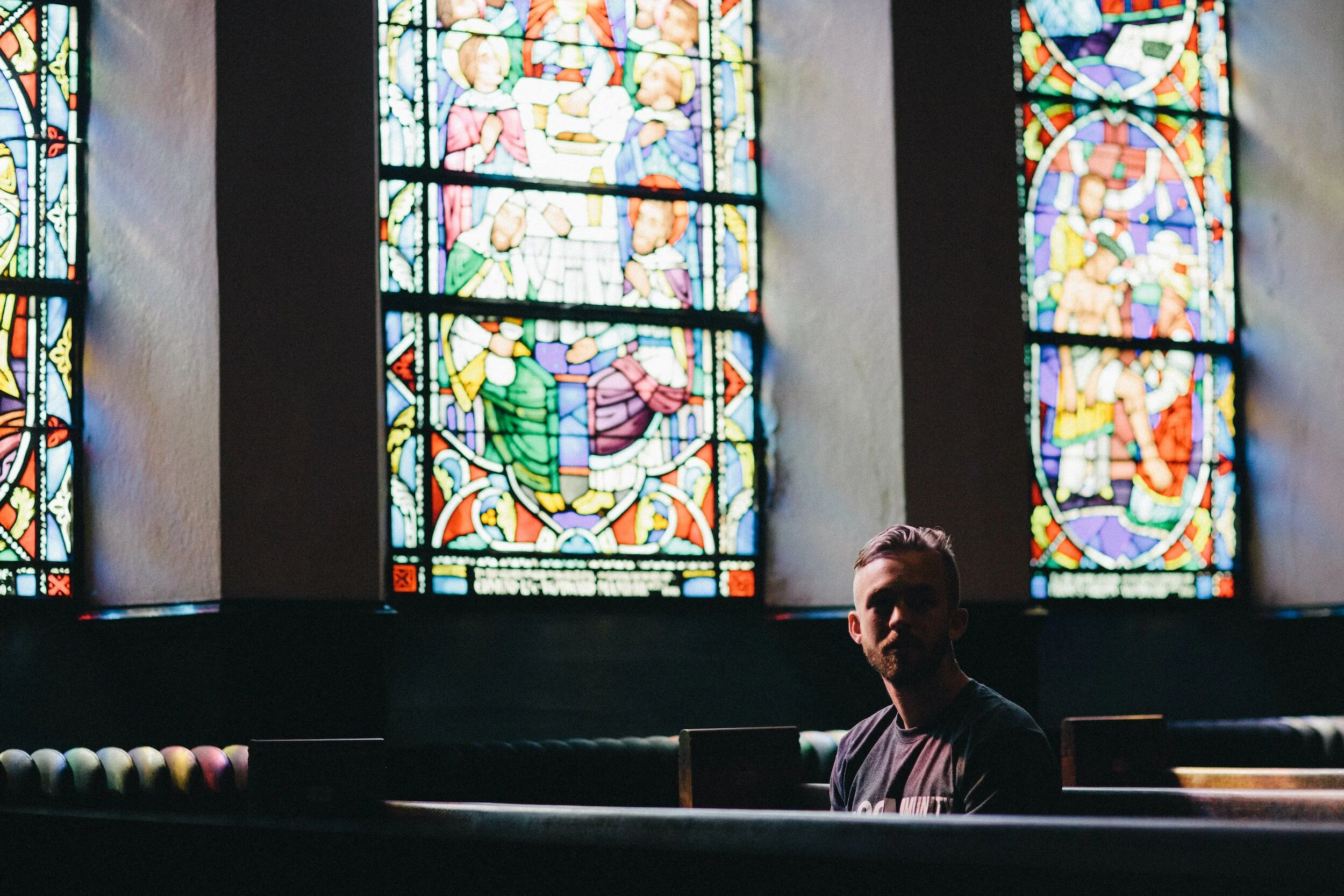
Was that a visitor? - Parker Webster
How do outsiders feel in our assemblies? A new assembly and a new type of worship is intimidating. Do we realize our visitors have taken a great step of courage to walk into worship?
(This was an article posted on Facebook, used with permission - title given by TGOC)
Was that a visitor?
How do outsiders feel in our assemblies? A new assembly and a new type of worship is intimidating. Do we realize our visitors have taken a great step of courage to walk into worship?
One of the worst things we can do to that shocked, newly challenged visitor is to ignore their presence. Many will leave in a daze having experienced a new way to serve God while not making any personal connections.
About a week ago, I learned a much needed lesson. I was a visitor. I knew what to expect from the worship and teaching. However, on this occasion my family was COMPLETELY ignored. This wasn’t some back row dash after worship. We sat near the front, took notes, and all sang out. Not a word spoken, not even a handshake. We were all very discouraged.
My family will be fine—we have amazing church families back home, we are saved, and we are deeply connected to the work of the Kingdom.
What about that visitor? What will they think? How will they feel? Will they ever darken the doors again?
We may only have one shot. Get out of your comfort zone. Don’t just stare, go speak to them. Don’t just thank them for coming, ask them about their life. Sit back and listen. Let the love of Jesus shine through you. (Col. 3:15)

What Must I do to be Saved? {Part 4} - Ben Bailey
The fourth step in God’s plan of salvation is confession. The Apostle Paul reminded the Roman Christians that “with the heart, one believes unto righteousness, and with the mouth, confession is made unto salvation” (Rom. 10:10). From this text it is evident that confession is an important part of the plan of salvation. Let’s take just a moment to see exactly what the Bible teaches about confession.
What Must I do to be Saved? {Part 4}
The fourth step in God’s plan of salvation is confession. The Apostle Paul reminded the Roman Christians that “with the heart, one believes unto righteousness, and with the mouth, confession is made unto salvation” (Rom. 10:10). From this text it is evident that confession is an important part of the plan of salvation. Let’s take just a moment to see exactly what the Bible teaches about confession.
A Confession of Faith in Christ. When one confesses that Jesus is the Christ, he is confessing his faith in the Son of God to save him (Acts 8:36-37). A true follower of Christ will not be ashamed to be called a Christian in any situation. Paul said, “I am not ashamed of the gospel of Christ…” (Rom. 1:16). When we confess our faith in Christ, it is a faithfulness we will never deny even if our life is at stake (Rev. 2:10). During the first century Christians often faced death by affirming their faith in Christ. One such story is that of Polycarp. Polycarp was taken before the Roman counsel and asked to deny faith in Christ. With great boldness Polycarp looked at the counsel that held his life in their hands and responded, “For Eighty and six years my Lord has not denied me, how can I then deny Him?” How great it would be if all Christians made the great confession with this much conviction!
A Confession of Faithfulness to Christ. An individual’s confession of Christ also means that he is willing to faithfully follow the Lord every day of his life. Jesus said, "Therefore whoever confesses Me before men, him I will also confess before My Father who is in heaven. But whoever denies Me before men, him I will also deny before My Father who is in heaven” (Mt. 10:32-33). The confession Jesus is speaking of here is not just simply naming the name of Christ. Jesus had already told many of these people that just simply saying “Lord” would not save anyone (Luke 6:46; Mt. 7:21). In this text, Jesus is talking about a confession of faith in Him through one’s actions. When I confess Jesus is the Son of God, I am confessing to follow him faithfully all the days of my life. Confession is more than a one-time act, it is a continual walk in the steps of the Savior (1 Peter 2:21).
Like the Ethiopian Eunuch may we have the courage to say, "I Believe Jesus is the Christ the Son of the Living God" and back that up by the way we live faithful to Him (Acts 8:36-37). Stay tuned to our next post, as we discuss the next step in God's Plan of Salvation: Baptism.
To learn more about the complete Plan of Salvation check out this video:

Don't ever give up! - Joey Ferrell
In life, we all face some pretty tall mountains. There are hardships in family, detriment in finances, work may change for us in a moment’s notice. Health may turn south in the least appropriate times (if there ever is one). But…as a Christian, I know that I have hope!
In life, we all face some pretty tall mountains. There are hardships in family, detriment in finances, work may change for us in a moment’s notice. Health may turn south in the least appropriate times (if there ever is one). But…as a Christian, I know that I have hope!
I cant help but think about some of our brothers and sisters in the Bible who faced some pretty serious challenges. Think about Job. Consider Paul. How about Ruth. Elijah. The list can go on and on.
The biggest challenges that can ever be put before us, the largest “holes” in our lives, the most devastating of devastation can come…and we STILL have God on our side!
Faithful Christians have hope. We can know that the trials of this life are only temporary, even if they are unto death. What is the answer to these feelings of despair sometimes? Well, consider a few verses with me as we think about the encouragement we can have through the inspired words of the Holy Spirit:
But those who wait on the Lord
Shall renew their strength;
They shall mount up with wings like eagles,
They shall run and not be weary,
They shall walk and not faint.Now may the God of hope fill you with all joy and peace in believing, that you may abound in hope by the power of the Holy Spirit.
And not only that, but we also glory in tribulations, knowing that tribulation produces perseverance; and perseverance, character; and character, hope.
You are my hiding place and my shield;
I hope in Your word.Be of good courage,
And He shall strengthen your heart,
All you who hope in the Lord.
This list of verses could go on and on. As a Christian, we can have our hearts eased, our minds rested, and our souls satisfied that God will “always have our back.”
I will close with just one additional verse that gives me a lot of hope, and I hope that it will you too:
Now to Him who is able to do exceedingly abundantly above all that we ask or think, according to the power that works in us, to Him be glory in the church by Christ Jesus to all generations, forever and ever. Amen.
Ephesians 3:20-21