

The Company You Keep - Amy Lawrence
In psychology, it is known as the Chameleon Effect; the human tendency to mimic those around us spontaneously. I wanted to be part of the group, the “cool” kids’ circle. To be regarded as worth knowing like they were was, to me, worth sacrificing the pieces of myself that were keeping me out of that social circle. Margaret Mitchell once wrote, “It’s hard to salvage jettisoned cargo and, if it is retrieved, it’s usually irreparably damaged. And I fear that when you can afford to fish up the honor and virtue and kindness you’ve thrown overboard, you’ll find they have suffered a sea change and not, I fear, into something rich and strange. ” There are some pieces of ourselves that should be discarded, but I have found that when trying to fit in, I am usually discarding the pieces I need to hang on to in order to be successfully good in the future and hanging on to the pieces that keep me from that future. I turned into this person that fits in, but at what price?
The Company You Keep
A Study on Fellowship of the Saints
In psychology, it is known as the Chameleon Effect; the human tendency to mimic those around us spontaneously. I wanted to be part of the group, the “cool” kids’ circle. To be regarded as worth knowing like they were was, to me, worth sacrificing the pieces of myself that were keeping me out of that social circle. Margaret Mitchell once wrote, “It’s hard to salvage jettisoned cargo and, if it is retrieved, it’s usually irreparably damaged. And I fear that when you can afford to fish up the honor and virtue and kindness you’ve thrown overboard, you’ll find they have suffered a sea change and not, I fear, into something rich and strange. ” There are some pieces of ourselves that should be discarded, but I have found that when trying to fit in, I am usually discarding the pieces I need to hang on to in order to be successfully good in the future and hanging on to the pieces that keep me from that future. I turned into this person that fits in, but at what price?
We are social creatures. God created us as such. We seek connection, no matter who we are. I’d like to say there are set rules to how we seek out others, but as it goes, both sameness and opposite attracts. We change in accordance with our social circle because once we find our circle, we make every attempt to become and remain a part of it. Not all change is bad. Changes that we make to our personality and behavior that are in a progressive direction to being a better person are good. Some circles promote this good. Consider the church. One of the vital attributes of the church is the good it cultivates in us, the love that we have for the attitude and behavior that is taught in God’s word - a connection we have together as God’s people. We all conform to the same source of righteousness, the only source that is righteousness: the Word of God, Rom. 1:16-17. That’s unity. Anyone wishing to be a part of the church of Christ will do the things that bring them into the family of Christ. Nothing can be more worth time and effort than this because we will not find a better group of people to which we can belong. This power of unity between God’s people is shown throughout scripture. Solomon wrote, “Though one may be overpowered by another, two can withstand him; and a threefold cord is not quickly broken.” (Ecc. 4:12) Paul wrote, “Fulfill my joy by being like-minded, having the same love, being of one accord, of one mind.” (Phil. 2:2) The church is a united group of people that build each other up, support one another, bear one another’s burdens, keep each other on the straight and narrow. We do this by conforming ourselves to God’s word, Rom. 12:1-2.
Not all changes we make to fit in are good, though. We know the old adage “Be careful of the company you keep.” When I was in high school, I spent a great deal of quality time with other teenagers that encouraged bad behavior. Instead of being the example of good behavior among them, I became as they were - to my deep regret. There were many things I refused to do, but there were also many things I participated in that made me just as guilty. James wrote, “Whoever keeps the whole law, and yet stumbles in one point, he is guilty of all.” (James 2:10) We have this habit of thinking we aren’t as bad as others because we don’t do all the bad things they do. We forget that we are all sinners, Rom. 3:23. The problem, though, isn’t just in the actions themselves. An action starts as a thought, Gen. 6:5. I came to realize their way of thinking became my way of thinking and I was undoubtedly one of them. I had allowed myself to become a person Satan was proud to see. When we allow Satan to win our mind, we become a tool in his hands, Lk. 22:31-32; 54-62 (Peter), Lk. 22:1-6, Jn. 13:2 (Judas), 2 Tim. 2:22-26 (Christians). It’s much easier to convince ourselves to choose the Devil when everyone around us is choosing him. Yes, Jesus sat with sinners. He didn’t sin with sinners. And the thing is, we’re not Jesus, Heb. 4:14-15. Does that mean we cannot spend time with anyone outside of the church? No, but we’ve got to be smart about it. If you’ll notice, Jesus and His apostles sat with the tax collectors and sinners, Mt. 9:10, Mk. 2:15. A group of good Christians fighting the Devil is less susceptible than a lone Christian. We are still required to try and reach the lost, Mk. 2:17, Mt. 28:19-20, and we cannot do that unless we go to the lost.
There will be situations, however, when we will find ourselves a lonely sheep among wolves. We will feel pressure to fit in, just for the sake of not being the only one in the crowd not following the crowd. God promises He will never leave us nor forsake us, Heb. 13:5, and so we are never really alone. Consider the position David was in when he faced Goliath. David was a boy having to lift his chin to look into the eyes of this giant he was about to kill, by himself. But was David by himself ? Remember the words of David when you face the Devil, 1 Sam. 17:45-47.
Grouping together as Christians is the better option, for many reasons. The Hebrew writer tells us that fellowship with the saints stirs up love and good works, Heb. 10:24-25. There is also strength in numbers, Ecc. 4:9-12. We’re less likely to be devoured as a group, 1 Pet. 5:8. But what if a congregation of God’s people is just as corrupt as the fellowship the world offers? Jesus addressed this problem with the Pharisees, Jn.
12:42-43, and Paul with the Corinthians, 1 Cor. 11:17-19. Five of the seven churches of Asia received rebuke and warning from Christ, Rev. 2-3. All of the above had to be told where the problem was; each problem was rooted in a stepping away from God’s word. Some made the necessary changes. Some did not. Doing things our way instead of God’s way breeds all sorts of issues, and it certainly doesn’t stir up love and good works. Instead, it stirs up strife, envy, hatred, dishonesty, covetousness, and such like, Gal. 5:13-26. Just as poison is to the human body, so is selfishness to the body of Christ. The antidote? “Let this mind be in you, which was also in Christ Jesus.” Read Philippians 2. We must think selflessly, just as Christ did. If you’re going to be part of a group of people, let it be those that build one another up - not tear one another down. Congregations that look to the Word of God can return to being a congregation of brethren and not one of enemies. There is a love that should exist between fellow Christians that begins and ends with God, Phil. 2:1-4. When we have a love for one another that is God-approved, a selfless love, the church can work as God intended.
Those of us that are Christians sometimes forget that the outside world doesn’t know what we know about the church. The church is home. (Many times in scripture, the church actually met in someone’s house, Acts 16:40, Rom. 16:3-5.) It is a place we can go to be with like- minded people that say and do things that do not make us feel we have to always be on our guard against sin. We, as a family, meet several times a week, primarily on the first day of the week, Acts 20:7. Our relationships with our brothers and sisters in Christ are like no other. We all have the same love for God, His law, and each other, Jn. 13:35. This is one of many reasons why we share the good news about the church. It’s because you will not find a circle like this anywhere else. We take care of each other, Phil. 2:4, Gal. 6:9-10. We keep each other in check, Gal. 6:1, James
5:19-20. We understand that there is an order to things, and when it’s God’s order, there is none better, Rom. 11:33-36, 1 Cor. 1:25;14:33,40. It is a sad state of affairs when one of our own forsakes the assembly. We want as many as possible to become a part of the church, 1
Tim. 2:1-4, but it is both dismaying and discouraging to see someone who is already a part of the church choose the cares and desires of this life over gathering with the saints. Well, Amy, you can’t judge a person’s heart on whether or not they are at services, you might say. You are correct. Only God and you can know your heart, 1 Sam 16:7. But what about actions? Can we judge those? Paul wrote that Christians will “judge the world”, 1 Cor. 6:2. When Christ taught in the temple, He said, “Judge not according to appearance, but judge righteous judgement.” (Jn. 7:24) There is a right way to judge and a wrong way to judge. Jesus, in His sermon on the mount, told His audience that “by their fruits” you can know a person, Mt. 7:16-20.
So let’s talk about some of those fruits…
Yes, there will be times and circumstances that will disallow some to be at every service. From illness to car trouble, life is unpredictable. There have been moments I have seen certain actions and mistook those actions for intentional forsaking of fellowship only to find I could have saved myself a lot of trouble if I had just asked, Mt. 18:15. Caring for a loved one at home. Lack of transportation. The necessity of a job on Sunday mornings to put food on the table. So many honest reasons can impede one’s ability to meet with the saints every service. (This is one reason why most congregations I have worshipped with have more than one service on Sundays.) I have learned to ask, Mt. 7:7. We are also commanded to bear with one another, Rom. 15:1, and be gentle with one another, Phil. 4:5. Jumping to the conclusion that anyone who misses services is doing so for sinful purposes denotes a lack of trust in one another. Our approach should be “innocent until proven guilty”. Once the truth of the matter is found, what is to be done if they are actually forsaking the assembly for reasons that are not honest reasons? Some stay home for worship services because they fear getting sick - but are seen at stores, restaurants, and such like where they are just as (if not more) likely to get sick. Staying out of church because you’re sick but showing up to work the next day begs the question, why too sick for God but not too sick for work? Some consider that a vacation from work includes a vacation from God. What if God took a vacation from us? That is frightful just in imagination. Some stay up late on Saturday night playing video games or in some other fun activity and decide they’d rather sleep in than go to morning services. It’s “too early” for their liking and they only attend evening services. They prioritize fun over God. Yes, many of us have to get up very early in the mornings, but is skipping the last fifteen minutes of service on Sunday or Wednesday night really making a difference in how your Monday or Thursday goes? Trading a chance to spend quality time with Christians for convenience, bad planning, or personal frivolities is not a fair trade. If you prefer these over fellowship, then you won’t like Heaven. We can talk all day long about those that can’t be at worship but want to be so badly and those that can find every excuse not to gather with the saints. Do you know what it does to Christian morale when those that call themselves one of us would rather be elsewhere than with us? I’ve seen first-hand people that are so tired from working two jobs to provide for their family that they can barely hold their song book to read the lyrics - and still show up every time the church building doors are open, because they love seeing their brethren and worshipping God. I’ve also seen people that would rather travel hours and sit in the cold to be at a football game than be at services in a climate-controlled building five minutes down the road. “For where your treasure is, there will your heart be also.” (Mt. 6:21) It’s all about what we rate as important. Too many put God at the bottom of their list. His name is what gets discarded when their list runs out of room. For Christians, God isn’t just at the top of our list. He’s the paper upon which our list is written. Let’s also remember what the Bible has to say about it. “And you shall love the Lord your God with all your heart, with all your soul, with all your mind, and with all
your strength.’ This is the first commandment.” (Mk. 12:30) Those that have a heart that wants to please God because that heart loves God will make every effort to do the things that God commands. He commands fellowship, Heb. 10:19-25. He does that for US. We are bombarded by Satan so much throughout the week, we should look forward to each time we can meet with our brothers and sisters in Christ, to be reminded that this life is not the permanent one and that these are the people with whom we will share Heaven. Don’t forget Who will decide whether or not Heaven is our home, Mt. 10:32-33. He will know who decided to be at the assembly and who decided to be at the Super Bowl. We as brothers and sisters in Christ are responsible for keeping one another in mind of how important it is for us to stick together. We must also do so according to scripture, Mt. 18:15-17. The way we handle things is just as important as the why we handle things. We are commanded to “speak with grace, seasoned with salt” when we talk with each other, Col. 4:6. Remember Abraham’s words to his nephew, Lot: “Please let there be no strife between you and me, and between my herdsmen and your herdsmen; for we are brethren.” (Gen. 13:8) We as Christians represent Christ; we are ambassadors of the Kingdom known as the church, 2 Cor. 5:20. To be a faithful ambassador, Prov. 13:17, we must give an accurate representation of Christ. When we handle tough situations between brethren as Christ would, delicately and in love, then we are being faithful ambassadors, 1 Jn. 2:10. Our words can plant gardens or burn down forests. Only one of those options will benefit the church. “Be swift to hear, slow to speak, and slow to wrath.” (James 1:19).
It matters those whom you let in as your circle. We feed off of each other; some symbiotically, others carnivorously. In many, many circles, selfish ambition is what matters. People that are willing to use others as stepping stones seek out such groups. They put their own success above all else. There are also circles that seek out the success of the circle itself at any cost. Cliques will include only those that fit. In this, they give up the ability to benefit from diversity. Without diversity, they cannot accomplish anything outside their limited spectrum of talents. Then you have a collection of individuals that are morally united and dedicated to helping each other. Now look at the church: millions of people with different backgrounds, experiences, and talents, selflessly dedicating themselves to helping one another reach Heaven and spreading the gospel of Christ to the world as a successful, peaceful assembly of humans. When you have this unity, there is peace - but this peace isn’t just the absence of conflict. It is also the presence of justice. We are the children of the mighty, loving, just, ubiquitous God, 1 Jn. 3:1, Nahum 1:3. He has set the standard, Mt. 7:21. As long as we follow that standard, we are and will remain the faithful church Christ established, 2 Tim. 2:24-26. Stepping away from that standard, however, comes with dire consequences, 2 Thess. 1:5-6.
There are congregations of the Lord’s church that have all the types of circles. When an outsider becomes interested in knowing more about the church, do we present the church for which Christ died, or do we show them a man-made cluster of divided people? If the latter, we will answer for scaring away prospective Christians, or worse, leading the lost down an even more lost path. “But whoso shall offend one of these little ones which believe in me, it were better for him that a millstone were hanged about his neck, and that he were drowned in the depth of the sea.” (Mt. 18:6)
This world is full of souls - some found, but most lost. We as the church are to be a beacon, Mt. 5:14-16, guiding the lost. The more sparks we add to the light, the brighter the beam. If you are looking for a place to belong, I can tell you of the kingdom that surpasses the abilities of mankind to fulfill the need to a part of something magnificent. It is so precious, it was bought with blood, Acts 20:28. Its King is unbeatable, 1 Tim. 1:17. The bond between the members of this kingdom is forged in love, Jn. 13:35. You won’t find Easy Street in this kingdom - at least not while it’s here on Earth, 1 Cor. 15:58, 2 Cor. 5:9, 2 Tim. 3:12, but many hands make light work, Ecc. 4:9, and the reward is beyond words, 2 Cor. 12:1-4, Mt. 11:28-30. I invite you to come and be a part of the fellowship with the saints at any faithful congregation of the church of Christ. I will leave you with the words of Christ: “And the Spirit and the bride say, Come. And let him that heareth say, Come. And let him that is athirst come. And whosoever will, let him take the water of life freely.” (Rev. 22:17)

God Never Changes! - Ben Bailey
“Of old you laid the foundation of the earth, and the heavens are the work of your hands.
They will perish, but you will remain; they will all wear out like a garment. You will change them like a robe, and they will pass away, but you are the same, and your years have no end” (Ps. 102: 25-27).
“Jesus Christ is the same yesterday and today and forever” (Hebrews 13:8).
The world we live in is filled with constant change and never-ending updates.
“Of old you laid the foundation of the earth, and the heavens are the work of your hands.
They will perish, but you will remain; they will all wear out like a garment. You will change them like a robe, and they will pass away, but you are the same, and your years have no end” (Ps. 102: 25-27).
“Jesus Christ is the same yesterday and today and forever” (Hebrews 13:8).
The world we live in is filled with constant change and never-ending updates. The moment you buy a new computer or phone there is a better one out. The first time you turn on your new computer there are multiple new updates that must be installed. At an annoying rate, things are constantly changing in our fast-paced world. Amid all this change, there is some really good news—God Never Changes. The unchanging God is our Rock we can always trust in to be exactly the same—no updates, no newer models or additions…just the same all the time. To a Christian, this should be really encouraging news!
The Psalmist reminds us of the eternal and unchanging nature of God when he contrasts the creation with the Creator. The Psalmist uses a vivid illustration to help us understand this point. Doesn’t everyone like having a new outfit to wear every now and then? How long does that new outfit stay “new”? Not very long. You can buy a new pair of jeans, wear them and wash them a few times and before you know it they are faded with holes in them! Clothes just don’t stay new looking very long. God is not that way. The Psalmist says, “…you are the same and your years have no end” (Ps. 102:27). When I think about this idea it fortifies my faith and trust in Almighty God!
Along with the fact that God never changes is the wonderful idea that our Savior does not change either. Remember, Jesus Christ is the same yesterday and today and forever (Heb. 13:8). One of the things that teach us is that God’s plan in Christ Jesus is not going to be amended or abrogated. From the moment I first trust in Jesus to the moment I draw my last breath, He will be my Savior who I can always lean upon. He will never leave you nor forsake you so that you may boldly say, “The Lord is my helper, I will not fear, what can man do to me?” (Heb. 13:5-7). The Christian can find great confidence in the solid nature of Jesus Christ!
As each of us moves through different phases of our lives and as we look at how the world has changed so drastically in just the last couple of years, we can each find solace in the fact that God never changes. The same God people prayed to and put their confidence in for salvation in the 1st century, is the same God we put our hope and faith in today. May God help us to continue to be faithful to him until death so that we can have the crown of life (Rev. 2:10)!

Keeping Focus - Jamie Oliver
But Jesus said to him, “No one, having put his hand to the plow, and looking back is fit for the kingdom of God”. Not many have had the experience of plowing a field today unless they grew up on a farm. Have you ever passed a field and wondered how they made the lines so straight? A point must be found ahead of you, and you must focus on that point all the way from the start of the row to the end of the row. If you turn even slightly to one side your line is going to get off. Christ is telling us we must focus on Him; we can’t let the world divert our focus.
But Jesus said to him, “No one, having put his hand to the plow, and looking back is fit for the kingdom of God”. Not many have had the experience of plowing a field today unless they grew up on a farm. Have you ever passed a field and wondered how they made the lines so straight? A point must be found ahead of you, and you must focus on that point all the way from the start of the row to the end of the row. If you turn even slightly to one side your line is going to get off. Christ is telling us we must focus on Him; we can’t let the world divert our focus.
We see in Genesis 19:1 and 12-16 two angels came to speak to Lot to warn him of the destruction that was coming to the city. He was warned to flee the city with his family and to not look back. Their focus was reaching the city outside of the plain, but Lot’s wife faltered, looked back, and turned into a pillar of salt (Genesis 19:23-26). This was such an important lesson he returns to it when speaking to his disciples in Luke 17:32 to “Remember Lot’s wife”. He is telling them they have started this work and not to look back now, there is more to look forward to. We don’t know when He will return and if we are caught looking back instead of looking for Him, we will miss Him. Just like the five foolish virgins in Matthew 25:1-13, we must be prepared for His coming. Those five who were not prepared came back and cried to be let in, but He told them He did not know them. In Matthew 7:21 “Not everyone who says to Me. ‘Lord, Lord, ‘ shall enter the kingdom of heaven, but he who does the will of My Father in heaven.” How do we know what His will is? Solomon spent his life trying everything under the sun and compared it to trying to catch the wind and vanity. He sums it up well in Ecclesiastes 12:13 “Let us hear the whole conclusion of the matter: Fear God and keep His commandments, for this is man’s all.”
Jesus also tells us to watch what we put value in as we see in Matthew 6:20-21 “but lay up for yourselves treasures in heaven, where neither moth nor rust destroys and where thieves do not break in and steal. For where your treasure is, there your heart will be also.” We can’t have the best of both worlds, just like the church of the Laodiceans who were lukewarm, neither hot nor cold and were spewed out. God wants our focus; he doesn’t want us to be divided between Him and the world. We must choose a side.
Let’s look back to some biblical examples of choosing a side:
In Genesis 22:1-14 we read about Abraham choosing to focus on God’s promise given to him in Genesis 12:1-3. Abraham knew even if God had to raise Isaac from the dead (Hebrews 11:17-19), He would fulfill His promise of making him a great nation from his seed.
Israel flops back and forth all throughout the Old Testament between God and idol worship. We see Joshua’s strength as he stands up to Israel and tells them to make a choice. “…but as for me and my house, we will serve the Lord.”
I love the story of Elijah and the prophets of Baal in I Kings 18:19-39. Elijah did not allow his focus waiver from God, but the people did. He asks them in verse 21 how long they were going to falter between two opinions. The choice of the true God was obvious as we see in verse 39.
In John 12:42-43 we see even some among the rulers believed in Jesus, but “they loved the praise of men more than the praise of God.”
Ananias and Sapphira wanted to appear as all in for God but wanted to keep some back for themselves. (Acts 5:1-11)
So often we can get discouraged when we lose our focus on God and find ourselves on the wrong side of the fence. Thankfully God offers us opportunities to either come to him for the first time as we repent of sins, confess the name of Jesus and that He is the true son of God, and are baptized for the remission of our sins or we can come back to Him after we have strayed just like the father looked for the return of the prodigal son in Acts 15:11-25. We need to surround ourselves with those who can influence us for the good and will help us in keeping ourselves focused on His word. John warns us in I John 2:15-17 about loving the world. We need to find things of God to fill ourselves up with. Our focus can remain true with spending time in His word, with His church, and with Him in prayer.

Are the Titles ‘Pastor’ or ‘Priest’ Biblical? - Ben Bailey
Often we hear religious leaders referred to as “pastor” or “priest”. Are these biblical names that should be applied to the religious leader today? Is it right for a man to wear these names? Let’s examine what God has to say on the matter.
Often we hear religious leaders referred to as “pastor” or “priest”. Are these biblical names that should be applied to the religious leader today? Is it right for a man to wear these names? Let’s examine what God has to say on the matter.
Should a religious leader be referred to as “Pastor”? In the New Testament, the word pastor is used exclusively of the work and office of an elder. For example, the word for pastor/shepherd is found in Acts 20:28 and 1 Peter 5:2-4. In both cases, it is used to describe the work and office of overseers. The New Testament church did not have a single “pastor” because it is not authorized in the Bible. In every case where shepherds or pastors are spoken of it is always a plurality of men (1 Peter 5:1; Acts 20:17). In the New Testament, there is not one case of a single “pastor” ruling the church. In fact, the one case we have of a man trying to rule the church by himself is condemned by God (see 2 John 9-10). A common misconception many have is the preacher is the pastor. Dear friend, this is not a biblical concept. Nowhere in the Bible will you find the preacher referred to as the pastor. In fact, most of them could not be a pastor because they do not meet the qualifications for a pastor/elder found in 1 Timothy 3. The churches of Christ do not have a head pastor because it is not authorized in the Bible (Col. 3:17). However, we do have pastors or elders as used in the biblical sense of men shepherding the church of God (Acts 20:28).
Should any religious leader wear the title of “Priest” or “Father”? In the New Testament, Jesus is our High Priest who made one sacrifice forever for sins (Heb. 3:1; 8:1; 10:12). The purpose of the priest under the Law of Moses was to make sacrifices to God for the people’s sins (Lev. 1-5). However, the New Testament teaches that we are no longer under the Old Law (Col. 2:14). Jesus Christ, as our High Priest, offered himself to God as sacrifice (Heb. 9:14). Churches of Christ do have a High Priest, Jesus Christ Himself. Since Jesus is our High Priest, and He has made one sacrifice for sins forever, why do some denominations still have men as priests? Where is the biblical authority for having priests? There is none. In fact, the Scripture says, “Call no man father” (Mt. 23:9).
These clear teachings of Scripture illustrate for us the need to go back to the Bible and study the Scriptures. It teaches us that we must not believe what we have always heard. Instead, we must search the Scriptures for ourselves. --Ben Bailey

Should Christian Teens Dance? - Amy Lawrence
As a teenager, I was pressured severely concerning the senior Prom. I had friends, peers, and a boyfriend who was going. My friends assumed my decision to not go was based on domineering parents who disallowed it. They offered to help me sneak out of the house and get me ready at a friend’s house. My peers assumed I just couldn’t dance. My boyfriend continually reminded me that he would be the only guy there that didn’t bring his girlfriend. How would that look? My parents were in part responsible for my decision, but not because they were cruel and demanded that I commit social suicide. Their part resided solely on the Christian education they had given me up to that point. That begs the question: how would a Christian education affect my decision concerning the Prom?
As a teenager, I was pressured severely concerning the senior Prom. I had friends, peers, and a boyfriend who was going. My friends assumed my decision to not go was based on domineering parents who disallowed it. They offered to help me sneak out of the house and get me ready at a friend’s house. My peers assumed I just couldn’t dance. My boyfriend continually reminded me that he would be the only guy there that didn’t bring his girlfriend. How would that look? My parents were in part responsible for my decision, but not because they were cruel and demanded that I commit social suicide. Their part resided solely on the Christian education they had given me up to that point. That begs the question: how would a Christian education affect my decision concerning the Prom?
Let’s start with the basics:
What is the Prom? The term “Prom” is an abbreviation for “promenade”. The Merriam-Webster dictionary defines “promenade” as: “to take or go on a promenade, to walk about, in, or on.” It is synonymous with “parade”. The idea behind the word itself is the action of purposely displaying oneself to others. Putting oneself before an audience is not wrong in and of itself. It’s what we’re doing that is making people look that determines the morality of the situation. The gentlemen wear a tux, the young ladies wear a beautiful dress and spend quality time and money making their hair and features more beautiful than ever. The entire point of these things is to be seen, to “promenade”.
What does one do at the Prom? They get all gussied up to just...stand around and talk? No. The most prominent feature of a senior Prom is the dancing.
I. What is so wrong with dancing?
Let’s look at some world views...
- In an article published by the Sydney Morning Herald, December of 2005, Alok Jha of London wrote, “It’s true; dancing does lead to sex.” His article addressed the scientific approach to explaining why dancing was sexually appealing. “Charles Darwin was the first to suggest that dance was a courtship signal in animals, but there had been no studies of the relation of dance and genetic or physical quality in humans until now,” he continued.
“Scientists have confirmed what fans of John Travolta in Saturday Night Fever have known all along: men with the best dance moves have the most sex appeal.”
-A more recent article written by Kristen Sollee in February of 2017 titled “4 Study-based Links Between Dancing and Sex” used scientific evidence to come to conclusions about the correlation between dancing and sexual lust. She wrote, “A new study published in Scientific Reports asked subjects to analyze and rate different digital avatars that were mapped from the dance moves of real women. Both male and female raters judged dancing with greater hip swinging as more attractive, as well as moves that incorporated asymmetric thigh movements and intermediate levels of asymmetric arm movements.” She also mentioned a study cited in Psychology Today that addressed how women danced differently based on the changes of hormones before and after their menstrual cycle. The article further addressed how women view dancing men. “You can tell a lot about a potential lover from the way they dance. According to a survey of 2,000 women by The Daily Mail, 80 percent said they experienced a direct correlation between a man's performance in the club and in the bedroom.“
- According to Dr. Peter Lovatt, a renowned dance psychologist, men with higher testosterone levels dance differently. Men with lower levels favor smaller movements, but men with higher levels of testosterone dance with more vigorous, flashy movements.
- Famous Paris fashion designer Christian Dior once admitted in an interview: “For the first time, I have done away with corsets even for dance dresses. I have often heard men complain that in dancing they could not feel a living form under women’s corsets.”
-Louis Guyon, once a proprietor of Paradise, a Chicago dance hall, said, “In over thirty years in this business I have come to the strong conclusion that dancing is just the beginning of other evils. Sex being the one most often led to, and I believe that this is what makes dancing nviting...thousands of boys and girls dancing in this very way who do not realize they are doing anything out of the way, and whose fool parents look on complacently.”
No matter the innocence one claims, dancing is documented by both the world as well as scripture as an intimate action.
II. What does the BIble have to say about…?
1.) dancing
2.) two people of the opposite sex being within such proximity to one another
-Let’s not forget John the Baptist’s beheading. Herod Antipas, the son of Herod the Great and brother of Herod Phillip I, watched his niece (Josephus calls her Salome, daughter of his brother Herod Phillip I and Herodias) dance in view of everyone at his birthday party. He enjoyed it so much that he was willing to give her whatever she asked, up to “half the kingdom”. (Many suggest that Herod was drunk, and it is likely, but the context only tells us that he held a feast for the nobles and prominent men of Galilee, Mark 6:14-29. Mark wrote that it didn’t just please Herod, but also the others who sat with him, vs. 22.) What would move Herod to make an oath to this young woman to give her anything she asked? Lust can make a man do funny things.
-The Bible uses a word to describe situations such as the Prom; places where there is loud music, dancing, and maybe even the occasional spiked punch. The original Greek word is κῶμος (komos), “revelry”. Even hundreds of years ago, they had parties with dancing, loud music, and drinking. It was trouble then and it is trouble now. No sane person dips their toes in shark-infested waters and thinks they won’t get bitten. No sane Christian walks straight into the devil’s snares with their eyes wide open and expects not to get caught. We cannot be ignorant of his devices, 2 Cor. 2:11.
-Consider the Proverb of the seductress. Proverbs 6 and 7 warn of a woman who has a talent for seduction. Not all women are out to ensnare men, but let’s look at the means by which this woman catches what the writer calls a “young man devoid of understanding” (Prov. 7:7.):
>. A flattering tongue
>. Lustful beauty
>. Mannerisms/attire of a harlot
>. Enticing speech
Let us equally consider the young man. He:
>. Took the path to her house. He chose to be in a place where he knew temptation would be found.
>. Was in the wrong place, at the wrong time - in the twilight, evening, black and dark night. The setting itself denotes a desire to find trouble.
>. He had a heart that was easily snagged.
All of the above is a recipe for disaster. That’s a bit drastic, Amy, you might say, calling young women harlots when it’s completely innocent that they only want to dress up and have fun. Just to be clear - I am not calling young women that go to the Prom “harlots”. I am not even suggesting that they think of nothing but sex in reference to the Prom. Do young women engage in activities such as the Prom with their minds focused on sexual encounters? Some do, but most do not. Most young women are excited about the opportunity to dress more fashionably than usual and be doted upon by young men. Do young men engage in activities such as the Prom with their minds focused on sexual encounters? I myself being female cannot with any honesty answer that question from my own perspective…but I do know and have talked with males concerning the subject. They have all stated the same: sex doesn’t start out at the forefront of their mind, but by the end of the evening it is most certainly there. I have had young women give voice to their being offended by the mere suggestion that they become a temptation for young men in situations such as the Prom, as if such suggestions label them as promiscuous. I am doing no such thing. We as females want to be seen as beautiful. Sometimes, though, that desire clouds our judgement. We forget to consider the perspective of the males. Most males will admit that it IS a temptation. We, both males and females, will be judged by the example we set and the influence we portray, Lk. 17:1-5.
The writer of the Proverb uses the phrase, “Can a man take fire into his bosom and his clothes not be burned?” (Prov. 6:27) Paul Southern wrote, “it’s like lighting a fire under a tea kettle and daring the water to boil.” It matters where we are and what we and those around us are doing. Paul wrote to the Corinthians, “…Evil companions corrupt good morals.” (1 Cor. 15:33) Paul wrote to Timothy, “FLEE youthful lusts.” (2 Tim. 2:22) Scripture should matter to every Christian. Its application keeps us out of trouble.
One of the biggest nets Satan uses to catch us are those stages in our childhood society calls “rites of passage”. The Prom is labeled as such a stage. It’s a tradition in a teenager’s transition from school years into adulthood. Many have been called odd (among other things) because they would dare speak against traditions such as the Prom. There is insurmountable peer pressure surrounding the event. (The article “Peer Pressure” is also available to read.) To miss one’s Prom is to “miss a once-in-a-lifetime event”, as they say. To speak against the Prom is to commit social suicide. Most choose to follow the world. Scripture tells us that he that makes himself a friend of the world is the enemy of God, James 4:4. We will never influence the world by trying to be just like it, and the more we look like the world, the less we will be recognized by Christ, Mt. 7:23.
1 John 2:15 “Love not the world, neither the things that are in the world. If any man love the world, the love of the Father is not in him.
1 John 2:16 For all that is in the world, the lust of the flesh, and the lust of the eyes, and the pride of life, is not of the Father, but is of the world.
1 John 2:17 And the world passeth away, and the lust thereof: but he that doeth the will of God abideth for ever.”
There is hope. We can choose Christ. He offers not just a life, but an abundant one, Jn. 10:10. Don’t buy in to the YOLO attitude. You don’t just live once. But how you live this life determines where you end up in the next, Heb. 9:27, 2 Cor. 5:10. Choose Christ.
~Amy Lawrence

Thanksgiving to God - Ben Bailey
“Enter into His gates with thanksgiving, And into His courts with praise. Be thankful to Him, and bless His name. For the LORD is good; His mercy is everlasting, And His truth endures to all generations” (Psalm 100:4-5). With the recent Thanksgiving holiday upon us, many are counting their blessings. But shouldn’t thanksgiving be an everyday event instead of a once a year holiday. To the child of God, everyday is a day of thanksgiving. But, what should we thank God for?
“Enter into His gates with thanksgiving, And into His courts with praise. Be thankful to Him, and bless His name. For the LORD is good; His mercy is everlasting, And His truth endures to all generations” (Psalm 100:4-5). With the recent Thanksgiving holiday upon us, many are counting their blessings. But shouldn’t thanksgiving be an everyday event instead of a once a year holiday. To the child of God, everyday is a day of thanksgiving. But, what should we thank God for?
“…Proclaim with the voice of thanksgiving, And tell of all Your wondrous works” (Psalm 26:7). Christians should be thankful for all that God has done for them. These works would include: God’s love (Rom. 5:6-8), God’s mercy (Lam. 3:21-22), God sacrifice (Isa. 53:10, Matt. 27:46), and God’s salvation (Eph. 2:8-10). Truly, Christians are the most blessed people in the entire world.
“For every creature of God is good, and nothing is to be refused if it is received with thanksgiving; for it is sanctified by the word of God and prayer” (1 Tim. 4:4-5). The Christian should be thankful for the necessities of life that God provides. God is the one who provides all our needs (Phil 4:19). If we are seeking first God’s kingdom and His righteousness, then all else will be provided for us (Matt. 6:33). Aren’t you thankful you don’t have to worry about such things as where your next meal will come from or what clothes you will wear?
“Let us come before His presence with thanksgiving; Let us shout joyfully to Him with psalms” (Psalm 95:2). In this context the psalmist is elated that He can be in the presence of the God of the Universe. Today, we should be thankful that we are able to have a relationship with God. We should be thankful that we can call Him father (Matt. 6:9). We should be grateful that we are part of His family (1 Tim. 3:15). Truly, it is an awesome privilege to have a relationship with Jehovah!
“ Continue earnestly in prayer, being vigilant in it with thanksgiving” (Col. 4:2). May every day of our lives be filled with prayers of thanksgiving to God. If there is a time when we become unthankful, may we stop for just a moment and think about those who are less fortunate than us. “ I will offer to You the sacrifice of thanksgiving, And will call upon the name of the LORD” (Psalm 116:17).

Is There Anything Worth Dying For? - Parker Webster
Propaganda photographer and fashion icon, James Jebbia released a rare set of home decor with the skateboarding brand “Supreme” in December 2017. Jebbia is known by the fashion industry to be a controversial giant. Many of his photos are looked down upon by the art and fashion scene due to political and ethical content. So, when this collection of home decor was released, many designers raised eyebrows. One obscure item of his collection was a welcome mat. Usually placed at a front door, this mat had a picture of a gun with a description reading, “there is nothing here worth dying for.”
Propaganda photographer and fashion icon, James Jebbia released a rare set of home decor with the skateboarding brand “Supreme” in December 2017. Jebbia is known by the fashion industry to be a controversial giant. Many of his photos are looked down upon by the art and fashion scene due to political and ethical content. So, when this collection of home decor was released, many designers raised eyebrows. One obscure item of his collection was a welcome mat. Usually placed at a front door, this mat had a picture of a gun with a description reading, “there is nothing here worth dying for.”
This year, our nation exceeded spending one trillion dollars on electronic devices alone. America has a problem with spending. We are constantly caught up in owning the latest and greatest. We put so much emphasis on earthly possessions that we may forget what our focus should be. Perhaps materialism affects man today more than ever. We have to have the latest apple product and drive the newest car to be “cool.”
Although I rarely ever endorse or agree with anything in the fashion industry, as a Christian, I think Jebbia’s “rug saying” holds SOME truth. If we were to look in the book of Mark we read, “what does it profit if a man if he gains the whole world and forfeits his soul” (Mark 8:36)
Ultimately, there is nothing physical worth dying for. People break their backs and go into debt just to possess the items of this world. The rich young ruler couldn’t follow Jesus because of his great possessions. (Luke 18:18-23) The world was worth dying for to this young man. We need to make sure we are focusing on banking in heaven (Matt. 6:19-20), rather than dying for Wells Fargo.
Johnny Ramsey used to say, "It's all just going to be burned up anyway." With that in mind, ask yourself, “Is there really anything worth dying for?”
Contributed by
Parker Webster
Minister, Carriage Oaks church of Christ
Bossier City, LA

Does the Name Matter? - Ben Bailey
Recently someone told me they thought it didn’t matter what a church called itself as long as they worshipped correctly. Is this true according to the Bible? Could a church called itself any name and be acceptable to God as long as they worship correctly? Let’s consider for a moment why it does matter what the church called itself. In fact, just like worshipping God correctly is essential, going by what the rest of the Bible says about the church is also essential. Notice why this is true.
Does the Name Matter?
Recently someone told me they thought it didn’t matter what a church called itself as long as they worshipped correctly. Is this true according to the Bible? Could a church called itself any name and be acceptable to God as long as they worship correctly? Let’s consider for a moment why it does matter what the church called itself. In fact, just like worshipping God correctly is essential, going by what the rest of the Bible says about the church is also essential. Notice why this is true.
The name of the church is important because the Bible tells us not to add to or take away from God’s Word (Rev. 22:18-19). If the name of a church is not found in the Bible, we would be adding to God’s Word. If the name is found in the Bible and we choose to call it by something not found in the Bible, we would be taking away from it.
The name of the church is important because the Bible specifically tells us not to go beyond what is written (1 Cor. 4:6). If the name of a church is not found in Scripture we are going “beyond what is written.”
The name of the church is important because we are to do everything by the authority of Christ, who is the Head of the church (Col. 3:17; Mt. 28:18; Eph. 1:22-23). Whatever God, Christ or the Holy Spirit referred to the church as is what we should refer to it as.
The name of the church is important because the name we call the church should only bring honor and glory to God, Christ or the Holy Spirit not men (1 Cor. 10:31). If the church is called the church of Mark or Mark’s church, who is that bringing honor to?
The name of the church is important because the Jesus died for and shed His blood for His church (Acts 20:28). The act of Jesus dying on the cross purchased the church. Since it was his blood that paid the price for the church, it should wear His name (Mt. 16:18).
The name of the church is important because the name shows ownership and the Lord as the builder and founder of the church is the only one who has the right to be owner of the church (Mt. 16:13-18).
The name of the church is important because the church is the Bride of Christ and as His bride it should wear His name (Eph. 5:22-31).
The name of the church is important because we are only to speak as the oracles of God (1 Peter 4:11). Here are the names the Bible refers to the church as:
Jesus said, “I will build my church” (Mt. 16:13-18). Thus, it is the church of Jesus or the church of Christ.
It is referred to as the church of the Lord (Acts 20:28).
It is referred to as the church of God in Scripture (1 Cor. 1:1-2; Gal. 1:13)
It is referred to as the church of the Living God (1 Tim. 3:15).
It is referred to as the church of Christ (Rom. 16:16; Gal. 1:22).
It is referred to as the church of the firstborn, which is another name for Jesus (Heb. 12:23; Col. 1:15-19; Rom. 8:29).
The name of the church is important because calling the church by men’s names or denominational names is specifically and explicitly condemned in Scripture (1 Cor. 1:10-13).
Friend, a careful study of the Scripture helps us to see that what we call the church really does matter. We need to call the church by names that are in Scripture and that bring honor and glory to God not men. May God help us to glorify the church Jesus died for in everything we say and do! --Ben Bailey

An Unhealthy Home - Amy Lawrence
In order to come to an understanding of what constitutes an unhealthy home, we must first define a healthy one. God describes the tools needed to establish a healthy home in Ephesians chapters 5-6; how husband and wife should behave toward one another, how children should behave toward parents, and how parents should behave toward children. In Jeremiah chapter 35, Jeremiah tells us of a family known as the Rechabites. God contrasts the disobedience of Judah to the obedience of the sons of Jonadab. Jonadab had taught his sons how to respect authority and be obedient, whether it be toward him or God. God commends Jonadab and his sons, concluding that his household will always have a man that will stand before God. Positive peer pressure. Abraham was given the same commendation (Gen. 18:19). We see in this a healthy home.
An Unhealthy Home
In order to come to an understanding of what constitutes an unhealthy home, we must first define a healthy one. God describes the tools needed to establish a healthy home in Ephesians chapters 5-6; how husband and wife should behave toward one another, how children should behave toward parents, and how parents should behave toward children. In Jeremiah chapter 35, Jeremiah tells us of a family known as the Rechabites. God contrasts the disobedience of Judah to the obedience of the sons of Jonadab. Jonadab had taught his sons how to respect authority and be obedient, whether it be toward him or God. God commends Jonadab and his sons, concluding that his household will always have a man that will stand before God. Abraham was given the same commendation (Gen. 18:19). We see in this a healthy home.
An unhealthy home is created when those in the home do not follow the instructions given to us by God Almighty - whether knowingly or out of ignorance. This creates conflict in the home and an atmosphere for negative influence to become an issue. Let’s look at some Biblical examples of this:
-Eli’s family in the book of 1 Samuel shows how a lack of restraint can do harm (1 Sam. 3:13). Eli’s sons, Hophni and Phinehas, were corrupt. As priests, they had the responsibility God placed upon the descendants of Aaron to uphold the statutes of the sacrifices (Ex. 27-31). Eli was supposed to teach his sons to fear the Lord, but according to 1 Sam. 2:12, they “knew not the Lord”. Hophni and Phinehas, never having been taught to be in submission to their father, had no respect toward Eli. All of Israel suffered because of Eli’s failure to stand up to his sons and rebuke them for their sin.
-The family of Isaac and Rebekah, Jacob and Esau (Gen. 25-27) reveals the kind of turmoil that is found in a family where there is favoritism (Gen. 25:28). Jacob used his brother’s lack of self-control to gain the inheritance that was due his brother (Gen. 25:29-34). The favoritism carried over into Jacob’s family as well. Jacob favored Joseph over his other sons (Gen. 37:3). This created enmity between him and his brethren, and they later sold him into slavery.
-Solomon was warned of what would happen if he chose to marry foreign women (1 Kings 11:1-3). Like so many, Solomon allowed the influence of someone he loved to turn his heart in a direction that took him away from God.
Our spiritual education begins at home, Deut. 6:4-9. It is a place where we should feel the most comfortable, and where the most important stages of our growth happen. But is the soil of your home healthy…or unhealthy? If you answered unhealthy, then look to scripture in how to make it healthy.
-Is there love in your home? 1 Cor. 13
-Is there daily Bible study in your home? 2 Tim. 3:14-15
-Is there order in your home? Eph. 6:1-4
It’s a place to start. When God rules the home, then and only then will you find a healthy home.

The Magnificence of the Christian Covenant - Ben Bailey
“But now He has obtained a more excellent ministry, inasmuch as He is also Mediator of a better covenant, which was established on better promises” (Hebrews 8:6). One of the main points of the book of Hebrews and the New Testament is the Superiority of Christ and the New Covenant. Notice a couple of ways the Book of Hebrews illustrates the Superiority of Christ and Christianity.
The Magnificence of the Christian Covenant
“But now He has obtained a more excellent ministry, inasmuch as He is also Mediator of a better covenant, which was established on better promises” (Hebrews 8:6). One of the main points of the book of Hebrews and the New Testament is the Superiority of Christ and the New Covenant. Notice a couple of ways the Book of Hebrews illustrates the Superiority of Christ and Christianity.
A Better Offering
Under the Old Testament system, the priests were commanded to take offerings of animals and grain (Lev. 1-5). Yet, with these sacrifices, there was the ever-present reminder that they could never take away sin. Of this, the Hebrew writer says, “But in those sacrifices, there is a remembrance again made of sins every year. For it is not possible that the blood of bulls and of goats should take away sins” (Hebrews 10:3-4). The great thing about the priesthood of Christ is His offering is once for all. Of Jesus it is said, “But this man, after he had offered one sacrifice for sins forever, sat down on the right hand of God” (Hebrews 10:12). Imagine what it would have been like to live under the Levitical sacrifice system. If a man sinned (and all did!—Rom. 3:23), he would go out to the field and get a spotless bull from the flock take it to the door of the tabernacle and kill it before the Lord. Then, the priest would slaughter the animal placing its blood on the altar and its entrails as a burnt offering for sin (Lev. 4:1ff). And, if he sinned the next day, the whole process started all over again. How thankful to God we ought to be that Jesus is the once for all sacrifice for sins! Why would anyone want to go back to an inferior system of sacrifice that could never really save?
A Better Priestly Order
It is impossible for Jesus Christ to be a Levitical priest on earth today (Heb. 8:3-4). He does not fit the divine pattern for the Levitical priest. He came from the wrong tribe (Heb. 7:14). His parents were not of the proper genealogy. His priestly service would have begun and ended at a certain age (Heb. 7:3). Thank God Jesus is a High Priest according to a better order. As God said, “You are a priest forever according to the order of Melchizedek” (Ps. 110:4). This order far exceeds the priestly order of Aaron because it is not dependent upon genealogy (7:3), has no beginning or ending point (7:3), and is superior to Levi from its inception (7:1-10). And, since Jesus is of a “better” priestly order the Hebrew writer says, “For the priesthood being changed, of necessity there is also a change of the law” (Heb. 7:12). This idea of a change in the priesthood necessitating a change in the law naturally turns the Hebrew writer’s attention to the “better” covenant.
How wonderful it is to live in the New Testament Age! Friend, have you taken advantage of the great salvation that can only be found in Jesus? If not, you can do so today. You can do so very simply by believing in Jesus as God’s son (John 8:24), repenting of your past sins (Luke 13:1-5), confessing him as Lord (Rom. 10:10; Matt. 10:32-33) and being baptized in water for the remission of your sins (Acts 2:38; Acts 22:16). --Ben Bailey

The Conversion of Saul - Ben Bailey
Toward the end of Paul’s life, he exclaimed “This is a faithful saying and worthy of all acceptance, that Christ Jesus came into the world to save sinners, of whom I am chief (1 Tim. 1:15). There is little doubt that Paul had his former life as a persecutor of Christians in mind when he said these words. Yet, the change from Saul The Persecutor to Paul The Preacher is one of the great conversions of the New Testament. What steps did Saul take to convert to Christianity? Let’s notice Saul’s conversion from Scripture.
Toward the end of Paul’s life, he exclaimed “This is a faithful saying and worthy of all acceptance, that Christ Jesus came into the world to save sinners, of whom I am chief (1 Tim. 1:15). There is little doubt that Paul had his former life as a persecutor of Christians in mind when he said these words. Yet, the change from Saul The Persecutor to Paul The Preacher is one of the great conversions of the New Testament. What steps did Saul take to convert to Christianity? Let’s notice Saul’s conversion from Scripture.
Saul’s great change was necessitated by an acceptance of Jesus and recognition of his sin. On the road to Damascus, Saul is blinded by the great light and accepts the fact that Jesus is the Son of God and the Messiah (Acts 9). He believes in Jesus as the Savior. For a person to be saved today they must also believe in Christ (Jn. 3:16; 8:24). Was Saul saved at the point of belief alone? No.
Saul also recognized and turned away from sin. Saul spent three days in prayer and fasting (Acts 9:9-12). During this time of fasting and prayer Saul made some serious changes in his thinking and in his life. This change is seen in the dedication Paul had to the cause of Christ (Phil. 1:21). For one to be saved today, he must also repent of sin (Luke 13:3,5).
In Saul’s conversion he also confessed that Jesus was the Messiah. When Paul realized that Jesus was talking to him on the road to Damascus he responded by saying, “Lord, what would you have me to do.” In this statement, Paul recognized that Jesus was Lord (master or owner). Today people must confess Jesus if they are going to be saved (Rom. 10:10; Mt. 10:32-33).
Up to this point in Saul’s conversion his sins have not been forgiven. Ananias, the Lord’s servant comes to Saul with one other command from God. Ananias tells Saul, “And now why are you waiting? Arise and be baptized, and wash away your sins, calling on the name of the Lord” (Acts 22:16). Saul was forgiven of his sins when he obeyed all of God’s commands, including the command to be baptized. Why was Saul baptized? Saul was baptized so that his sins could be washed away. In the plan of salvation, it is at the point of baptism that we contact the blood of Jesus (Rev. 1:5). There are a host of passages that teach the necessity of baptism in salvation (Mk. 16:16; Acts 2:38; Gal. 3:27; 1 Pet. 3:21; Jn. 3:3-5). If men and women are going to be saved today, they too must be baptized for the remission of their sins (Acts 2:38).
Friend, have you been converted like Saul? Was your conversion according to what the Scriptures teach? If not, then you have not been saved from sin. If you have questions or concerns, we would be happy to help you. May God help you to make the right decision concerning salvation.
--By Ben Bailey

The Marvelous Mercy of God - Ben Bailey
“Blessed be the God and Father of our Lord Jesus Christ, who according to His abundant mercy has begotten us again to a living hope through the resurrection of Jesus Christ from the dead” (1 Peter 1:3). One of the great themes of the Bible is God’s loving mercy toward sinful man. As the Apostle Peter noted, if it were not for God’s mercy we would have no hope in this life. Notice some of the great statements about God’s mercy found in the Bible.
“Blessed be the God and Father of our Lord Jesus Christ, who according to His abundant mercy has begotten us again to a living hope through the resurrection of Jesus Christ from the dead” (1 Peter 1:3). One of the great themes of the Bible is God’s loving mercy toward sinful man. As the Apostle Peter noted, if it were not for God’s mercy we would have no hope in this life. Notice some of the great statements about God’s mercy found in the Bible.
“God, who is rich in mercy, because of His great love with which He loved us, even when we were dead in trespasses, made us alive together with Christ…” (Eph. 2:4-5). Isn’t it wonderful to know that the King we serve is abundantly wealthy? Yet, even greater than God's wealth is His Abundant mercy He bestows on His Children. As Paul reminded Titus, “trough the Lord’s mercy we are saved” (Titus 3:5).
“The LORD is gracious and full of compassion, Slow to anger and great in mercy” (Ps. 145:8). What makes God’s nature so wonderful is that he is not a capricious and vindictive God. While God does get angry with the wicked (Ps. 7:11), his mercy toward those who love and obey Him far outweighs His anger. In reality, if each one of us got what we deserved we would be lost in Hell for all eternity. As the Psalmist pondered this he said, “He has not dealt with us according to our sins, Nor punished us according to our iniquities. For as the heavens are high above the earth, So great is His mercy toward those who fear Him; As far as the east is from the west, So far has He removed our transgressions from us” (Ps. 103:10-12).
The Christian owes a great debt of gratitude to Almighty God for his marvelous mercy. May we show our appreciation for God’s mercy by humbly submitting to His will. Friend, have you received the mercy of God? Have you obeyed the gospel? If not, you can obey God’s will today by hearing God’s word (Rom. 10:17), believing in Jesus as the Son of God (Jn. 8:24), repenting of past sins (Luke 13:3), confessing Jesus as Son of God and Lord of your life (Rom. 10:10), and being baptized in water for the forgiveness of sins (Acts 2:38). May each of us constantly be reminded of the marvelous mercy of Almighty God!
Preach the Word! - Ben Bailey
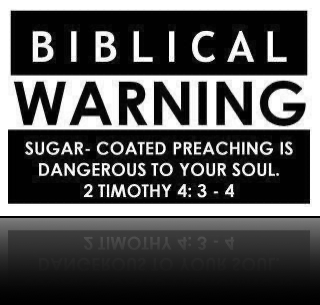
The messianic prophet Zechariah illustrated the urgency of preaching God’s Word when he said, “Run, speak to this young man…” (Zechariah 3:2). Just as in the Old Testament days, an interesting parallel is found in the urging of Phillip to teach the Ethiopian Eunuch. The Scripture records that Phillip “ran to him, and heard him reading the prophet Isaiah, and said, ‘Do you understand what you are reading?’” (Acts 8:30). Both of these verses illustrate the urgent need for men and women to hear the powerful Word of God. Since God chose the foolishness of preaching to save the lost (1 Corinthians 1:21), this places a dire need upon God’s people to preach and teach only God’s Word (2 Timothy 4:2; Acts 8:3-4). What then does it mean to really teach God’s Word?
The messianic prophet Zechariah illustrated the urgency of preaching God’s Word when he said, “Run, speak to this young man…” (Zechariah 2:4). Just as in the Old Testament days, an interesting parallel is found in the urging of Phillip to teach the Ethiopian Eunuch. The Scripture records that Phillip “ran to him, and heard him reading the prophet Isaiah, and said, ‘Do you understand what you are reading?’” (Acts 8:30). Both of these verses illustrate the urgent need for men and women to hear the powerful Word of God. Since God chose the foolishness of preaching to save the lost (1 Corinthians 1:21), this places a dire need upon God’s people to preach and teach only God’s Word (2 Timothy 4:2; Acts 8:3-4). What then does it mean to really teach God’s Word?
Let the Lion Roar! The bold prophet Amos recorded, “A lion has roared! Who will not fear? The Lord God has spoken! Who can but prophesy?” (Amos 3:8) If you have ever been to the zoo, you can relate to this passage. Think back to the last time you were at the zoo, and you heard a lion roar. No matter where you are, the lion roaring is a sound that strikes attention in your heart and a healthy fear for such an awesome beast. Like the lion roaring, God’s Word should cause us to sit up and listen very carefully. To the seven churches of Asia, Jesus said, “he who has an ear, let him hear what the Spirit says” (Revelation 2:7; 1 Timothy 4:1). God’s people are encouraged to: “take heed what you hear” (Matthew 4:24; Hebrews 2:1); “take heed how you hear” (Luke 8:18); and God said, “This is my beloved Son in whom I am well pleased. Hear Him!” (Matthew 17:5). When God’s Word is preached, like the roaring of a lion, we need to have an attentive heart and a healthy respect for its awesome power.
God’s Word in Your Mouth. To the young and insecure prophet Jeremiah, God said, “Behold, I have put My words in your mouth” (Jeremiah 1:9). The problem with much of the preaching today is that it is backward from what God told Jeremiah. A lot of today’s preaching is simply man’s word in man’s mouth. Sadly, that’s not what God commanded nor will it save lost souls (Hebrews 4:12). Throughout Scripture we find the need to preach God’s Word reinforced. Paul told Timothy to “Preach the Word” (2 Timothy 4:2). Peter instructed Christians to “speak as the oracles of God” (1 Peter 4:11). After being spit out on the beach by a large fish near Nineveh, God told the reluctant prophet Jonah, "Arise, go to Nineveh, that great city, and preach to it the message that I tell you." (Jonah 3:2). The need for preaching what God tells us is directly related to the power of God’s Word to save. If the implanted word saves (James 1:21); and the gospel is the power of God to salvation (Romans 1:16); and God chose the foolishness of preaching to save (1 Corinthians 1:21), then we desperately need to let our mouth be the tool for God’s Word to echo forth to the masses (Jeremiah 22:29).
Not Public Enemy #1. When men of God boldly preach the whole counsel of God which reaches down inside of us and urges us to change our lives - even if we don’t like it, God’s preachers are not our enemy! After sharply rebuking the Galatian Christians in many areas, Paul asked this question: “Have I therefore become your enemy because I tell you the truth?” (Galatians 4:16). Maybe you’ve heard the expression, don’t kill the messenger if you don’t like the message. How true that is as it relates to preaching God’s word. Have you ever sat in a sermon that made you feel uncomfortable, caused you to squirm a little in your seat, and really reached down inside you and challenged you to change your spirit in areas you knew needed changing? How do we respond to that awkward and uncomfortable feeling that true Gospel preaching creates? Either we accept truth and change, or we can get mad at the messenger as a way to avoid doing what we know is right. Too many times the latter occurred in Scripture. Why do you think King Ahab said to Elijah, “Is that you, you troubler of Israel”? (1 Kings 18:17). Why was Jeremiah thrown in the dungeon (Jeremiah 20)? Why were the Jews so indignant at Jesus that they cried, “Crucify Him?” (John 19:6). Why was Paul imprisoned? Why was John exiled to Patmos? All of these are examples of persecuting the messenger as a way of avoiding the changes that God’s Word demands. When God’s Word demands change, you (and I) need to “Humble yourselves under the mighty hand of God, that He may exalt you in due time” (1 Peter 5:6).
While Jesus used practical illustrations to help people understand the truth (Mark 4:34), too much of today’s preaching is filled with silly anecdotes, funny stories, and cute illustrations that never really get to the heart of the matter—helping men and women to change their will to God’s will (Acts 3:19). In a day and age where there is a famine for Bible preaching (Amos 8:11-12), may each Christian be encouraged to boldly proclaim, “Thus saith the Lord!” (Zechariah 1:3). In seeking and saving lost souls, let’s listen when the lion roars, use our mouths as a tool to let God’s word echo forth, and make changes in our lives when Gospel preaching demands it! --Ben Bailey

Inward Spiritual Struggles—Good or Bad?
Do you ever feel like you need to do more for the cause of Christ? Does the feeling that you just aren’t everything you need to ever trouble you? Maybe these feelings are something you struggle with every day. I have a friend who constantly struggles with this problem. He would often get discouraged by the feeling of imperfection and deeply distressed over the fact that he just didn’t feel like he was doing enough in the kingdom.
Do you ever feel like you need to do more for the cause of Christ? Does the feeling that you just aren’t everything you need to ever trouble you? Maybe these feelings are something you struggle with every day. I have a friend who constantly struggles with this problem. He would often get discouraged by the feeling of imperfection and deeply distressed over the fact that he just didn’t feel like he was doing enough in the kingdom. As I thought about his situation and the inward struggle that each of us faces, I wondered “Are these feelings of imperfection a good or bad thing”? The more I thought about this matter the more I realized this truth: It’s not the people who have these struggles and feeling of imperfection that I worry about, it’s the ones that don’t that bother me. I know this is correct, for Paul expressed this to the church in Philippi saying, “not that I have already attained” and “not that I have already perfected” or “I do not count myself as apprehended” (Phil. 3:12-14). In essence, Paul was recognizing the fact that all of us face the inward struggles of imperfection and incompetence. And, if we use those feelings correctly they are not bad. How can these feelings help us?
If these feelings of imperfection motivates us to do more, they have been beneficial to us. In view of his own inward struggles Paul said, “I Press on” (Phil. 3:12). Instead of getting discouraged, Paul used his inward struggle as a motivating factor. As one faces these struggles, maybe a little introspection would be in order. Paul said, “Examine yourselves as to whether you are in the faith. Test yourselves” (2 Cor. 13:5). In times like these, we should each look for more ways to serve God faithfully and stay busy in the kingdom!
If these feelings of imperfection keeps us on our toes, they have been beneficial to us. Maybe these feelings are simply a correct response of a good conscience seeking to help us do more and be more for Christ (1 John 3:20; Rom. 2:15). Rather than growing stagnant and becoming lukewarm, they remind us to stay busy and fruitful in the kingdom.
While a person can take these feelings to the extreme and allow them to affect his spiritual life negatively, if used correctly they do have a positive spiritual benefit. Remember, the Apostle Paul said, “Not that I have already grasped it all or have already become perfect, but I press on if I may also take hold of that for which I was even taken hold of by Christ Jesus” (Phil. 3:12). --Ben Bailey

"What is Forgiveness?" - Amy Lawrence
We as the fallible humans that have been made in the image of God often have conflicting ideas concerning forgiveness. Our sinful nature would have us to hold grudges and forgive but never forget. Scripture teaches, however, that we can control that sinful nature and bring it under subjection to the law of Christ (Romans 7-8). The words of forgiveness Jesus spoke while in agony on the cross are the words that ring in the life of a faithful Christian that would forgive the way God forgives. What does scripture say about how God forgives? Let’s see.
We as the fallible humans that have been made in the image of God often have conflicting ideas concerning forgiveness. Our sinful nature would have us to hold grudges and forgive but never forget. Scripture teaches, however, that we can control that sinful nature and bring it under subjection to the law of Christ (Romans 7-8). The words of forgiveness Jesus spoke while in agony on the cross are the words that ring in the life of a faithful Christian that would forgive the way God forgives. What does scripture say about how God forgives? Let’s see.
The Prodigal Son
Each stage of forgiveness can be seen in Luke’s account of the Prodigal Son. He tells us of the son who left home to dive headfirst into prodigal living (Lk. 15:11-32). Following are the four stages of forgiveness:
Sin = riotous living. The prodigal son engaged in prodigal living as soon as he had acquired the inheritance from his father. By asking for his inheritance before his father had passed, as was the cultural practice then and now, the son in essence was telling his father that he was dead to him, vss. 11-13.
Repentance = “came to himself”/ went to his father. God told the Israelites that if they “come to themselves AND repent”, that He would hear and forgive (1 Kings 8:46-50). The prodigal son “came to himself”, vs. 17, and reasoned. He knew how his father treated even his servants, caring for all in his household. He humbled himself, debasing himself to the position of a servant with the intention of returning to his father and asking for a servant’s share. But it didn’t end there with just good intentions. He returned, vs. 20.
Prayer = the request the son made as a servant and not as his son. This denoted humility. God places value on a humble heart. David wrote, in his psalm concerning his adultery with Bathsheba, that the Lord will not despise the sacrifices of a broken spirit and a contrite heart (Ps. 51:17).
2Chr. 7:14 “if My people who are called by My name will humble themselves, and pray and seek My face, and turn from their wicked ways, then I will hear from heaven, and will forgive their sin and heal their land.”
Our prayer must be made with the knowledge that we tried our way, and it didn’t work. It’s time to do things God’s way.
Forgiveness = the prodigal son was lost and is now found.
Matt. 18:12 “ “What do you think? If a man has a hundred sheep, and one of them goes astray, does he not leave the ninety-nine and go to the mountains to seek the one that is straying?
Matt. 18:13 And if he should find it, assuredly, I say to you, he rejoices more over that sheep than over the ninety-nine that did not go astray.” “
Sin
To understand forgiveness, we first have to understand sin.
The Bible is incredibly descriptive of sin, but there are four different terms scripture uses, and each one has a slightly different meaning: sin, trespass, transgression, iniquity. Three are found in Ex. 34:7. Ex. 34:7 Keeping mercy for thousands, forgiving iniquity and transgression and sin, and that will by no means clear the guilty; visiting the iniquity of the fathers upon the children, and upon the children’s children, unto the third and to the fourth generation.
All communicate the same idea of what sin is - a departure from the will of God.
Sin - “to miss the mark”. This can be done against God or against a person (Ex. 10:16) and include sins of commission (1 Jn. 3:4) or omission (James 4:17, Mt. 23:23). Sacrifices under the Law of Moses included sins committed in ignorance (Num. 15:27). Sin is used generally as anything that falls short of the glory of God (Rom. 3:23). It is also used to describe the fleshly nature of mankind (Gen. 3:6-7, Rom. 5:12). Unchecked, it leads to a “reprobate mind” (Rom. 1:24). Our innate sinful nature tends to gravitate toward selfishness, envy, and pride. even when our intentions are to do good. Paul wrote of this in Rom. 7:18.
Trespass - going beyond a line drawn, whether with spontaneous intent or unintentionally. It can also mean falling away after being close by. Peter trespassed in denying Jesus (Luke 22:34, 56-62). It is most common in the habitual sins, i.e. thought, word, or attitude, and is used in Mt. 6:14-15.
Transgression - choose intentionally to go beyond, disobey. Samson intentionally touched a dead lion and later allowed Delilah to cut his hair (Num. 6:1-5, Judges 14:8-9; 16:17), willfully breaking his Nazarite vow. The Pharisees intentionally transgressed God’s word in order to hold to their traditions (Mt. 15:3).
Iniquity - a more deeply rooted form of sin. It is a premeditated sin that is continued without repentance. David, in his attempt to hide his original adultery with Bathsheba, premeditated the murder of Uriah the Hittite (2 Sam. 11:3-4, 2 Sam. 12:9). David acknowledged it as such (Ps. 51:2-3) Micah the prophet wrote, “Woe to them that devise iniquity, and work evil upon their beds! when the morning is light, they practice it, because it is in the power of their hand.” (Micah 2:1)
Repentance
Now that we have an understanding of sin, let’s get into repentance.
God has the ability and willingness to forgive any type of sin. But something must take place on our end first: repentance.
2Chr. 7:14 “if My people who are called by My name will humble themselves, and pray and seek My face, and turn from their wicked ways, then I will hear from heaven, and will forgive their sin and heal their land.”
Ezek. 18:30 “ “Therefore I will judge you, O house of Israel, every one according to his ways,” says the Lord GOD. “Repent, and turn from all your transgressions, so that iniquity will not be your ruin.
Ezek. 18:31 Cast away from you all the transgressions which you have committed, and get yourselves a new heart and a new spirit. For why should you die, O house of Israel?
Ezek. 18:32 For I have no pleasure in the death of one who dies,” says the Lord GOD. “Therefore turn and live!” “
2Pet. 3:9 “The Lord is not slack concerning His promise, as some count slackness, but is longsuffering toward us, not willing that any should perish but that all should come to repentance.”
Acts 8:20 “But Peter said to him, “Your money perish with you, because you thought that the gift of God could be purchased with money!
Acts 8:21 You have neither part nor portion in this matter, for your heart is not right in the sight of God.
Acts 8:22 Repent therefore of this your wickedness, and pray God if perhaps the thought of your heart may be forgiven you.” “
Acts 2:37 “Now when they heard this, they were pricked in their heart, and said unto Peter and to the rest of the apostles, Men and brethren, what shall we do?
Acts 2:38 Then Peter said unto them, Repent, and be baptized every one of you in the name of Jesus Christ for the remission of sins, and ye shall receive the gift of the Holy Ghost.
Acts 2:39 For the promise is unto you, and to your children, and to all that are afar off, even as many as the Lord our God shall call.”
All paint the same picture - repentance is a change of the mind that results in a change of action.
If my wedding ring is stolen and I know the thief and confront them, and then the thief comes and asks me for forgiveness, am I obligated to grant forgiveness? Yes. Jesus said to His disciples, “seventy times seven”, using an exaggerated number to denote that we are to grant forgiveness as many times as it is asked. Am I obligated in that granting of forgiveness to also include they keep the ring? No. Forgiveness does not dissolve the consequences of sin (2 Sam. 12:13-14). If I demand that they return the ring and they refuse, is that repentance?
Are they sorry because they want to do right, or are they sorry because they got caught?
2Cor. 7:9 “Now I rejoice, not that you were made sorry, but that your sorrow led to repentance. For you were made sorry in a godly manner, that you might suffer loss from us in nothing.
2Cor. 7:10 For godly sorrow produces repentance leading to salvation, not to be regretted; but the sorrow of the world produces death.”
John 8:39 They answered and said unto him, Abraham is our father. Jesus saith unto them, If ye were Abraham’s children, ye would do the works of Abraham.
Luke uses the phrase “fruits worthy of repentance” in his gospel (Lk. 3:8). What does this mean, exactly? In the context of Luke 3, John is preaching the baptism of repentance in the wilderness of Judea. There were some that had come to be baptized, but John made clear that there was a prerequisite: works of repentance. When they asked, “What shall we do?” John responded with the answers (vss. 11-14). Paul used a similar phrase in Acts 26:20, “works meet for repentance”. A person that is truly repentant is a person that shows such in their choices and actions.
Prayer
Our requests are made known to God through prayer (Phil. 4:6, 1 Jn. 5:14-15). The Christian has this access through the Holy Spirit (Rom. 8:26-27), and through prayer forgiveness is received (James 5:15).
But there are some prayers that God refuses to hear.
Prov. 28:9 “One who turns away his ear from hearing the law, Even his prayer is an abomination.”
Is. 59:1 “Behold, the LORD’S hand is not shortened, That it cannot save; Nor His ear heavy, That it cannot hear.
Is. 59:2 But your iniquities have separated you from your God; And your sins have hidden His face from you, So that He will not hear. “
1Pet. 3:12 “For the eyes of the LORD are on the righteous, And His ears are open to their prayers; But the face of the LORD is against those who do evil.”
So the question is, if we ask for forgiveness without the repentance, without the intention of stepping away from the sin, will we receive forgiveness?
Forgiveness
There are two perspectives to forgiveness:
-lateral - forgiveness between two persons
Luke 17:3 Take heed to yourselves: If thy brother trespass against thee, rebuke him; and if he repent, forgive him.
Luke 17:4 And if he trespass against thee seven times in a day, and seven times in a day turn again to thee, saying, I repent; thou shalt forgive him.
-verticle - forgiveness of God to man
Acts 5:31 Him hath God exalted with his right hand to be a Prince and a Saviour, for to give repentance to Israel, and forgiveness of sins.
When Jesus gave His disciples the model prayer in Mt. 6:9-13, part of that prayer was forgiveness - both lateral and vertical: “forgive us our debts as we forgive our debtors”.
But is forgiveness conditional?
In chapter 18 of Matthew, Jesus gives the parable of the unforgiving servant (vss. 21-35). God tells us that if we don’t forgive others, He won’t forgive us (Mt. 6:14-15). In that same chapter, Jesus gives parameters as to how we should deal with offenses (vss. 15-17):
-The offense has to be addressed between the offended and the offender alone.
-If the first step does not solve the problem, then one or two witnesses are required.
-If the problem continues to be unsolved, it is put before the church and addressed.
-If the offender will not be persuaded by the church, then church discipline is required.
The best course of action is God’s course of action, not our own. We are human and have emotions that would persuade us in another direction that God would not have us follow. Jeremiah wrote, “The heart is deceitful above all things...” (Jer. 17:9) There are times when our current emotional state cannot be trusted. Paul wrote to the Ephesians, “Be angry, and do not sin...neither give place to the devil.” (Eph. 4:26-27) Anger is a natural emotion, one of the easiest to feel and hardest to control. Everyone has a story of a bad decision made in anger. It is also an emotion that has a 0% success rate in the forgiveness department. Before forgiveness can occur, the anger has to be replaced with another emotion - compassion. Often, communication is the barrier that prevents such an exchange. God commands that the offense must first be addressed between the offender and the offended through communication. I cannot count how many times the offense between myself and another was simply a miscommunication. So many offenses I’ve had in relationships were solved with just step one. Most people are willing to talk. Some let fear keep them from doing so.
When all steps are followed and the offender does not ask forgiveness, are we still obligated to forgive? The Bible gives an example of such a scenario. Paul’s first letter to the church at Corinth tells us of a man who was involved in sexual sins that were known to the congregation, chapter 5. He admonished the church there for not addressing the sin and putting it out of their midst, verses 1-5. Church discipline was practiced. The man was disfellowshipped. In Paul’s second letter to the Corinthians, the same man is mentioned - but as one showing repentance and seeking forgiveness (2 Cor. 2:6-8). Paul assures them that the discipline inflicted had the results desired; it brought back the brother lost. He goes on to mention the emotion found in forgiveness: “love toward him.” When such a repentant one seeks forgiveness, they should be welcomed back with open arms, “ for this my son was dead, and is alive again; he was lost and is found.” (Lk. 15:24) All in heaven rejoice, and so should we! (Lk. 15:7,10)
If one literally considers forgiveness, only God has the power to forgive (Mk. 2:7, Lk. 5:21). He knows, however, the connection forgiveness creates and/or keeps in human relationships. Our hearts were not built to hold anger, and that is one reason why forgiveness is a benefit for the forgiver as much as the forgiven. Sometimes forgiveness is not asked and we have to forgive anyway so that our hearts do not become damaged. Stephen forgave, even when it wasn’t requested (Acts 7:60). In forgiveness, we should remember the passage found in Luke 7:41-48:
“There was a certain creditor who had two debtors. One owed five hundred denarii, and the other fifty. And when they had nothing with which to repay, he freely forgave them both. Tell Me, therefore, which of them will love him more?”
Simon answered and said, “I suppose the one whom he forgave more.”
And He said to him, “You have rightly judged.” Then He turned to the woman and said to Simon, “Do you see this woman? I entered your house; you gave Me no water for My feet, but she has washed My feet with her tears and wiped them with the hair of her head. You gave Me no kiss, but this woman has not ceased to kiss My feet since the time I came in. You did not anoint My head with oil, but this woman has anointed My feet with fragrant oil. Therefore I say to you, her sins, which are many, are forgiven, for she loved much. But to whom little is forgiven, the same loves little.”
Then He said to her, “Your sins are forgiven.”
We are all debtors to Christ - and we are all in need of forgiveness. To assume that we do not owe another forgiveness is to forget the price that was paid for ours.
Conclusion
As I studied for this article, I gained a deeper understanding of forgiveness. There are many factors to being a good forgiver; love, humility, gratitude, thankfulness, patience, understanding, and above all an ability to admit faults and grow from them...and to accept that others may also be growing. A heart that holds all of these is a heart that can forgive like God forgives.
*Contributed by Amy Lawrence - McMinnville, TN

"Does it Really Matter?" - Ben Bailey
The question, “Does it really matter?” is becoming the motto for our modern society. We used to have moral beliefs, but “Does it really matter anymore?” At one-time people had a strong conviction about ungodliness and sin but, “Does it really matter that much?” In the past, we had faith in the Bible and its teaching but, “Does the Bible really matter anymore?” To God, IT REALLY DOES MATTER A LOT! Notice several areas in which it does matter.
The question, “Does it really matter?” is becoming the motto for our modern society. We used to have moral beliefs, but “Does it really matter anymore?” At one-time people had a strong conviction about ungodliness and sin but, “Does it really matter that much?” In the past, we had faith in the Bible and its teaching but, “Does the Bible really matter anymore?” To God, IT REALLY DOES MATTER A LOT! Notice several areas in which it does matter.
Does it matter if I believe in God or Evolution? Yes! The downward spiral that society is facing is due in large to the effects of evolutionary thinking. For example, the increasing suicide rate is a direct result of evolution. If there is no God and life ends at death, then why not end your life if you are not happy with it. In addition, the current rise of sexual immorality is a direct result of evolution. If there are no standards for marriage (Gen. 2:18-24), then I can marry or live-with whoever I want for however long I want and there are no repercussions to this lifestyle. Friend, can you not see that it really does matter that there is a God?
Does it matter what church I am a part of? Our society tells us to choose the church of our choice and God will be happy with that. Is this biblical thinking? No. The bible teaches that Jesus only built one church (Eph. 1:21-23; Eph. 4:4). That one church must call itself by a biblical name (Romans 16:16). When Jesus spoke about the church, He called it His church (Matt. 16:13-18). Therefore, we also should call the church Jesus purchased with His own blood (Acts 20:28), the church of Christ. The Bible teaches that Jesus will deliver a singular “kingdom” or church back to the father at the end of time (1 Cor. 15:24). If you are not a part of the church that Jesus built, then it really will matter!
Does it really matter if I am baptized for the remission of my sin? Many are teaching today that all a person must do to be saved is believe in Jesus and say the sinner’s prayer and you will be saved. Is this really what the Bible teaches? No. In fact, the Bible teaches the exact opposite of this belief. James said, “You see that a man is justified by works, and not by faith only.” I often hear people ask the question, “Is baptism really that important?” Let’s let the Bible answer that question for us. Jesus said, “He that believes and is baptized will be saved…” (Mk. 16:16). Peter proclaimed, “Repent and be baptized every one of you for the remission of your sins…” (Acts 2:38). Jesus also said, “Unless a man is born of water and the Spirit he cannot enter the kingdom of Heaven” (Jn. 3:3-5). Ananias told Paul, “Arise and be baptized and wash away your sins calling on the Lord’s name” (Acts 22:16). Friend, from these passages baptism for the remission of sins really does matter to God.
If you are swayed by the popular philosophy that it really does not matter, please come back to the Bible, and see that it does. It matters what you believe and how you live your life to God. It also matters what church you are a part of and how you became a Christian. John sums it up by saying, “Whoever transgresses and does not abide in the doctrine of Christ does not have God. He who abides in the doctrine of Christ has both the Father and the Son” (2 John 9). Friend, it really does matter to God! --Ben Bailey

How to Overcome a Sinful Past - Ben Bailey
A person must also be ashamed of their sinful past. Too often, people who have lived a life of sin go around bragging about the “sins” they used to commit. Sin should be something that causes us great shame, not gives us an avenue to boast (Rom. 6:21). How sad it is when we reach a point that we can no longer blush over sin (Jer. 8:12).
Sometimes in our Christian life we really mess up don’t we? We know what the Bible says. We know what we ought to do. Yet, there are times when we do just the opposite of what is right and we sin. When a person really messes up, how do they overcome that sinful past?
He must recognize and admit the sin in his life. Unless we are willing to says, “I have sinned”, we cannot be forgiven by God (1 Sam. 12:21ff). The beloved Apostle John said, “If we say that we have no sin, we deceive ourselves, and the truth is not in us. If we confess our sins, He is faithful and just to forgive us our sins and to cleanse us from all unrighteousness” (1 Jn. 1:9-10). Someone has properly stated that to know yourself diseased is half the cure.
A person must also be ashamed of their sinful past. Too often, people who have lived a life of sin go around bragging about the “sins” they used to commit. Sin should be something that causes us great shame, not gives us an avenue to boast (Rom. 6:21). How sad it is when we reach a point that we can no longer blush over sin (Jer. 8:12).
To overcome a sinful past a person must deal with sin in a God-approved way. The only way to deal with sin properly is through obedience to Jesus Christ (Matt. 7:21; Heb. 5:8-9). Jesus made it clear that to deal with sin one must believe in Him (Jn. 8:24), repent of past sins (Luke 13:3), confess Him as Lord (Rom. 10:10), be baptized for the remission of one’s sins (Acts 2:38; Mark 16:16), and be faithful to death (Rev. 2:10).
Finally, to overcome a sinful past one must put the past behind him and move forward. The Apostle Paul said, “Brethren, I do not count myself to have apprehended; but one thing I do, forgetting those things which are behind and reaching forward to those things which are ahead, I press toward the goal for the prize of the upward call of God in Christ Jesus” (Phil. 3:13-14). To overcome the past, we must put the past behind us and look forward to the future. If God has forgotten our sins (Heb. 8:12-13), can’t we? It has been aptly stated, “Those who live in the past are doomed to repeat its mistakes.”
All of us have made mistakes in life that we are not proud of. The difference between a person who has overcome sin and one who has not is very simple--Jesus Christ. Have you dealt with sin a God-approved way? If not, why not? Why not do that today? May God help each of us to deal with sin in a God approved way!

Against the Wind - Celine Sparks
I hadn’t seen a sign of life for miles. It was a desolate road trip home; the kind that makes you wonder if you screamed for your life, would there be anyone near enough to hear you? Then I saw it -- a light in the distance. As I got nearer, it was a fueling station with, I hoped, a bathroom.
The following is an article written by Celine Sparks.
I hadn’t seen a sign of life for miles. It was a desolate road trip home; the kind that makes you wonder if you screamed for your life, would there be anyone near enough to hear you? Then I saw it -- a light in the distance. As I got nearer, it was a fueling station with, I hoped, a bathroom.
There was also a sign on the door, written with a fat-tip marker, that said, “Best cup of coffee in town.” I missed the town part. I guess these people made coffee a whole lot better than the nearby raccoons and coyotes.
Jesus preached in this kind of desolate place a time or two -- minus the acclaimed coffee. In Mark chapter 6, his disciples came to him and said, “This is a desolate place, and the hour is now late” (verse 35).
What followed was a miracle no food truck could have rivaled. Jesus satisfied the hunger of 5,000-plus people, in a desolate place far from any restaurants, so much that there were leftovers. John’s account said they had “as much as they wanted” (John 6:11). And he did it all from his starting amount of five loaves of bread and two fish. There’s more than that in a kid’s meal. Oh wait -- this was a kid’s meal (John 6:9).
But what is most intriguing to me is not that there was more food left after the meal than there was to start with --I feel like that happens here every Thanksgiving. It’s not the sheer volume of people -- I’ve been to Walmart when there were threats of snow flurries in Alabama. And even though the fact that they managed to get a crowd like that to sit down in groups -- we have never been able to do that at Vacation Bible School with a crowd about 4900 people smaller -- this is not what I want to highlight either.
What’s even more incredible than all of this is what happens next. Jesus had his disciples board a boat and head to the other side while he dismissed the crowd. He then took this opportunity, being alone, to spend time in prayer.
Now let’s take up the narrative at Mark 6:47-52: “And when evening came, the boat was out on the sea, and he was alone on the land. And he saw that they were making headway painfully, for the wind was against them. And about the fourth watch of the night he came to them, walking on the sea. He meant to pass by them, but when they saw him walking on the sea they thought it was a ghost, and cried out, for they all saw him and were terrified. But immediately he spoke to them and said, “Take heart; it is I. Do not be afraid.” And he got into the boat with them, and the wind ceased. And they were utterly astounded, for they did not understand about the loaves, but their hearts were hardened.
There are three words in here that jump off the page, and impress themselves deep in my soul: Making headway painfully (verse 48). Every one of us have been there at some point in our lives if we’ve lived long enough. Circumstances become harder than we could foresee, the outlook is bleak and growing bleaker, and yet we are rowing. We are trying with all our might to forge choppy waters. It may be that we are making headway, but it is in sweat, blood, and tears. We’re making it painfully.
A dear friend of mine, one of the Godliest I know, recently amidst other difficult trials, found herself being handcuffed and escorted into prison. I had never been more sure of a person’s innocence. When she was released the next day, she was barred from being with her children until the details could be sorted out. We knew, when the research was done and the facts were gathered, it would be obvious just how preposterous a circus was being created here. I’m not knocking law enforcement or the entire justice system -- I have great esteem for public servants -- but sometimes just one person dragging their feet can tumble the whole dance line. It was weeks before the charges were dropped and the shenanigans were dismissed.
Deep into week three, I said, “Do you feel like you’re making headway painfully?” She said, “I feel exactly like that.”
I remember talking with another dear friend some time before that, a beautiful mom of six. They were at rope’s end with one child, had dealt with some external threats to their family, and she was just weary. She said, “I can’t find the joy anymore in the day-to-day. I want to bring back the joy.” She was still in the fight, but she was making headway painfully.
Plop! A pile of books fell beside me at a table where I was working. I looked up at a familiar face attached to arms that had just released the books. Arms that were part of a body that was usually working circles around me. There was constantly laughter wherever she was. But this time, she said, “Help me!” She had screamed at her children the night before -- children she adored, counted as blessings, and thanked God nightly for. But she had so many pressures mounting that the laughter that accompanied her soul was now hanging by a thread. “Help me,” she said. Screaming at her kids again was not an option. She was bent on restoring calm to their disrupted world, but she was making headway painfully.
I’ll say it again. All of us have been there. We’ve grabbed up the paddles, and rowed hard to keep our marriages from plummeting, our tempers from exploding, our children from being sucked up by the world, those dear to us from spiraling into depression. But the waters are choppy, and we make headway painfully.
And Jesus sees it (verse 48). He sees the struggles of his followers. It’s just a comforting thought that He knows.
So here was Jesus walking toward the boat, and the text tells me something incredibly interesting, if not troubling. He meant to pass by them (verse 48).
What? In the midst of a storm where his disciples are struggling in pain, He meant to pass by them? I don’t know entirely what to think of it. I can’t read the mind of God other than what He gives me to read, but I can decipher this. When they cried out to Him, it changed His course.
You could argue that they didn’t cry out to him, because the text tells us they thought it was a ghost. One thing we can agree on is, they did cry out (verse 49). I find in the most tragic of emergencies, when people cry out, they cry out to God. I mean, people that are not even Christians pray like they are when fear grabs them by the pants. I just have a feeling these men, who were followers of Christ, were praying when they cried out, even though they didn’t know that they were looking at the very one they were crying out to.
If we are making headway painfully, we must cry out to the Lord. The one who was walking on water here, was the one who had just spent time alone and apart with His Father God on the mountain. The ones who had run ahead of that step were now struggling.
They thought he was a ghost (verse 49). Let it be a lesson to us that when we’re in the middle of a storm, we don’t see so clearly. Yes, there were rough waters; yes, the wind was against them; and yes, it was in the darkest of night. But there was not a ghost! Sometimes, we think our circumstances are so bad that we make them worse. In the middle of the darkest of storms, let’s intentionally look for the positive, because it is certainly there, instead of imagining things that have not even occurred. That’s called worry, and it never helped us get a decent night’s sleep.
The most meaningful thing to me is that he heard that cry, and responded. He always will. Psalm 34:17 says, “When the righteous cry for help, the Lord hears and delivers them out of all their troubles.” Praise God.
His words to them were, “Take heart; it is I. Do not be afraid” (verse 50). They were words we find often in the scriptures. God the Son and God the Father want us to know They are with us. “Do not be afraid” is among the most disregarded scriptural guidance. We sometimes act as though there is honor in fear.
We will say that the world we live in is “scary.” We mean that it is evil, but we cannot be afraid of evil because, if we are Christians, God is there with us. “It is I. Do not be afraid.” What we find over and over in scriptures is that those who are opposed to God, who seem to be a threat to all that is good, are inwardly filled with fear. It’s not who we are.
Turn a few pages over, still in the book of Mark. The chief priests and scribes are looking for a way to destroy Jesus (11:18). Why? “For they feared him.” In the Old Testament saga of David and Saul, the more Saul turned away from God and became militantly set on destroying David, the more we read about his fear, even though he was in the top position of earthly power.
These are only two examples among hundreds in the scriptures. Is it any wonder that it was most likely David himself who penned, “I will not be afraid of many thousands of people who have set themselves against me all around” (Psalm 3:6)? If we’re fearful, we’ve sat down on the wrong side of the gym!
God’s action to back up his words, “It is I. Do not be afraid,” is almost too amazing to comprehend. But let’s look. The very next words are, “And He got into the boat with them, and the wind ceased” (verse 51).
When we are crying out for help, when we are making headway painfully, Jesus says, “Scoot over. I’m getting in there with you.” They were utterly astounded (verse 51). So am I.
One more thing. They were astounded now. “For they did not understand about the loaves, but their hearts were hardened” (verse 52). Isn’t that the way we are? Still. After a couple of thousand years, we’re still the same humans.
As long as God’s providing for us incredibly, as long as we have a fish sandwich with leftovers, we shrug and move on to the next level of Candy Crush or Bejeweled or Best Fiends or whatever’s on our important agenda. How is it that we forget to be impressed when we are eating from every food group and sleeping under insulated roofing? Our hearts are hardened.
But oh, when the wind comes; when we are making headway painfully; when we just about see ghosts and cry out for help, we begin to get it. We begin to focus on the one who whispers, “It is I; do not be afraid.” We scoot over and make room in the boat.
And knowing Who is sitting next to us, how can we help but be astounded?
Celine Sparks

The Steadfast Love of the Lord - Ben Bailey
The Book of Lamentations has often been referred to as Israel’s funeral sermon or eulogy. In this Book, Jeremiah laments the ultimate destruction and death of Israel as they go into captivity for their sins. Yet, during this sad and depressing time, we find some incredibly beautiful verses about God’s love.
The Steadfast Love of the Lord
The Book of Lamentations has often been referred to as Israel’s funeral sermon or eulogy. In this Book, Jeremiah laments the ultimate destruction and death of Israel as they go into captivity for their sins. Yet, during this sad and depressing time, we find some incredibly beautiful verses about God’s love. In one passage, the Holy Spirit gave us these beautiful and encouraging words, “The steadfast love of the Lord never ceases; his mercies never come to an end; they are new every morning; great is your faithfulness. “The Lord is my portion,” says my soul, “therefore I will hope in him.” (Lam. 3:22-24). These words would not doubt serve as an encouragement to the faithful remnant of Israel who stayed true to their God. Notice what we learn about God from this passage.
You cannot plumb the depths of God’s love, mercy, and faithfulness. They have no end! Towards his faithful people, God will never stop loving them. Just like the sun that comes up every morning, the mighty mercy of God is available for His Children. This verse reminds us of the beautiful words of Paul in Romans 5:6-8. Paul said, “For while we were still weak, at the right time Christ died for the ungodly. For one will scarcely die for a righteous person—though perhaps for a good person one would dare even to die— but God shows his love for us in that while we were still sinners, Christ died for us.”
Since the depths of God’s mercy and love are limitless, it is our privilege to exclaim—God is my portion and my hope! To say the Lord is my portion is saying, I belong to Him! Since Christians do belong to God, he truly is our hope and comfort. The apostle John said, “Behold what manner of love the Father has bestowed on us, that we should be called children of God! Therefore, the world does not know us, because it did not know Him” (1 John 3:1). Just like the faithful of Israel needed encouragement during times of spiritual darkness, Christians need to be reminded that God’s blessing are limitless, and it is a privilege to belong to and serve Him!
--Ben Bailey

The Blood of Christ - Ben Bailey
The Holy Spirit says, “Without the shedding of blood there is no remission of sins” (Heb. 9:22). The Old Testament Levitical system was a very bloody system (Lev. 1-5). For every sin of every kind there was a blood sacrifice to be offered (Lev. 4:1-12). Yet the Scripture records that the blood of all those bulls and goats could never really take away sin (Heb. 10:3-4). How thankful we should be that Jesus was willing to shed His blood once for all for sin so that the sin problem would have a permanent solution (Heb. 10:12). Notice just how important the blood of Christ is to our salvation.
The Blood of Christ
By Ben Bailey
The Holy Spirit says, “Without the shedding of blood there is no remission of sins” (Heb. 9:22). The Old Testament Levitical system was a very bloody system (Lev. 1-5). For every sin of every kind there was a blood sacrifice to be offered (Lev. 4:1-12). Yet the Scripture records that the blood of all those bulls and goats could never really take away sin (Heb. 10:3-4). How thankful we should be that Jesus was willing to shed His blood once for all for sin so that the sin problem would have a permanent solution (Heb. 10:12). Notice just how important the blood of Christ is to our salvation.
Jesus’ blood removes sin from our life. When Jesus instituted the Lord’s Supper He said, “For this is My blood of the new covenant, which is shed for many for the remission of sins” (Mt. 26:28). When Jesus was on the cross “…one of the soldiers pierced His side with a spear, and immediately blood and water came out” (Jn. 19:34). It was at this point in time when a fountain was opened for cleansing sin (Zech. 13:1). Without the shedding of Jesus’ blood we would not have forgiveness (Rom. 6:1-4; Acts 2:38).
Jesus’ blood redeems us to God. The Apostle Paul said, “In Him we have redemption through His blood, the forgiveness of sins, according to the riches of His grace” (Eph. 1:7). Paul later wrote that we are brought near to God through the blood of Jesus Christ (Eph. 2:13). The word “redeem” literally means to “buy back.” Before Jesus shed His blood we were enslaved to sin (Rom. 6:17-18). Jesus paid the ransom price to free us from sin. Paul said of Jesus’ sacrifice, “who gave himself for our sins to deliver us from the present evil age, according to the will of our God and Father” (Gal. 1:4). Only through the blood of Christ could we be bought back into a right relationship with God (Jn. 14:6).
Jesus’ blood brings us into a peaceful relationship. Because of sin, the relationship with God and man had been severed (Isa. 59:1-2; Ezek. 18:4; Rom. 3:23). Yet, how wonderful it is to hear Paul tell the Colossian Christians that Jesus made “peace through the blood of His cross” (Col. 1:20). Through the blood of Christ we can have the peace of God which surpasses all understanding (Phil. 4:6-8).
Jesus’ blood is also essential to becoming and remaining a faithful child of God. The Scriptures tell us that Jesus loves us and is willing to wash us from our sins in His own blood (Rev. 1:5). At what point do we contact the blood of Christ? When do we receive that washing of our sins in the blood of Jesus? We contact the blood of Christ in the watery grave of baptism (Rom. 6:1-4; Eph. 5:26; Heb. 10:22). Paul was told to “arise and be baptized and wash away your sins calling on the name of the Lord” (Acts 22:16). Since it is the blood of Christ that cleanses our sins, then we must conclude that baptism is the point at which we reach the blood of Christ (Acts 2:38; Mk. 16:16). Furthermore, in light of the fact that we can lose the benefit of Jesus’ cleansing blood as a child of God (Heb. 10:24-26), we must continue to walk in the light as Jesus is in the light, and we must continue to confess our sins as His children so that the blood of Jesus can keep on cleansing us from all sin (1 John 1:7-9). Thank God for the precious blood of Jesus that not only makes us pure, white, and whole in God’s sight, but maintains our purity in His sight so that one day we can “see God” for eternity (Isa. 1:18; Mt. 26:28; 5:8).