

"Sojourner or Settler?" - G. Scott Furniss
There is a popular hymn entitled “This world is not my Home” with the words, “This world is not my home. I am just a passing through.” I hear preachers speaking of a renewed earth as if this is our world. I listen to Christians talking about politics, elections, and other worldly things more than spiritual things and I am worried too many Christians are becoming settlers in this world instead of sojourners just passing through. They speak more of this world and fight harder to keep things in order in this country than they speak of their home and fight for Christ and His kingdom.
There is a popular hymn entitled “This world is not my Home” with the words, “This world is not my home. I am just a passing through.” I hear preachers speaking of a renewed earth as if this is our world. I listen to Christians talking about politics, elections, and other worldly things more than spiritual things and I am worried too many Christians are becoming settlers in this world instead of sojourners just passing through. They speak more of this world and fight harder to keep things in order in this country than they speak of their home and fight for Christ and His kingdom. We need to remember we are aliens and pilgrims in this world and are supposed to be sojourners and not settlers. “ These all died in faith, not having received the promises, but having seen them afar off [e]were assured of them, embraced them and confessed that they were strangers and pilgrims on the earth. 14 For those who say such things declare plainly that they seek a homeland. 15 And truly if they had called to mind that country from which they had come out, they would have had opportunity to return. 16 But now they desire a better, that is, a heavenly country. Therefore God is not ashamed to be called their God, for He has prepared a city for them” (Hebrews 11:13-16 NKJV).
The sojourner declares he is an alien and a pilgrim in this world making it clear they are seeking a country of their own so God is not ashamed to be our God. They also abstain from fleshly lusts which war against our souls.
Beloved, I beg you as sojourners and pilgrims, abstain from fleshly lusts which war against the soul, 12 having your conduct honorable among the Gentiles, that when they speak against you as evildoers, they may, by your good works which they observe, glorify God in the day of visitation (1 Peter 2:11-12 NKJV).
When we think of these things let us look at three tests of whether we are sojourners or settlers. First, where Is Your Citizenship? “For our citizenship is in heaven, from which we also eagerly wait for the Savior, the Lord Jesus Christ, 21 who will transform our lowly body that it may be conformed to His glorious body, according to the working by which He is able even to subdue all things to Himself.” (Philippians 3:20-21 NKJV).
While Daniel, Ezra, and Nehemiah show us we should be good citizens of whatever country we find ourselves in this world, but we have to be careful how entangled we get with the affairs of this life as we engage in the warfare of the kingdom. The settler’s concern is their earthly country and rulers, the sojourner’s concern is their heavenly country and king?
The second test is where is Your Treasure? Jesus told us to be careful of our attitude towards the things of this life. “Do not lay up for yourselves treasures on earth, where moth and rust destroy and where thieves break in and steal; 20 but lay up for yourselves treasures in heaven, where neither moth nor rust destroys and where thieves do not break in and steal. 21 For where your treasure is, there your heart will be also” (Matthew 6:19-21 NKJV).
We need to have the attitude of Job. “Then Job arose, tore his robe, and shaved his head; and he fell to the ground and worshiped. 21 And he said: “Naked I came from my mother’s womb, And naked shall I return there. The Lord gave, and the Lord has taken away; Blessed be the name of the Lord.” 22 In all this Job did not sin nor charge God with wrong (Job 1:20-22 NKJV). We must heed the warning of Paul. “Now godliness with contentment is great gain. 7 For we brought nothing into this world, [d]and it is certain we can carry nothing out. 8 And having food and clothing, with these we shall be content. 9 But those who desire to be rich fall into temptation and a snare, and into many foolish and harmful lusts which drown men in destruction and perdition. 10 For the love of money is a root of all kinds of evil, for which some have strayed from the faith in their greediness, and pierced themselves through with many sorrows (1 Timothy 6:6-10 NKJV).
The Settler’s concern is his savings, the sojourner’s concern is his salvation?
The third test is where is your home. “For we know that if our earthly [a]house, this tent, is destroyed, we have a building from God, a house not made with hands, eternal in the heavens. 2 For in this we groan, earnestly desiring to be clothed with our [b]habitation which is from heaven, 3 if indeed, having been clothed, we shall not be found naked. 4 For we who are in this tent groan, being burdened, not because we want to be unclothed, but further clothed, that mortality may be swallowed up by life. 5 Now He who has prepared us for this very thing is God, who also has given us the Spirit as [c]a guarantee. 6 So we are always confident, knowing that while we are at home in the body we are absent from the Lord. 7 For we walk by faith, not by sight. 8 We are confident, yes, well pleased rather to be absent from the body and to be present with the Lord. 9 Therefore we make it our aim, whether present or absent, to be well pleasing to Him. 10 For we must all appear before the judgment seat of Christ, that each one may receive the things done in the body, according to what he has done, whether good or bad.(2 Corinthians 5:1-10 NASB). Are you more concerned with staying here or do you have the desire to go home? “For to me, to live is Christ, and to die is gain. 22 [u]But if I am to live on in the flesh, this will mean fruitful labor for me; and I do not know [v]which to choose. 23 But I am hard-pressed from both directions, having the desire to depart and be with Christ, for that is very much better; 24 yet to remain on in the flesh is more necessary for your sakes. 25 Convinced of this, I know that I will remain and continue with you all for your progress and joy [w]in the faith, 26 so that your pride in Christ Jesus may be abundant because of me by my coming to you again” (Philippians 1:21-26). The settler wants to stay the sojourner wants to go home.
What is your concern? Country or Kingdom? Savings or Salvation? Stay or go home? So the question we must ask ourselves, is this world your home or are you just passing through? Are your treasures here on earth or are they laid up somewhere beyond the blue? Have you settled in the land or are you a sojourner, a stranger and an alien looking for a city not made with hands, so God is not ashamed to be called your God? God encourages us not to settle down in this world but continue as strangers and aliens here knowing our citizenship is in heaven, serving our king in whatever land we reside, laying up our treasure in heaven so our heart will be there.
G. Scott Furniss

Once Saved, Always Saved? - Ben Bailey
One of the most destructive doctrines to the Bible and Christian character is the man-made teaching that once a person has been saved he can never loose his salvation. This doctrine is destructive to the Bible because it twists the Scriptures to their own destruction (2 Pet. 3:16). But, it is also destructive to Christian character because it provides a license for sin. Does the Bible really teach that once a person is saved he can never again be lost? Let us consider two passages of Scripture.
Once Saved Always Saved
Ben Bailey
One of the most destructive doctrines to the Bible and Christian character is the man-made teaching that once a person has been saved he can never loose his salvation. This doctrine is destructive to the Bible because it twists the Scriptures to their own destruction (2 Pet. 3:16). But, it is also destructive to Christian character because it provides a license for sin. Does the Bible really teach that once a person is saved he can never again be lost? Let us consider two passages of Scripture.
Galatians 5:4 “You have become estranged from Christ, you who attempt to be justified by law; you have fallen from grace.” The teaching of Galatians 5:4 absolutely repudiates the idea of “Once Saved Always Saved.” In the letter to the Galatians, Paul is writing to “the churches of Galatia” (Gal. 1:2), which represents all those who have already been saved. This is very significant because some have tried to say that these people really weren’t saved in the first place. By saying this, they are saying that Paul, an inspired man of God, didn’t really know who was and who wasn’t in the church. Friend, Galatians 5:4 clearly teaches that some were at one point saved and in the church and then they later fell out of grace with God. Others have objected to this verse by saying that these people had not fallen out of grace, they had merely fallen from within the center of God’s grace. First, what difference is there? Both are without God’s richest grace. Secondly, the Greek Testament will not accept this rendering. The literal word for fallen from is the Greek preposition that means “out of”. Paul is not only saying they have just fallen from God’s grace, but that they have literally fallen out of the realm of God’s grace. Friend, the Bible does not teach once saved always saved, it clearly refutes it!
Acts 8:20 “But Peter said to him, "Your money perish with you, because you thought that the gift of God could be purchased with money!” If Galatians 5:4 teaches by principle that the doctrine of once saved always saved is false, then Acts 8:20 teaches it is false by case example. Here is a man who has been converted to the gospel by inspired teacher. He then tries to buy the gift of miracles and is found in sin. Then, Peter says to him “That’s okay you’re once saved always saved.” NOT SO! Peter told Simon that his money was would perish with him. Peter told Simon he was about to perish spiritually. Remember, here is a man who has just become a Christian and then Peter told him he was about to be lost. There could be no more convincing example than this that a person can become a Christian and shortly after that be lost. Friend, the Bible does not teach once saved always saved, it clearly refutes it!
Dear reader, please do not be deceived. Once saved always saved is not taught at all in the Bible. In fact, it is clearly refuted. Please do not let yourself get caught in the modern teachings of men, but return to the Bible.
The doctrine of once saved, always saved teaches that a Christian can never so sin as to be completely lost for all eternity. Regardless of how bad your sin is or how evil you act, you cannot be lost once you are saved. No doubt, this is a very comforting teaching but it is not taught anywhere in the Bible. In fact, it is explicitly condemned in Galatians 5:4. Let us notice two other passages in the Bible that teach once saved always saved is not biblical.
1 Corinthians 10:12 “Therefore let him who thinks he stands take heed lest he fall.” In this passage Paul clearly teaches that the Corinthian Christians could fall away from God. Corinth was a very wicked city and the church was becoming wicked in some ways as well. They had division, idolatry, immorality, adultery and other problems that were about to cause them to be lost. However, some might object to this passage by saying “fall doesn’t mean to be lost forever.” Let’s let the context determine the meaning. Those whom Paul is speaking about were involved in the following sins: lust, sexual immorality, idolatry, tempting Christ, and complaining (1 Cor. 10:1-11). Can anyone with these sins in their life go to Heaven? No! In fact, the context defines “fall” as “being destroyed by the destroyer” (1 Cor. 10:10). When Paul says fall he means to be lost for all eternity from God. Truly, these Christians were about to be destroyed spiritually by God and so can we if we are not careful.
2 Peter 1:10 “Therefore, my brothers, be all the more eager to make your calling and election sure. For if you do these things, you will never fall.” Once again, Peter tells Christians they can so sin as to be lost. Why must a Christian make sure he stays saved if he can never be lost to begin with? Once saved always saved is in total contradiction with this passage of Scripture. There is no need to make sure if you are eternally secure. But, someone might object by saying “These people were never saved in the first place.” Are we willing to say Peter didn’t know who his “brothers” (2 Pet 1:10) were? Peter knew who was and wasn’t a child of God and he also knew that they could be lost if they were not careful. Truly, this passage teaches that the possibility exists for Christians to be lost and fall from grace.
After considering these passages, as well as last week’s, one wonders why those who claim to believe the whole Bible teach this doctrine. Could it be because of the comfort it brings? Possibly, but it is a pseudo-comfort. Could it be because it is what we have always heard? Very likely, but we will not be judged by what we have heard but by God’s Word (Jn. 12:48). Could it be because we have not studied the Bible to find the truth? Yes! It is time for all of us to go back to the Bible and find the truth instead of letting our denominational party tell us what to believe.
In the Bible, there are clear-cut passages that teach a Christian can so sin as to be eternally lost (See Gal. 5:4; 2 Pet 1:10, 1 Cor. 10:12, Acts 8:20). However, some have tried to distort certain passages to make them teach once saved always. Let us take a moment to examine a few of these distorted passages.
1 John 3:9 “Whoever has been born of God does not sin, for His seed remains in him; and he cannot sin, because he has been born of God.” To the destruction of John’s overall message, some have tried to make this teach that a person cannot sin after he has become a child of God. First, this is in direct contradiction with what John has already said. In 1 John 1:8, John tells Christians “if we say we have no sin, we deceive ourselves and the truth is not in us. Also, in 1 John 2:1-2 John tells Christians that when they do sin they have an advocate for their sin Jesus Christ. In these passages it is evident John realized Christians would sin and would need help with their sin. What is 1 Jn. 3:9 trying to teach? John is teaching that a Christian cannot stay saved and continue in sin. The Greek word for sin is continual in its action. All Greek scholars and lexicons agree that John is saying a Christian cannot continue in sin and be pleasing to God. John is not envisioning a one-time act, but a continual lifestyle of sin. The NIV translates 1 Jn 3:9 accurately by saying “No one who is born of God will continue to sin…he cannot go on sinning.” Isn’t it interesting that the verse that some have used to prove once saved, always saved actually teaches a Christian can be lost. John is teaching that a Christian cannot continue in sin and still be pleasing in God’s sight. But, a Christian can sin and a Christian can fall away.
In writing articles of this nature, some might think my purpose is to make fun of or anger other religious groups. Dear reader, that is not at all my purpose. In fact, while I write the truth of these articles with confidence in the Bible’s teaching, I also write with a love for your soul. If it were the case that this doctrine is not true and I never said anything about it, would I really love you? No! Please understand that I am always open to reader questions and comments. If you have a question or comment about what I say, please write to me at 607 McLish Ave., Ardmore, OK 73401. And, stay tuned next week as I answer two more alleged proof text for this doctrine.
A denominational preacher in Louisville, KY has made this statement concerning once saved always saved. "If I killed my wife and mother and debauched a thousand women I couldn't go to hell--in fact, I couldn't go to hell if I wanted to." While many who hold to this teaching would not take it this far, this has to be the logical conclusion of once saved always saved. No matter what you do, or how bad you live, you cannot go to Hell even if you want to! Let us examine another passage that some believe teach once saved always saved.
John 6:37 “All that the Father gives Me will come to Me, and the one who comes to Me I will by no means cast out.” Some claim this passage teaches that once you are in Christ, you can never leave Him. In context, this is not at all what Jesus is teaching. Jesus is teaching the exact opposite of that. Jesus is saying that nothing can remove him from you, not you from Him. This is very, very important to recognize. Jesus is teaching us that nothing externally (world, devil, persecution, etc,.) can take you out of his care and protection. But, you can get up and remove yourself out of Christ’s love by living a life of sin. Nothing can force you to leave Christ, but you can freely choose to leave Him and be lost. Jesus clarified this idea in John 10:2 by saying “…no one is able to snatch them out of the Father’s hand.” Those who believe John 6:37 teaches eternal security must believe that we are mere robots and drones. If nothing can remove us from eternal life, not even our own decisions to leave, then we do not have a free will. The Bible teaches that we do have the free will to choose (Josh. 24:15). Dear reader, John 6:37 teaches that Jesus does not want you to be lost and has done all He can to protect you, but you can turn you back on His protection and be lost.
The Bible does not teach a person can never be lost once he is saved. In fact, the Prodigal Son is a perfect example of a son who left the Father and was dead and lost (Lk. 15:24). The younger son chooses to leave the safety of his father’s house to lead a life of sin and waste. To return to the father, the son must make a decision to repent and turn back to his father. While the son is leading an ungodly life, he is considered lost by his father. The application for us is that once we are Christians we can choose to leave the security of the house of God and be lost to our heavenly Father.

Heaven, Our Forever Home - Ben Bailey
“There remains therefore a rest for the people of God” (Heb. 4:9). With these words the Hebrews writer reminds us of our forever home—Heaven. Unlike the Israelites who were heading toward the physical home of Canaan, Christians are journeying toward our final destination of Heaven. As we think about that forever home each of us are probably made to ask, “What will Heaven really be like?” Notice how the Bible describes the beauty of Heaven.
Heaven, Our Forever Home
“There remains therefore a rest for the people of God” (Heb. 4:9). With these words the Hebrews writer reminds us of our forever home—Heaven. Unlike the Israelites who were heading toward the physical home of Canaan, Christians are journeying toward our final destination of Heaven. As we think about that forever home each of us are probably made to ask, “What will Heaven really be like?” Notice how the Bible describes the beauty of Heaven.
Our forever home will be a wonderful place of rest after the struggles of this life have ended. Each one of us gets tired after a long hard day of work. We enjoy putting up our feet at the end of a long day and relaxing. While earthly rest will not begin to compare to heavenly rest, what a joy it is to know that Heaven is a place of rest. There will be no more labor, toil, and striving against sin. The writer of Hebrews describes it in this way. “There remains a rest for the people of God” (Heb. 4:9). This rest contrasted with and was greater than the promise rest Joshua had given the people of Israel in Canaan (Heb. 4:1ff).
Our forever home will be great because it will be a place where we can worship God fully. Someone has said, “If you don’t enjoy worship here on earth, you probably won’t enjoy Heaven either.” Why? Because much of what we see going on in Heaven is worship to Almighty God. For example, in Revelation 4&5 those in Heaven are throwing down their crowns and worshipping God in song. This gives us insight as to what will happen in Heaven (Rev. 4:9-10).
Our forever home will be amazing because it is described as a place of endless joy. One of the great things about Heaven will be the absolute joy that God’s people possess. All of us will admit that one of the worst things about this life is sadness. Isn’t it wonderful to know that Heaven is a place of infinite joy? To the servant who used his talents to the glory of God Jesus said, “…enter into the joy of your Lord” (Matt. 25:21).
How wonderful it is to know that when the toils and struggles of this life are over and we hear the Words, “Well done, good and faithful servant enter into the joys of your Lord” that we can partake in all the wonder and beauty of our Heavenly Home. May God help each of us to life in such a way that Heaven will be our forever home! --Ben Bailey

5 Steps to A Stable Relationship with God from Psalm 15 - Ben Bailey
1. The Person Who is Concerned About Living with God Will Have a Stable Relationship with Him. Notice what was on the Psalmist's mind when He asked, “Lord, who may abide in Your tabernacle? Who may dwell in Your holy Hill?” (Psalm 15:1). If a person is concerned about His soul and living with God for eternity, He is not only going to be thinking about that regularly but working toward achieving that goal (Col. 3:1-3).
5 Steps to A Stable Relationship with God from Psalm 15
1. The Person Who is Concerned About Living with God Will Have a Stable Relationship with Him. Notice what was on the Psalmist's mind when He asked, “Lord, who may abide in Your tabernacle? Who may dwell in Your holy Hill?” (Psalm 15:1). If a person is concerned about His soul and living with God for eternity, He is not only going to be thinking about that regularly but working toward achieving that goal (Col. 3:1-3).
2. The Person of Integrity Will have a Stable Relationship with God. The Psalmist answers his own question by stating, “He who walks uprightly, And works righteousness, And speaks the truth in his heart” (Psalm 15:2). Joseph reminds us of real integrity when he was in the house with Potiphar's wife and no one was watching he still said, “How then can I do this great wickedness, and sin against God?” (Gen. 39:9). If you have the integrity to do right simply because it’s the right thing to do, you are on the right track to a stable relationship with God.
3. The Person Who Really Loves His Neighbor As Himself will have a Stable Relationship with God. The Psalmist emphasized our need to love our neighbor when He said, “He who does not backbite with his tongue, Nor does evil to his neighbor, Nor does he take up a reproach against his friend” (Psalm 15:3). How we treat other people is a direct indicator of how much we love God and are concerned about our relationship with Him. The Apostle John reminds us, “If anyone says, “I love God,” and hates his brother, he is a liar; for he who does not love his brother whom he has seen cannot love God whom he has not seen” (1 John 4:20).
4. The Person Who is Honorable will Have a Stable Relationship with God. David noted that the honorable person is one “In whose eyes a vile person is despised, But he honors those who fear the Lord; He who swears to his own hurt and does not change” (Psalm 15:4). Jules Renard reminds us of the challenge to be honorable when he said, “It is more difficult to be an honorable man for a week than to be a hero for fifteen minutes.”
5. The Person who is Honest in His Dealings will have a Stable Relationship with God. The Holy Spirit encourages each of us to be honest when He says, “He who does not put out his money at usury, Nor does he take a bribe against the innocent. He who does these things shall never be moved” (Psalm 15:5). Not only is honesty the “best policy” it is God’s policy. As each of us strives to live with God forever may these 5 guiding principles help us to one day make God’s tabernacle our permanent dwelling place!
--Ben Bailey
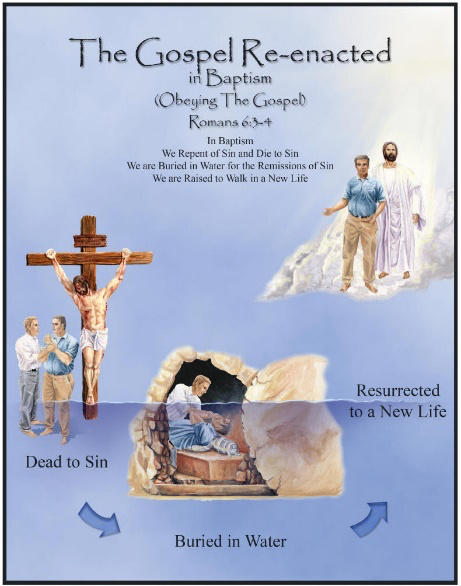
Christ’s Death, Burial, and Resurrection—And Ours - Ben Bailey
“What shall we say then? Are we to continue in sin that grace may abound? By no means! How can we who died to sin still live in it? Do you not know that all of us who have been baptized into Christ Jesus were baptized into his death? We were buried therefore with him by baptism into death, in order that, just as Christ was raised from the dead by the glory of the Father, we too might walk in newness of life” (Romans 6:1-4). At the heart and core of the Gospel are the Death, Burial, and Resurrection of Jesus Christ (1 Cor. 15:1-3). This blockbuster event is the greatest expression of love and sacrifice anyone has ever known (Rom. 5:6-8). Yet, these events also parallel the Christian’s conversion and commitment to the Savior who died for them (2 Cor. 5:14-15). Notice Christ’s Death, Burial, and Resurrection and ours.
Christ’s Death, Burial, and Resurrection—And Ours
“What shall we say then? Are we to continue in sin that grace may abound? By no means! How can we who died to sin still live in it? Do you not know that all of us who have been baptized into Christ Jesus were baptized into his death? We were buried therefore with him by baptism into death, in order that, just as Christ was raised from the dead by the glory of the Father, we too might walk in newness of life” (Romans 6:1-4). At the heart and core of the Gospel are the Death, Burial, and Resurrection of Jesus Christ (1 Cor. 15:1-3). This blockbuster event is the greatest expression of love and sacrifice anyone has ever known (Rom. 5:6-8). Yet, these events also parallel the Christian’s conversion and commitment to the Savior who died for them (2 Cor. 5:14-15). Notice Christ’s Death, Burial, and Resurrection and ours.
Christ’s Death & Mine. The Scriptures teach that Jesus died for sin (2 Cor. 5:21; 1 Peter 2:24). He suffered in his physical body so that we don’t have to face the spiritual penalty of sin (John 3:16; Isa. 53:4). The agony, torment, and pain he suffered was to free men from the slavery of sin (Rom. 6:17). In parallel to that, the Christian dies to sin when he obeys the Gospel. Paul asked the rhetorical question, “How shall we who died to sin live any longer in it” (Romans 6:2)? Of course, the answer is You Can Not. When I make the decision to obey the Gospel, I put to death my “members which are on the earth: fornication, uncleanness, passion, evil desire, and covetousness, which is idolatry” (Col 3:5). When we repent of sin, we turn from it and turn to God (1 Thess. 1:9-10). At this point, I have reenacted Christ’s death for sin by putting sin to death in my life.
Christ’s Burial & Mine. As we read the story of Jesus' death, the Scriptures next emphasize His burial. Jesus prophesied that he would not only die but be buried in the grave for three days (Mt. 12:40). And the Scriptures record that is exactly what happened (Mark 15:42-47). With this event in mind, Paul now draws a parallel between Jesus’ burial and ours when He says, “Therefore we were buried with Him through baptism into death” (Rom. 6:4). In fact, Paul would say it is at the point of our burial in water when we contact the saving death of Jesus Christ. Notice these words: “Or do you not know that as many of us as were baptized into Christ Jesus were baptized into His death?” (Rom. 6:3). Just as it was necessary for Christ to be buried in the earth to show His power over death, we must be buried with Him in water to contact His death that saves (Mark 16:16; 1 Peter 3:21; Acts 2:38). With this truth in mind, why would anyone ever want to deny the essentiality of baptism and its correlation to Jesus’ death?
Christ’s Resurrection & Mine. The climax of the Gospel story is found in Jesus’ resurrection and ultimate victory over death. The Scriptures teach this is the point at which Jesus dealt the ultimate death blow to death itself and overcame its power over mankind (Heb. 2:14-15). When Christ arose from the grave, He gave living proof to all men that He is the Resurrection and the life and whoever believes in Him will never really die (John 11:25). Just as Christ rose from the dead, the Christian also reenacts the resurrection in His obedience to the Gospel. The Holy Spirit says, “just as Christ was raised from the dead by the glory of the Father, even so, we also should walk in newness of life” (Rom. 6:4). When one comes out of the water as a new creature (2 Cor. 5:17) he now has a new outlook and a new purpose in life (Phil. 1:19-21). And, just as Jesus vanquished death through His resurrection, we have been set from the bonds of sin and death by obeying the Gospel (Rom. 6:17-18).
So What/Now What? How wonderful it is that every person who has obeyed the Gospel is a living and breathing testament to the Death, Burial, and Resurrection of our Lord and Savior Jesus Christ. Truly, we should let our light so shine before men that they may see our good works and glorify our Father who is in Heaven (Mt. 5:16). Like the Macedonians, may it be said of us “You are our epistle…known and read by all men” (2 Cor. 3:2). Also, my friend, if you have not obeyed the Gospel then the Death, Burial, and Resurrection of our Lord has not become a part of your life yet, and you are still lost in sin (Rom. 6:23). But the good news is you can do something about that today. Won’t you submit to God’s will by dying to sin (Luke 13:3), being buried with Christ in baptism (Rom. 6:1-4), and rising out of the watery grave victorious over sin and death with a new outlook on life? We hope and pray that each of us will treasure our Lord’s sacrifice by living in such a way that it brings honor to Him every day! –Ben Bailey
Does the Name Matter? - Ben Bailey
Recently someone told me they thought it didn’t matter what a church called itself as long as they worshipped correctly. Is this true according to the Bible? Could a church called itself any name and be acceptable to God as long as they worship correctly? Let’s consider for a moment why it does matter what the church called itself. In fact, just like worshipping God correctly is essential, going by what the rest of the Bible says about the church is also essential. Notice why this is true.
Does the Name Matter?
Recently someone told me they thought it didn’t matter what a church called itself as long as they worshipped correctly. Is this true according to the Bible? Could a church called itself any name and be acceptable to God as long as they worship correctly? Let’s consider for a moment why it does matter what the church called itself. In fact, just like worshipping God correctly is essential, going by what the rest of the Bible says about the church is also essential. Notice why this is true.
The name of the church is important because the Bible tells us not to add to or take away from God’s Word (Rev. 22:18-19). If the name of a church is not found in the Bible, we would be adding to God’s Word. If the name is found in the Bible and we choose to call it by something not found in the Bible, we would be taking away from it.
The name of the church is important because the Bible specifically tells us not to go beyond what is written (1 Cor. 4:6). If the name of a church is not found in Scripture we are going “beyond what is written.”
The name of the church is important because we are to do everything by the authority of Christ, who is the Head of the church (Col. 3:17; Mt. 28:18; Eph. 1:22-23). Whatever God, Christ or the Holy Spirit referred to the church as is what we should refer to it as.
The name of the church is important because the name we call the church should only bring honor and glory to God, Christ or the Holy Spirit not men (1 Cor. 10:31). If the church is called the church of Mark or Mark’s church, who is that bringing honor to?
The name of the church is important because the Jesus died for and shed His blood for His church (Acts 20:28). The act of Jesus dying on the cross purchased the church. Since it was his blood that paid the price for the church, it should wear His name (Mt. 16:18).
The name of the church is important because the name shows ownership and the Lord as the builder and founder of the church is the only one who has the right to be owner of the church (Mt. 16:13-18).
The name of the church is important because the church is the Bride of Christ and as His bride it should wear His name (Eph. 5:22-31).
The name of the church is important because we are only to speak as the oracles of God (1 Peter 4:11). Here are the names the Bible refers to the church as:
Jesus said, “I will build my church” (Mt. 16:13-18). Thus, it is the church of Jesus or the church of Christ.
It is referred to as the church of the Lord (Acts 20:28).
It is referred to as the church of God in Scripture (1 Cor. 1:1-2; Gal. 1:13)
It is referred to as the church of the Living God (1 Tim. 3:15).
It is referred to as the church of Christ (Rom. 16:16; Gal. 1:22).
It is referred to as the church of the firstborn, which is another name for Jesus (Heb. 12:23; Col. 1:15-19; Rom. 8:29).
The name of the church is important because calling the church by men’s names or denominational names is specifically and explicitly condemned in Scripture (1 Cor. 1:10-13).
Friend, a careful study of the Scripture helps us to see that what we call the church really does matter. We need to call the church by names that are in Scripture and that bring honor and glory to God not men. May God help us to glorify the church Jesus died for in everything we say and do! --Ben Bailey

The Magnificence of the Christian Covenant - Ben Bailey
“But now He has obtained a more excellent ministry, inasmuch as He is also Mediator of a better covenant, which was established on better promises” (Hebrews 8:6). One of the main points of the book of Hebrews and the New Testament is the Superiority of Christ and the New Covenant. Notice a couple of ways the Book of Hebrews illustrates the Superiority of Christ and Christianity.
The Magnificence of the Christian Covenant
“But now He has obtained a more excellent ministry, inasmuch as He is also Mediator of a better covenant, which was established on better promises” (Hebrews 8:6). One of the main points of the book of Hebrews and the New Testament is the Superiority of Christ and the New Covenant. Notice a couple of ways the Book of Hebrews illustrates the Superiority of Christ and Christianity.
A Better Offering
Under the Old Testament system, the priests were commanded to take offerings of animals and grain (Lev. 1-5). Yet, with these sacrifices, there was the ever-present reminder that they could never take away sin. Of this, the Hebrew writer says, “But in those sacrifices, there is a remembrance again made of sins every year. For it is not possible that the blood of bulls and of goats should take away sins” (Hebrews 10:3-4). The great thing about the priesthood of Christ is His offering is once for all. Of Jesus it is said, “But this man, after he had offered one sacrifice for sins forever, sat down on the right hand of God” (Hebrews 10:12). Imagine what it would have been like to live under the Levitical sacrifice system. If a man sinned (and all did!—Rom. 3:23), he would go out to the field and get a spotless bull from the flock take it to the door of the tabernacle and kill it before the Lord. Then, the priest would slaughter the animal placing its blood on the altar and its entrails as a burnt offering for sin (Lev. 4:1ff). And, if he sinned the next day, the whole process started all over again. How thankful to God we ought to be that Jesus is the once for all sacrifice for sins! Why would anyone want to go back to an inferior system of sacrifice that could never really save?
A Better Priestly Order
It is impossible for Jesus Christ to be a Levitical priest on earth today (Heb. 8:3-4). He does not fit the divine pattern for the Levitical priest. He came from the wrong tribe (Heb. 7:14). His parents were not of the proper genealogy. His priestly service would have begun and ended at a certain age (Heb. 7:3). Thank God Jesus is a High Priest according to a better order. As God said, “You are a priest forever according to the order of Melchizedek” (Ps. 110:4). This order far exceeds the priestly order of Aaron because it is not dependent upon genealogy (7:3), has no beginning or ending point (7:3), and is superior to Levi from its inception (7:1-10). And, since Jesus is of a “better” priestly order the Hebrew writer says, “For the priesthood being changed, of necessity there is also a change of the law” (Heb. 7:12). This idea of a change in the priesthood necessitating a change in the law naturally turns the Hebrew writer’s attention to the “better” covenant.
How wonderful it is to live in the New Testament Age! Friend, have you taken advantage of the great salvation that can only be found in Jesus? If not, you can do so today. You can do so very simply by believing in Jesus as God’s son (John 8:24), repenting of your past sins (Luke 13:1-5), confessing him as Lord (Rom. 10:10; Matt. 10:32-33) and being baptized in water for the remission of your sins (Acts 2:38; Acts 22:16). --Ben Bailey

The Conversion of Saul - Ben Bailey
Toward the end of Paul’s life, he exclaimed “This is a faithful saying and worthy of all acceptance, that Christ Jesus came into the world to save sinners, of whom I am chief (1 Tim. 1:15). There is little doubt that Paul had his former life as a persecutor of Christians in mind when he said these words. Yet, the change from Saul The Persecutor to Paul The Preacher is one of the great conversions of the New Testament. What steps did Saul take to convert to Christianity? Let’s notice Saul’s conversion from Scripture.
Toward the end of Paul’s life, he exclaimed “This is a faithful saying and worthy of all acceptance, that Christ Jesus came into the world to save sinners, of whom I am chief (1 Tim. 1:15). There is little doubt that Paul had his former life as a persecutor of Christians in mind when he said these words. Yet, the change from Saul The Persecutor to Paul The Preacher is one of the great conversions of the New Testament. What steps did Saul take to convert to Christianity? Let’s notice Saul’s conversion from Scripture.
Saul’s great change was necessitated by an acceptance of Jesus and recognition of his sin. On the road to Damascus, Saul is blinded by the great light and accepts the fact that Jesus is the Son of God and the Messiah (Acts 9). He believes in Jesus as the Savior. For a person to be saved today they must also believe in Christ (Jn. 3:16; 8:24). Was Saul saved at the point of belief alone? No.
Saul also recognized and turned away from sin. Saul spent three days in prayer and fasting (Acts 9:9-12). During this time of fasting and prayer Saul made some serious changes in his thinking and in his life. This change is seen in the dedication Paul had to the cause of Christ (Phil. 1:21). For one to be saved today, he must also repent of sin (Luke 13:3,5).
In Saul’s conversion he also confessed that Jesus was the Messiah. When Paul realized that Jesus was talking to him on the road to Damascus he responded by saying, “Lord, what would you have me to do.” In this statement, Paul recognized that Jesus was Lord (master or owner). Today people must confess Jesus if they are going to be saved (Rom. 10:10; Mt. 10:32-33).
Up to this point in Saul’s conversion his sins have not been forgiven. Ananias, the Lord’s servant comes to Saul with one other command from God. Ananias tells Saul, “And now why are you waiting? Arise and be baptized, and wash away your sins, calling on the name of the Lord” (Acts 22:16). Saul was forgiven of his sins when he obeyed all of God’s commands, including the command to be baptized. Why was Saul baptized? Saul was baptized so that his sins could be washed away. In the plan of salvation, it is at the point of baptism that we contact the blood of Jesus (Rev. 1:5). There are a host of passages that teach the necessity of baptism in salvation (Mk. 16:16; Acts 2:38; Gal. 3:27; 1 Pet. 3:21; Jn. 3:3-5). If men and women are going to be saved today, they too must be baptized for the remission of their sins (Acts 2:38).
Friend, have you been converted like Saul? Was your conversion according to what the Scriptures teach? If not, then you have not been saved from sin. If you have questions or concerns, we would be happy to help you. May God help you to make the right decision concerning salvation.
--By Ben Bailey

"What is Forgiveness?" - Amy Lawrence
We as the fallible humans that have been made in the image of God often have conflicting ideas concerning forgiveness. Our sinful nature would have us to hold grudges and forgive but never forget. Scripture teaches, however, that we can control that sinful nature and bring it under subjection to the law of Christ (Romans 7-8). The words of forgiveness Jesus spoke while in agony on the cross are the words that ring in the life of a faithful Christian that would forgive the way God forgives. What does scripture say about how God forgives? Let’s see.
We as the fallible humans that have been made in the image of God often have conflicting ideas concerning forgiveness. Our sinful nature would have us to hold grudges and forgive but never forget. Scripture teaches, however, that we can control that sinful nature and bring it under subjection to the law of Christ (Romans 7-8). The words of forgiveness Jesus spoke while in agony on the cross are the words that ring in the life of a faithful Christian that would forgive the way God forgives. What does scripture say about how God forgives? Let’s see.
The Prodigal Son
Each stage of forgiveness can be seen in Luke’s account of the Prodigal Son. He tells us of the son who left home to dive headfirst into prodigal living (Lk. 15:11-32). Following are the four stages of forgiveness:
Sin = riotous living. The prodigal son engaged in prodigal living as soon as he had acquired the inheritance from his father. By asking for his inheritance before his father had passed, as was the cultural practice then and now, the son in essence was telling his father that he was dead to him, vss. 11-13.
Repentance = “came to himself”/ went to his father. God told the Israelites that if they “come to themselves AND repent”, that He would hear and forgive (1 Kings 8:46-50). The prodigal son “came to himself”, vs. 17, and reasoned. He knew how his father treated even his servants, caring for all in his household. He humbled himself, debasing himself to the position of a servant with the intention of returning to his father and asking for a servant’s share. But it didn’t end there with just good intentions. He returned, vs. 20.
Prayer = the request the son made as a servant and not as his son. This denoted humility. God places value on a humble heart. David wrote, in his psalm concerning his adultery with Bathsheba, that the Lord will not despise the sacrifices of a broken spirit and a contrite heart (Ps. 51:17).
2Chr. 7:14 “if My people who are called by My name will humble themselves, and pray and seek My face, and turn from their wicked ways, then I will hear from heaven, and will forgive their sin and heal their land.”
Our prayer must be made with the knowledge that we tried our way, and it didn’t work. It’s time to do things God’s way.
Forgiveness = the prodigal son was lost and is now found.
Matt. 18:12 “ “What do you think? If a man has a hundred sheep, and one of them goes astray, does he not leave the ninety-nine and go to the mountains to seek the one that is straying?
Matt. 18:13 And if he should find it, assuredly, I say to you, he rejoices more over that sheep than over the ninety-nine that did not go astray.” “
Sin
To understand forgiveness, we first have to understand sin.
The Bible is incredibly descriptive of sin, but there are four different terms scripture uses, and each one has a slightly different meaning: sin, trespass, transgression, iniquity. Three are found in Ex. 34:7. Ex. 34:7 Keeping mercy for thousands, forgiving iniquity and transgression and sin, and that will by no means clear the guilty; visiting the iniquity of the fathers upon the children, and upon the children’s children, unto the third and to the fourth generation.
All communicate the same idea of what sin is - a departure from the will of God.
Sin - “to miss the mark”. This can be done against God or against a person (Ex. 10:16) and include sins of commission (1 Jn. 3:4) or omission (James 4:17, Mt. 23:23). Sacrifices under the Law of Moses included sins committed in ignorance (Num. 15:27). Sin is used generally as anything that falls short of the glory of God (Rom. 3:23). It is also used to describe the fleshly nature of mankind (Gen. 3:6-7, Rom. 5:12). Unchecked, it leads to a “reprobate mind” (Rom. 1:24). Our innate sinful nature tends to gravitate toward selfishness, envy, and pride. even when our intentions are to do good. Paul wrote of this in Rom. 7:18.
Trespass - going beyond a line drawn, whether with spontaneous intent or unintentionally. It can also mean falling away after being close by. Peter trespassed in denying Jesus (Luke 22:34, 56-62). It is most common in the habitual sins, i.e. thought, word, or attitude, and is used in Mt. 6:14-15.
Transgression - choose intentionally to go beyond, disobey. Samson intentionally touched a dead lion and later allowed Delilah to cut his hair (Num. 6:1-5, Judges 14:8-9; 16:17), willfully breaking his Nazarite vow. The Pharisees intentionally transgressed God’s word in order to hold to their traditions (Mt. 15:3).
Iniquity - a more deeply rooted form of sin. It is a premeditated sin that is continued without repentance. David, in his attempt to hide his original adultery with Bathsheba, premeditated the murder of Uriah the Hittite (2 Sam. 11:3-4, 2 Sam. 12:9). David acknowledged it as such (Ps. 51:2-3) Micah the prophet wrote, “Woe to them that devise iniquity, and work evil upon their beds! when the morning is light, they practice it, because it is in the power of their hand.” (Micah 2:1)
Repentance
Now that we have an understanding of sin, let’s get into repentance.
God has the ability and willingness to forgive any type of sin. But something must take place on our end first: repentance.
2Chr. 7:14 “if My people who are called by My name will humble themselves, and pray and seek My face, and turn from their wicked ways, then I will hear from heaven, and will forgive their sin and heal their land.”
Ezek. 18:30 “ “Therefore I will judge you, O house of Israel, every one according to his ways,” says the Lord GOD. “Repent, and turn from all your transgressions, so that iniquity will not be your ruin.
Ezek. 18:31 Cast away from you all the transgressions which you have committed, and get yourselves a new heart and a new spirit. For why should you die, O house of Israel?
Ezek. 18:32 For I have no pleasure in the death of one who dies,” says the Lord GOD. “Therefore turn and live!” “
2Pet. 3:9 “The Lord is not slack concerning His promise, as some count slackness, but is longsuffering toward us, not willing that any should perish but that all should come to repentance.”
Acts 8:20 “But Peter said to him, “Your money perish with you, because you thought that the gift of God could be purchased with money!
Acts 8:21 You have neither part nor portion in this matter, for your heart is not right in the sight of God.
Acts 8:22 Repent therefore of this your wickedness, and pray God if perhaps the thought of your heart may be forgiven you.” “
Acts 2:37 “Now when they heard this, they were pricked in their heart, and said unto Peter and to the rest of the apostles, Men and brethren, what shall we do?
Acts 2:38 Then Peter said unto them, Repent, and be baptized every one of you in the name of Jesus Christ for the remission of sins, and ye shall receive the gift of the Holy Ghost.
Acts 2:39 For the promise is unto you, and to your children, and to all that are afar off, even as many as the Lord our God shall call.”
All paint the same picture - repentance is a change of the mind that results in a change of action.
If my wedding ring is stolen and I know the thief and confront them, and then the thief comes and asks me for forgiveness, am I obligated to grant forgiveness? Yes. Jesus said to His disciples, “seventy times seven”, using an exaggerated number to denote that we are to grant forgiveness as many times as it is asked. Am I obligated in that granting of forgiveness to also include they keep the ring? No. Forgiveness does not dissolve the consequences of sin (2 Sam. 12:13-14). If I demand that they return the ring and they refuse, is that repentance?
Are they sorry because they want to do right, or are they sorry because they got caught?
2Cor. 7:9 “Now I rejoice, not that you were made sorry, but that your sorrow led to repentance. For you were made sorry in a godly manner, that you might suffer loss from us in nothing.
2Cor. 7:10 For godly sorrow produces repentance leading to salvation, not to be regretted; but the sorrow of the world produces death.”
John 8:39 They answered and said unto him, Abraham is our father. Jesus saith unto them, If ye were Abraham’s children, ye would do the works of Abraham.
Luke uses the phrase “fruits worthy of repentance” in his gospel (Lk. 3:8). What does this mean, exactly? In the context of Luke 3, John is preaching the baptism of repentance in the wilderness of Judea. There were some that had come to be baptized, but John made clear that there was a prerequisite: works of repentance. When they asked, “What shall we do?” John responded with the answers (vss. 11-14). Paul used a similar phrase in Acts 26:20, “works meet for repentance”. A person that is truly repentant is a person that shows such in their choices and actions.
Prayer
Our requests are made known to God through prayer (Phil. 4:6, 1 Jn. 5:14-15). The Christian has this access through the Holy Spirit (Rom. 8:26-27), and through prayer forgiveness is received (James 5:15).
But there are some prayers that God refuses to hear.
Prov. 28:9 “One who turns away his ear from hearing the law, Even his prayer is an abomination.”
Is. 59:1 “Behold, the LORD’S hand is not shortened, That it cannot save; Nor His ear heavy, That it cannot hear.
Is. 59:2 But your iniquities have separated you from your God; And your sins have hidden His face from you, So that He will not hear. “
1Pet. 3:12 “For the eyes of the LORD are on the righteous, And His ears are open to their prayers; But the face of the LORD is against those who do evil.”
So the question is, if we ask for forgiveness without the repentance, without the intention of stepping away from the sin, will we receive forgiveness?
Forgiveness
There are two perspectives to forgiveness:
-lateral - forgiveness between two persons
Luke 17:3 Take heed to yourselves: If thy brother trespass against thee, rebuke him; and if he repent, forgive him.
Luke 17:4 And if he trespass against thee seven times in a day, and seven times in a day turn again to thee, saying, I repent; thou shalt forgive him.
-verticle - forgiveness of God to man
Acts 5:31 Him hath God exalted with his right hand to be a Prince and a Saviour, for to give repentance to Israel, and forgiveness of sins.
When Jesus gave His disciples the model prayer in Mt. 6:9-13, part of that prayer was forgiveness - both lateral and vertical: “forgive us our debts as we forgive our debtors”.
But is forgiveness conditional?
In chapter 18 of Matthew, Jesus gives the parable of the unforgiving servant (vss. 21-35). God tells us that if we don’t forgive others, He won’t forgive us (Mt. 6:14-15). In that same chapter, Jesus gives parameters as to how we should deal with offenses (vss. 15-17):
-The offense has to be addressed between the offended and the offender alone.
-If the first step does not solve the problem, then one or two witnesses are required.
-If the problem continues to be unsolved, it is put before the church and addressed.
-If the offender will not be persuaded by the church, then church discipline is required.
The best course of action is God’s course of action, not our own. We are human and have emotions that would persuade us in another direction that God would not have us follow. Jeremiah wrote, “The heart is deceitful above all things...” (Jer. 17:9) There are times when our current emotional state cannot be trusted. Paul wrote to the Ephesians, “Be angry, and do not sin...neither give place to the devil.” (Eph. 4:26-27) Anger is a natural emotion, one of the easiest to feel and hardest to control. Everyone has a story of a bad decision made in anger. It is also an emotion that has a 0% success rate in the forgiveness department. Before forgiveness can occur, the anger has to be replaced with another emotion - compassion. Often, communication is the barrier that prevents such an exchange. God commands that the offense must first be addressed between the offender and the offended through communication. I cannot count how many times the offense between myself and another was simply a miscommunication. So many offenses I’ve had in relationships were solved with just step one. Most people are willing to talk. Some let fear keep them from doing so.
When all steps are followed and the offender does not ask forgiveness, are we still obligated to forgive? The Bible gives an example of such a scenario. Paul’s first letter to the church at Corinth tells us of a man who was involved in sexual sins that were known to the congregation, chapter 5. He admonished the church there for not addressing the sin and putting it out of their midst, verses 1-5. Church discipline was practiced. The man was disfellowshipped. In Paul’s second letter to the Corinthians, the same man is mentioned - but as one showing repentance and seeking forgiveness (2 Cor. 2:6-8). Paul assures them that the discipline inflicted had the results desired; it brought back the brother lost. He goes on to mention the emotion found in forgiveness: “love toward him.” When such a repentant one seeks forgiveness, they should be welcomed back with open arms, “ for this my son was dead, and is alive again; he was lost and is found.” (Lk. 15:24) All in heaven rejoice, and so should we! (Lk. 15:7,10)
If one literally considers forgiveness, only God has the power to forgive (Mk. 2:7, Lk. 5:21). He knows, however, the connection forgiveness creates and/or keeps in human relationships. Our hearts were not built to hold anger, and that is one reason why forgiveness is a benefit for the forgiver as much as the forgiven. Sometimes forgiveness is not asked and we have to forgive anyway so that our hearts do not become damaged. Stephen forgave, even when it wasn’t requested (Acts 7:60). In forgiveness, we should remember the passage found in Luke 7:41-48:
“There was a certain creditor who had two debtors. One owed five hundred denarii, and the other fifty. And when they had nothing with which to repay, he freely forgave them both. Tell Me, therefore, which of them will love him more?”
Simon answered and said, “I suppose the one whom he forgave more.”
And He said to him, “You have rightly judged.” Then He turned to the woman and said to Simon, “Do you see this woman? I entered your house; you gave Me no water for My feet, but she has washed My feet with her tears and wiped them with the hair of her head. You gave Me no kiss, but this woman has not ceased to kiss My feet since the time I came in. You did not anoint My head with oil, but this woman has anointed My feet with fragrant oil. Therefore I say to you, her sins, which are many, are forgiven, for she loved much. But to whom little is forgiven, the same loves little.”
Then He said to her, “Your sins are forgiven.”
We are all debtors to Christ - and we are all in need of forgiveness. To assume that we do not owe another forgiveness is to forget the price that was paid for ours.
Conclusion
As I studied for this article, I gained a deeper understanding of forgiveness. There are many factors to being a good forgiver; love, humility, gratitude, thankfulness, patience, understanding, and above all an ability to admit faults and grow from them...and to accept that others may also be growing. A heart that holds all of these is a heart that can forgive like God forgives.
*Contributed by Amy Lawrence - McMinnville, TN

How to Overcome a Sinful Past - Ben Bailey
A person must also be ashamed of their sinful past. Too often, people who have lived a life of sin go around bragging about the “sins” they used to commit. Sin should be something that causes us great shame, not gives us an avenue to boast (Rom. 6:21). How sad it is when we reach a point that we can no longer blush over sin (Jer. 8:12).
Sometimes in our Christian life we really mess up don’t we? We know what the Bible says. We know what we ought to do. Yet, there are times when we do just the opposite of what is right and we sin. When a person really messes up, how do they overcome that sinful past?
He must recognize and admit the sin in his life. Unless we are willing to says, “I have sinned”, we cannot be forgiven by God (1 Sam. 12:21ff). The beloved Apostle John said, “If we say that we have no sin, we deceive ourselves, and the truth is not in us. If we confess our sins, He is faithful and just to forgive us our sins and to cleanse us from all unrighteousness” (1 Jn. 1:9-10). Someone has properly stated that to know yourself diseased is half the cure.
A person must also be ashamed of their sinful past. Too often, people who have lived a life of sin go around bragging about the “sins” they used to commit. Sin should be something that causes us great shame, not gives us an avenue to boast (Rom. 6:21). How sad it is when we reach a point that we can no longer blush over sin (Jer. 8:12).
To overcome a sinful past a person must deal with sin in a God-approved way. The only way to deal with sin properly is through obedience to Jesus Christ (Matt. 7:21; Heb. 5:8-9). Jesus made it clear that to deal with sin one must believe in Him (Jn. 8:24), repent of past sins (Luke 13:3), confess Him as Lord (Rom. 10:10), be baptized for the remission of one’s sins (Acts 2:38; Mark 16:16), and be faithful to death (Rev. 2:10).
Finally, to overcome a sinful past one must put the past behind him and move forward. The Apostle Paul said, “Brethren, I do not count myself to have apprehended; but one thing I do, forgetting those things which are behind and reaching forward to those things which are ahead, I press toward the goal for the prize of the upward call of God in Christ Jesus” (Phil. 3:13-14). To overcome the past, we must put the past behind us and look forward to the future. If God has forgotten our sins (Heb. 8:12-13), can’t we? It has been aptly stated, “Those who live in the past are doomed to repeat its mistakes.”
All of us have made mistakes in life that we are not proud of. The difference between a person who has overcome sin and one who has not is very simple--Jesus Christ. Have you dealt with sin a God-approved way? If not, why not? Why not do that today? May God help each of us to deal with sin in a God approved way!

The Blood of Christ - Ben Bailey
The Holy Spirit says, “Without the shedding of blood there is no remission of sins” (Heb. 9:22). The Old Testament Levitical system was a very bloody system (Lev. 1-5). For every sin of every kind there was a blood sacrifice to be offered (Lev. 4:1-12). Yet the Scripture records that the blood of all those bulls and goats could never really take away sin (Heb. 10:3-4). How thankful we should be that Jesus was willing to shed His blood once for all for sin so that the sin problem would have a permanent solution (Heb. 10:12). Notice just how important the blood of Christ is to our salvation.
The Blood of Christ
By Ben Bailey
The Holy Spirit says, “Without the shedding of blood there is no remission of sins” (Heb. 9:22). The Old Testament Levitical system was a very bloody system (Lev. 1-5). For every sin of every kind there was a blood sacrifice to be offered (Lev. 4:1-12). Yet the Scripture records that the blood of all those bulls and goats could never really take away sin (Heb. 10:3-4). How thankful we should be that Jesus was willing to shed His blood once for all for sin so that the sin problem would have a permanent solution (Heb. 10:12). Notice just how important the blood of Christ is to our salvation.
Jesus’ blood removes sin from our life. When Jesus instituted the Lord’s Supper He said, “For this is My blood of the new covenant, which is shed for many for the remission of sins” (Mt. 26:28). When Jesus was on the cross “…one of the soldiers pierced His side with a spear, and immediately blood and water came out” (Jn. 19:34). It was at this point in time when a fountain was opened for cleansing sin (Zech. 13:1). Without the shedding of Jesus’ blood we would not have forgiveness (Rom. 6:1-4; Acts 2:38).
Jesus’ blood redeems us to God. The Apostle Paul said, “In Him we have redemption through His blood, the forgiveness of sins, according to the riches of His grace” (Eph. 1:7). Paul later wrote that we are brought near to God through the blood of Jesus Christ (Eph. 2:13). The word “redeem” literally means to “buy back.” Before Jesus shed His blood we were enslaved to sin (Rom. 6:17-18). Jesus paid the ransom price to free us from sin. Paul said of Jesus’ sacrifice, “who gave himself for our sins to deliver us from the present evil age, according to the will of our God and Father” (Gal. 1:4). Only through the blood of Christ could we be bought back into a right relationship with God (Jn. 14:6).
Jesus’ blood brings us into a peaceful relationship. Because of sin, the relationship with God and man had been severed (Isa. 59:1-2; Ezek. 18:4; Rom. 3:23). Yet, how wonderful it is to hear Paul tell the Colossian Christians that Jesus made “peace through the blood of His cross” (Col. 1:20). Through the blood of Christ we can have the peace of God which surpasses all understanding (Phil. 4:6-8).
Jesus’ blood is also essential to becoming and remaining a faithful child of God. The Scriptures tell us that Jesus loves us and is willing to wash us from our sins in His own blood (Rev. 1:5). At what point do we contact the blood of Christ? When do we receive that washing of our sins in the blood of Jesus? We contact the blood of Christ in the watery grave of baptism (Rom. 6:1-4; Eph. 5:26; Heb. 10:22). Paul was told to “arise and be baptized and wash away your sins calling on the name of the Lord” (Acts 22:16). Since it is the blood of Christ that cleanses our sins, then we must conclude that baptism is the point at which we reach the blood of Christ (Acts 2:38; Mk. 16:16). Furthermore, in light of the fact that we can lose the benefit of Jesus’ cleansing blood as a child of God (Heb. 10:24-26), we must continue to walk in the light as Jesus is in the light, and we must continue to confess our sins as His children so that the blood of Jesus can keep on cleansing us from all sin (1 John 1:7-9). Thank God for the precious blood of Jesus that not only makes us pure, white, and whole in God’s sight, but maintains our purity in His sight so that one day we can “see God” for eternity (Isa. 1:18; Mt. 26:28; 5:8).

A Haunting Question - Ben Bailey
When the Son of man comes, will He really find faith on the earth?” (Luke 18:8). This question Jesus asked arose from a discussion of persistence in prayer. This question of the Lord is designed to provoke an evaluation of our faith. The Apostle Paul said, “Examine yourselves as to whether you are in the faith. Test yourselves” (2 Cor. 13:5). How can we make sure the Lord finds faith when he comes?
A Haunting Question
“When the Son of man comes, will He really find faith on the earth?” (Luke 18:8). This question Jesus asked arose from a discussion of persistence in prayer. This question of the Lord is designed to provoke an evaluation of our faith. The Apostle Paul said, “Examine yourselves as to whether you are in the faith. Test yourselves” (2 Cor. 13:5). How can we make sure the Lord finds faith when he comes? Let me offer a couple of things we can do to ensure faith.
The only way to ensure the Lord finds his people being faithful is to follow the words of Faith, the Bible. The way we receive faith is through the hearing of God’s Word. “Faith comes by hearing and hearing by the Word of God” (Rom. 10:17). The more of the Bible we put into our hearts and lives, the more faith we can expect to receive. For this to be true we must be doers of the Word and not hearers only (James 1:22-25).
For the Lord to find faith when he comes we must remain faithful. Jesus said, “Be faithful unto death and I will give you the crown of life” (Rev. 2:10). We must take up our cross daily and follow Jesus (Luke 9:23). Paul said, “I have been crucified with Christ. It is no longer I who live, but Christ who lives in me…” (Gal. 2:20). If Christ is going to find faith when he returns, we must faithfully follow His Word (Mt. 7:21).
Dear friend, the only way Jesus will find faith in your life and mine is if we are obedient to His Word. Have you truly obeyed the gospel? Have you accepted the faith which was once for all delivered to the Saints (Jude 3). To become a faithful child of God you must hear God’s word (Rom. 10:17), believe in Jesus as the Son of God (Jn. 8:24), repent of past sins (Luke 13:3), confess Jesus before men (Rom. 10:10) and be baptized in water for the forgiveness of your sins (Acts 2:38). Once you have obeyed the gospel, then you must live faithful until death (Rev. 2:10). May God help each of us to have faith when Christ comes!
Article - Unlawful Sexual Activity Will Land Your Soul in Hell
Hollywood has glamorized unlawful sexual activity (fornication) to the point that much of society has accepted pre-marital sex, homosexuality (including lesbianism) and adultery as morally right for those who so choose. It is not uncommon for young people to view unlawful sexual activity before marriage in a similar light as kissing, hugging and holding hands. The idea of “trying someone out” or “shacking up” to determine if you are compatible before making a formal commitment to marriage is popular. Furthermore, speaking against homosexual and lesbian acts supposedly makes one a biased homophobe - and it is a seemingly forbidden thing for anyone to consider using Scripture to determine if the various divorce and remarriage cases are adulterous or not. All the while thousands of souls, young and old, are dying on a daily basis in these sinful conditions because no one is loving enough, “judgmental” enough, or “brother's-keeper” enough to warn these precious people that unlawful sexual activity will land your soul in hell. Give heed to God's righteous judgments on the subject: “Marriage is honorable among all and the bed undefiled; but fornicators and adulterers God will judge” (Hebrews 13:4); “...the unrighteous will not inherit the kingdom of God....Neither fornicators, ...nor adulterers, nor homosexuals, nor sodomites will inherit the kingdom of God” (1 Corinthians 6:9-10); "whoever divorces his wife, except for sexual immorality, and marries another, commits adultery; and whoever marries her who is divorced commits adultery"(Matthew 19:9); “sexually immoral...shall have their part in the lake which burns with fire and brimstone” (Revelation 21:8).

This material is copyrighted by The Gospel of Christ and its authors. This information is free to use in its entirety without further consent, however, modifications should not be made without contacting mail@thegospelofchrist.com for permission. Any and all images contained herein are believed to be free for all distribution and content.
Article - Your Thoughts Are NOT God’s Thoughts
The LORD truthfully stated in Isaiah 55:8, “For My thoughts are not your thoughts, nor are your ways My ways.” Consider the following thoughts that are contrary to God’s: (1) “You are not supposed to judge” versus “…judge with righteous judgment” (John 7:24); (2) “It is alright to have different interpretations of the Bible” versus “…be perfectly joined together in the same mind and in the same judgment” (1 Corinthians 1:10); (3) “Salvation is by grace alone plus nothing; therefore, we do not contribute one whit to our salvation” versus “For by grace you have been saved THROUGH FAITH” and “…BE BAPTIZED, and WASH AWAY YOUR SINS” and “…as you have always OBEYED…WORK out your own salvation” (Ephesians 2:8; Acts 22:16; Philippians 2:12); (4) “Salvation is by faith only” versus “…justified by WORKS, and not by faith only” (James 2:24); (5) “Water baptism is not essential to be saved” versus “…in the days of Noah…eight souls were saved through water. There is also an antitype which now saves us – BAPTISM” (1 Peter 3:20-21); (6) “It is alright to live with each other without getting married” versus “Marriage is honorable among all, and the bed is undefiled; but fornicators and adulterers God will judge” (Hebrews 13:4). It is time for you to denounce your thoughts and feelings and submit to the mind and will of Christ (Philippians 2:5)!
This material is copyrighted by The Gospel of Christ and its authors. This information is free to use in its entirety without further consent, however, modifications should not be made without contacting mail@thegospelofchrist.com for permission. Any and all images contained herein are believed to be free for all distribution and content.
Article - You Cannot Get to the Blood Without Water
After Jesus anointed the blind man’s eyes with clay, He commanded the blind man to go and wash in the pool of Siloam so that his eyes would be opened (John 9:1-15). Washing in the water to be healed was not necessary or essential for healing until Jesus commanded that it be done. The “works of God” were revealed in this man because he obeyed what Jesus commanded – otherwise he would have remained blind. So also, Jesus wants to heal us of our spiritual blindness (sin) through His blood (Luke 4:18; Ephesians 1:7). Jesus commands us to “Arise and be baptized, and wash away your sins, calling on the name of the Lord” (Acts 22:16). Having “our bodies washed with pure water” was not necessary or essential for the cleansing of our sins and the salvation of our souls until Jesus commanded that it be done (Mark 16:16; John 3:5; Hebrews 10:22). The “working/operation of God” (removing all your past sins) will not occur in your life until you obey Jesus and are buried with Him in baptism (Colossians 2:11-12; Hebrew 5:9). Otherwise, you are still blind – you are still in your sins. Consider these Scriptures: Jesus’ blood was shed “for the remission of sins” (Matthew 26:28). You are to “repent and be baptized for the remission of sins” (Acts 2:38). Jesus purchased the church “with His own blood” (Acts 20:28). Jesus cleanses the church with the “washing of water” (Ephesians 5:26). Jesus’ blood cleanses your conscience (Hebrews 9:14). Water baptism “now saves us” and is “the answer of a good conscience toward God” (1 Peter 3:20-21).
This material is copyrighted by The Gospel of Christ and its authors. This information is free to use in its entirety without further consent, however, modifications should not be made without contacting mail@thegospelofchrist.com for permission. Any and all images contained herein are believed to be free for all distribution and content.
Article - Repent And Be Baptized For The Remission Of Sins (Part 2)
Several years ago Richard Heatherly (Baptist “Pastor”) wrote several articles under the title “In What Sense Does Baptism Remit Sins?” in a sales paper out of Fayetteville, TN (read part 1). Instead of giving the common Baptist response - that baptism has absolutely nothing to do with salvation, Richard correctly states that Acts 2:38 “clearly relates baptism to the remission of sins” and that the scriptures addressing the topic of baptism show one “how to be forgiven.” However, when Richard further explains that the remission of sins obtained in Acts 2:38 is merely symbolic and ceremonial, he provides no proof and departs from the context of Acts 2:36-38. The Jews on the day of Pentecost wanted to know what THEY needed to DO to obtain LITERAL remission of sins. The two imperatives of Peter were: Repent and be baptized. The two imperatives Richard mentions in his articles: Repent and believe. Yet in another one of Richard’s articles he only mentions one imperative: “by faith in Christ’s atonement alone.” Peter said that both repentance and baptism were for the remission of sins. When I pointed this out to Richard in one of my articles, he said that such an observation was “a very shallow theology.” The order of Peter’s sermon was: 1) repent; 2) be baptized; 3) remission of sins. The order of Richard’s sermon is: 1) repent (and believe); 2) remission of sins; 3) be baptized. Those who gladly received Peter’s word were baptized (Acts 2:41). Those who gladly receive Richard’s word may or may not decide to be baptized, yet Richard finds it essential to wear the Baptist name. Whose sermon will you follow?
This material is copyrighted by The Gospel of Christ and its authors. This information is free to use in its entirety without further consent, however, modifications should not be made without contacting mail@thegospelofchrist.com for permission. Any and all images contained herein are believed to be free for all distribution and content.
Article - Repent And Be Baptized For The Remission Of Sins (Part 1)
Several years ago Richard Heatherly (“Pastor” of a Baptist Church) wrote an article in a Fayetteville, Tennessee sales paper in which he boldly admitted that Acts 2:38 “clearly relates baptism to the remission of sins.” I was encouraged by Richard’s willingness to make such an admission as he proceeded to tackle such a controversial topic in a thorough manner. In order for religious people to fulfill God’s command to “speak the same thing,” have “no divisions” (including NO denominations) and “be perfectly joined together in the same mind and in the same judgment,” we must have an open Bible, an open mind and an open discussion (ignoring one another has accomplished nothing all these years; study Acts 17:11; 18:26 and 1 Corinthians 1:10).
The title of Richard’s article asked, “In What Sense Does Baptism Remit Sins?” Richard’s answer was: metaphorically, symbolically, ceremonially. Do you the reader gather such an idea when you study Acts 2:36-38? After the Jewish audience was accused by Peter of crucifying the Christ, they were cut to the heart and ask the apostles, “What shall we do?” Did the Jews want to know what they needed to do to receive remission of sins symbolically? Or were they seeking literal forgiveness? The two things Peter commanded his audience (and all of us) to do in order to receive the remission of sins were 1) repent and 2) be baptized. Why did Richard not take notice or mention that Acts 2:38 also says repent for the remission of sins? Baptism remits sins in the same way that repentance does (Acts 3:19). For Richard to consistently hold on to his doctrine, he would have to also teach that a sinner repents in order to remit his sins symbolically. If not, why not? (see part 2 for a final analysis of Acts 2:38).
This material is copyrighted by The Gospel of Christ and its authors. This information is free to use in its entirety without further consent, however, modifications should not be made without contacting mail@thegospelofchrist.com for permission. Any and all images contained herein are believed to be free for all distribution and content.
Article - Saving the Lost
It has been estimated that there were over four million Jews/Israelites living in the 1st century (http://en.wikipedia.org/wiki/Historical_Jewish_population_comparisons) when Paul wrote the following inspired words of God in Romans 10:1-3, “Brethren, my heart’s desire and prayer to God for Israel is that they may be saved. For I bear them witness that they have a zeal for God, but not according to knowledge. For they being ignorant of God’s righteousness, and seeking to establish their own righteousness, have not submitted to the righteousness of God.” These verses help explain why Paul was such an aggressive soul winner not only of the Jews but also the Gentiles (Proverbs 11:30; James 5:20). First, Paul genuinely desired to save others (do you? Or are you too busy?). Second, Paul prayed to God for those whom he wanted to save (do you?). Third, Paul realized that according to God’s will there are only two categories of people: those who are saved AND those who are lost (are you saved or lost? Mark 16:16; John 3:16; 1 Peter 4:18). Fourth, Paul applied the righteous judgment of God to the Jewish religion and made the righteous and loving judgment that the Jews (that is, those who adhered to the doctrines and traditions of the Jewish religion) were among the category of the lost (John 7:24; Acts 13:44-46; Galatians 1:13-14; 2 Thessalonians 1:4-9). Fifth, Paul realized that although the Jews had some positive and, to a certain degree, sincere traits (a zeal for God), their lost state was due mainly to two shortcomings: the Jews did not have the proper, scriptural knowledge of the truth AND they had not submitted to/obeyed the righteousness of God/the gospel (Matthew 7:21-23; John 8:32; 17:17; Acts 5:32; Romans 2:8; 6:16-17; 2 Thessalonians 1:7-9; Hebrews 5:8-9; 1 Peter 1:22; 4:17).
This material is copyrighted by The Gospel of Christ and its authors. This information is free to use in its entirety without further consent, however, modifications should not be made without contacting mail@thegospelofchrist.com for permission. Any and all images contained herein are believed to be free for all distribution and content.
Article - The Predestination of Calvinism and Presbyterianism is False
Does the Bible teach that everyone’s destiny (where you end up in eternity) has been predetermined randomly and that there is nothing we can personally do about it? Absolutely not! Such false teaching contradicts the following Bible truths: (1) God does not want anyone to perish (therefore, if salvation does not involve our choice, every human would be going to heaven, 1 Timothy 2:4; 2 Peter 3:9); (2) God does not show partiality but is just and fair (therefore, He does not arbitrarily choose who goes to heaven and who goes to hell, Acts 10:34-35); (3) Jesus died for everyone (not just for a few that God randomly chose; otherwise, what purpose would it have served for Jesus to become a human and die for humans whom His Father had already chosen to go to heaven?, 1 Timothy 2:6; Hebrews 2:9); (4) God designed us as creatures of choice (including the choice to work out our own salvation or not, Genesis 2:15-17; Joshua 24:15; Isaiah 7:16; Luke 10:38-42; Acts 6:2-5; 13:45-46; Philippians 2:12); (5) The gospel is to be preached to every human (not just to a select few whom God has already predestined, Matthew 28:18-20; Mark 16:15-16); (6) The gospel invitation is offered to all (not just to God’s elect, Revelation 22:17); (7) A child of God can choose to fall from God’s grace and be lost for eternity (John 6:67-71; 17:12; Acts 1:25; Galatians 5:4; 2 Peter 2:20-22); (8) God predetermined His Plan of salvation and the Type of persons (chosen qualities) He would save – not random individuals (Acts 4:27-28; 1 Corinthians 2:7-8; Ephesians 1:11-13). If your Church (Presbyterian, etc.) teaches Calvin’s predestination, then leave your Church on the basis of false teaching just as Calvin left his Church (Catholic) and become part of the one church Jesus built (Matthew 16:18; Acts 2:47; Romans 16:16).
This material is copyrighted by The Gospel of Christ and its authors. This information is free to use in its entirety without further consent, however, modifications should not be made without contacting mail@thegospelofchrist.com for permission. Any and all images contained herein are believed to be free for all distribution and content.
Article - Is Your Name in the Book of Life?
In Revelation 20:12, John speaks of the Judgment Day on which books are opened. One of those books is described as the Book of Life. It is called the Lamb’s Book of Life because Jesus was slain to make redemption available through His shed blood (Revelation 1:5-6; 5:8-13; 7:10; 13:8). It is the Book of eternal Life because only people whose names are written in it will enter into eternal life in the heavenly city (Revelation 7:17; 21:10, 27; 22:3-5). Those whose names are not written in God’s Book will be cast into the lake of fire (Revelation 20:14-15). Therefore, only the names of God’s children are written in the Book. But even a child of God can have his name taken out of the Lamb’s Book and, hence, forfeit his eternal salvation. For instance, children of God of the Old Testament were taken out of God’s Book because of their impenitent sin and because they turned their hearts away from God (Exodus 32:31-33; Deuteronomy 29:14-15, 18-20). Children of God of the New Testament are taken out of it because they do not overcome/remain faithful and/or they take away from God’s words (Revelation 2:10; 3:5; 22:19). Other names not found in the Book of Life are those who worshiped the sea beast (beast = the Roman government/emperors) and those who defile, cause an abomination or lie (Revelation 13:1, 8; 17:8; 21:27). If you want to be in the Book of Life (and stay in it), you must be a faithful Christian worker who endures to the end (Philippians 4:3; Revelation 3:4-5; also read Malachi 3:16-17). Is your name in the Book of Life? Has it been taken out? Examine yourself whether you are in the faith (2 Corinthians 13:5).
This material is copyrighted by The Gospel of Christ and its authors. This information is free to use in its entirety without further consent, however, modifications should not be made without contacting mail@thegospelofchrist.com for permission. Any and all images contained herein are believed to be free for all distribution and content.